Gujiao Mobile Toilet Construction Design
The construction design of mobile toilets in Gujiao should focus on project positioning, construction organization, structural materials, environmental protection adaptation, and process management, with detailed plans tailored to local environmental characteristics.

1. Project Overview and Design Positioning
As temporary facilities, mobile toilets need to clarify functional requirements based on specific usage scenarios in Gujiao City, such as tourist attractions, construction sites, and temporary event venues. For example, tourist attractions require the installation of deodorization devices, baby changing stations, and barrier-free access (with a minimum corridor width of 1.2 meters), with nighttime lighting covering a 5-meter radius around the toilets. Construction sites necessitate enhanced collision-resistant designs (such as adding anti-collision strips), oil-resistant materials (like stainless steel or fiberglass-reinforced plastic walls), and a drainage slope of at least 2% to prevent water accumulation. The design should balance temporariness and reliability, with the main structure capable of withstanding wind speeds of at least grade 8 to cope with potential strong winds in Gujiao.
2. Construction Deployment and Organization
- Objectives and Principles: Set four core objectives: quality (main structure wind resistance meets standards), safety (zero fatalities during construction), schedule (regular projects delivered within 72 hours), and environmental protection (construction noise ≤ 60 decibels), following the principle of "underground before above-ground, main structure before decoration."
- Organizational Structure: Establish a dedicated team with clear divisions of labor: the project manager oversees the overall operation, the technical lead reviews drawings and specifications, the construction foreman handles on-site execution, the safety officer conducts continuous hazard inspections, and the logistics officer ensures material supply.
- Site Preparation: Before construction, use a total station to measure ground flatness (with an error ≤ 5 millimeters) and inspect underground utilities (such as water supply and cables) to avoid damage during subsequent excavation.
3. Structural and Material Selection
The main structure is assembled from prefabricated steel or composite panel modules, with the base welded using channel steel or I-beams and columns made of square steel (with specifications ≥ 80×80 millimeters) to ensure lifting stability. Wall materials are selected based on the scenario: color-coated steel sheets are preferred for tourist attractions (for their lightweight and aesthetic appeal), while stainless steel or fiberglass-reinforced plastic is chosen for construction sites (for their corrosion resistance and ease of cleaning). The frame structure should reserve holes for electrical wiring to avoid damaging the waterproof layer during later drilling.
4. Environmental Protection and Functional Adaptation
- Environmental Protection Measures: Equip with waterless toilets (to reduce sewage discharge) or rainwater harvesting systems (for flushing), and use solar power to reduce energy consumption. During construction, control dust (by covering materials and washing vehicles), recycle wastewater, and ensure noise compliance (such as using low-noise generators).
- Functional Adaptation: Adjust the number of toilet stalls based on peak visitor flow (e.g., a ratio of 1:50 for tourist attractions). Toilets at construction sites should include a tool storage area and use non-slip floor tiles (with a friction coefficient ≥ 0.6).
5. Construction Process and Precautions
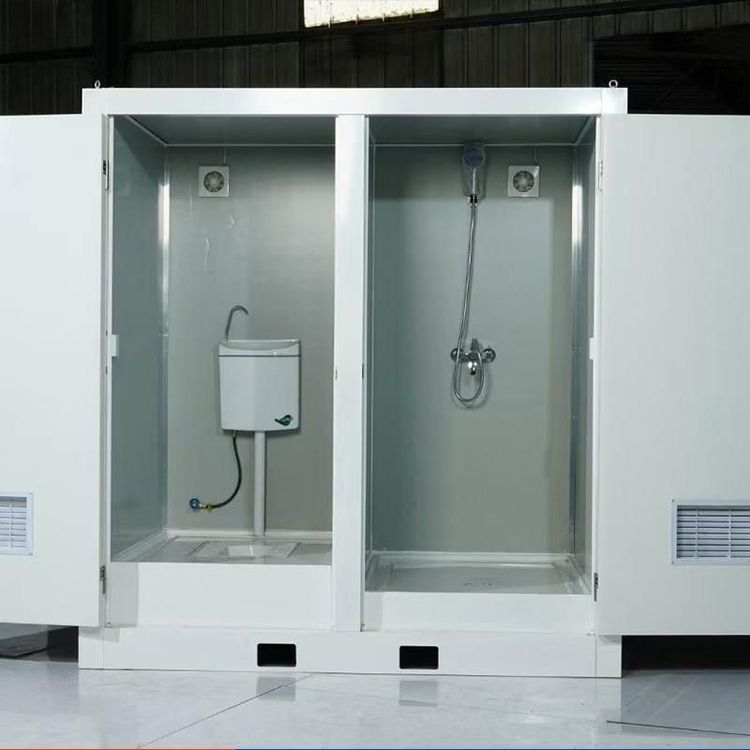
- Installation Process: First, assemble the toilet body, then install supporting facilities (such as septic tanks and handwashing stations), and finally lay out electrical wiring (after detecting underground utilities in advance).
- Seasonal Measures: In winter, add insulation layers to water tanks and pipes in Gujiao due to the cold climate; in summer, avoid construction during peak heat hours (10:00-15:00) and provide heatstroke prevention supplies.