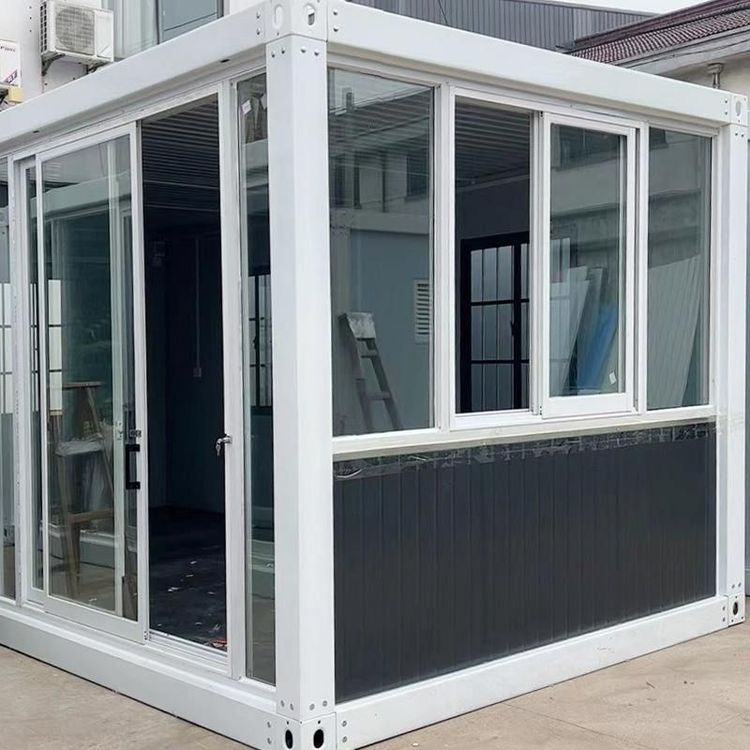
Gucheng Movable Toilet Structure
The structure of the movable toilet in Gucheng mainly includes the main frame, enclosure structure, functional modules, harmless treatment system, and other characteristic parts.

Main Frame: It is usually welded from national standard light steel keels, with the bottom reinforced by channel steel or I-beams. The columns are square steel, and after anti-rust treatment, the lifespan can reach 20 years. There is also the use of a steel structure frame, with galvanized steel pipes or square steel as the main load-bearing components, and the surface is also treated with anti-rust measures to extend the service life.
Enclosure Structure:
- Walls: Options include polyurethane sandwich color steel plates, metal carved plates, etc., with a thickness of ≥1mm, providing fire resistance, corrosion resistance, and sound insulation. There are also panels with waterproof, corrosion-resistant, and easy-to-clean properties, such as color steel sandwich panels, stainless steel plates, or carved plates.
- Ceiling: Made of FRP material, with thermal insulation and decorative plastic steel ceilings inside. The roof design often features a good drainage slope and is equipped with a thermal insulation layer to cope with different climatic conditions.
- Floor: Uses FRP non-slip flooring, with silicone rubber strips at the edges for waterproofing. It can also be replaced with tiles or plastic flooring. The chassis part needs to bear the weight of internal sanitary ware and personnel, and generally uses non-slip flooring with reserved sewage discharge ports.
Functional Modules: Standard equipment includes a makeup mirror, clothes hook, toilet paper holder, toilet (or squat toilet), exhaust fan, lighting, handrail, door lock, and signage. The internal configuration usually includes basic facilities such as a toilet (or squat toilet), washbasin, mirror, lighting, exhaust fan, and tissue holder.
Harmless Treatment System: The movable toilet may be equipped with a septic tank system, which uses a combination of physical sedimentation and anaerobic fermentation to initially decompose excreta. The internal structural design of the septic tank directly affects the treatment efficiency and maintenance cycle. Traditional double- or triple-chamber septic tanks form multiple treatment chambers with baffles, extending the hydraulic retention time. Some improved designs add filter media or additional exhaust channels to accelerate the decomposition process and reduce odor generation.
Other Characteristics: Movable toilets usually exist as independent box structures, with the characteristics of immediate use and no need to connect to fixed pipe networks. Their water supply systems rely on external water sources or built-in water tanks, and the sewage discharge methods vary according to the application scenario, including direct discharge designs (connected to municipal sewage pipe networks) and collection solutions (equipped with sewage storage tanks or septic tanks). In recent years, some products have begun to incorporate functions such as intelligent sensor flushing, automatic disinfection, and deodorization devices to enhance the user experience.