
Guanji Concrete House Prefabrication
Prefabricated concrete house construction primarily involves prefabricated concrete assembled houses in prefabricated buildings, achieving rapid construction through factory-prefabricated modules and on-site assembly.
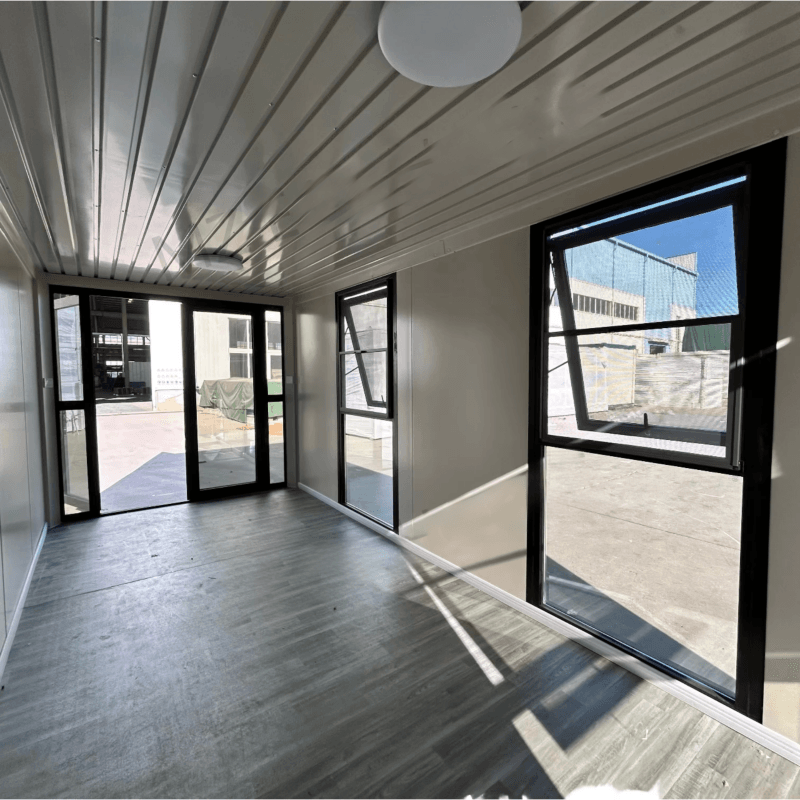
1. Core Concepts and Assembly Methods
Prefabricated concrete houses are a type of prefabricated building. The core idea is to divide the house into independent modules based on functional areas (such as kitchens, bathrooms, and bedrooms), which are then prefabricated in factories and transported to the site for assembly. Assembly methods include hoisting (using lifting equipment for overall hoisting) and assembling (connecting modules with bolts or welding), offering fast construction and high standardization.
2. Cost and Efficiency Advantages
Prefabricated houses significantly shorten the construction period, making them particularly suitable for time-sensitive projects. For example, prefabricated houses exported from China to European and American countries offer a significant price advantage: a prefabricated house costing 200,000 RMB can be delivered to your doorstep, while traditional construction costs in the United States may double due to high labor costs. This cost-effectiveness makes them an ideal choice for regions with housing shortages and high labor costs in Europe and America.
3. Historical Background and Application Categories
Prefabricated buildings are not a new technology; their history can be traced back to the 17th century. After World War II, they experienced rapid development due to post-war reconstruction needs. According to structural forms, prefabricated buildings can be divided into five major categories:
- Block buildings: Constructed by stacking prefabricated blocks (such as concrete hollow blocks);
- Panel buildings: Assembled from prefabricated wall panels, floor panels, and other panels;
- Box buildings: Prefabricating rooms as whole “boxes” for on-site assembly;
- Skeleton panel buildings: Using a frame structure as support and attaching prefabricated panels externally;
- Lift-slab and lift-floor buildings: Installing floor slabs layer by layer using hydraulic lifting technology.
4. Differences in Market Acceptance
Prefabricated houses are widely adopted in European and American countries, primarily due to their low cost and fast assembly. In rural China, however, influenced by traditional观念 (traditional beliefs), farmers prefer to purchase materials themselves and hire local villagers for construction, believing this approach is more “reliable,” resulting in the limited popularity of prefabricated houses. Nevertheless, with rising labor costs and the advancement of building industrialization, the potential of prefabricated houses in the Chinese market is gradually emerging.



