
Charging Methods for Mobile Toilets in Germany
The charging methods for mobile toilets in Germany are diverse, primarily depending on the toilet type and service level, including solar power supply, hydrogen fuel cell power supply, and traditional power supply.
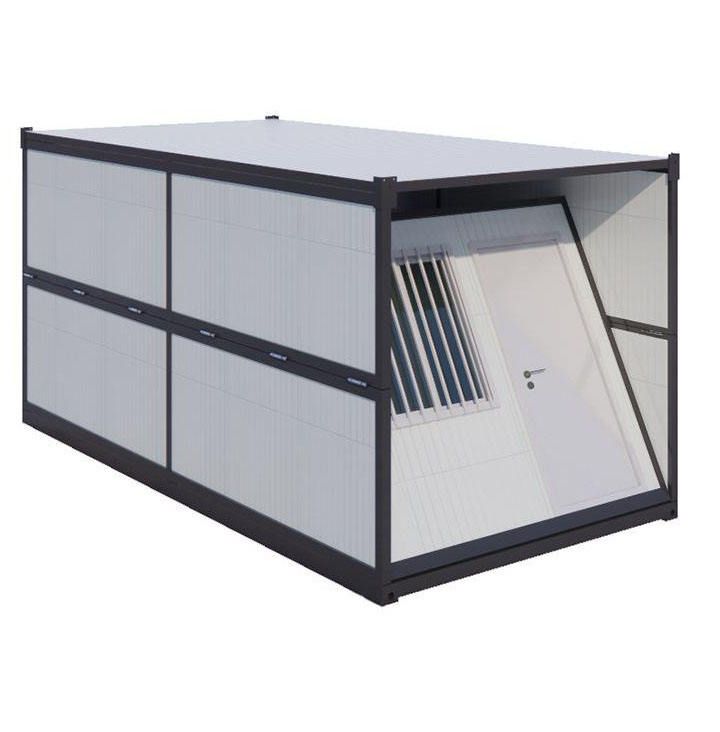
For low-power upgraded mobile toilets, solar power supply is a common choice. These toilets are usually equipped with solar panels with a power range of 10 - 20 watts. On sunny days, they can fully absorb solar energy and convert it into electrical energy to power the LED lights, exhaust fans, and other equipment inside the toilet. Taking the exhaust fan as an example, it uses a 5-watt DC motor. Continuous operation for 24 hours only consumes 0.12 kilowatt-hours of electricity, and the electricity stored by the solar panel on sunny days is sufficient to meet its daily operational needs. Even on cloudy days, this low-power upgraded mobile toilet can rely on the electricity stored by the solar panel to operate for 3 days, ensuring the normal use of basic functions.
The hydrogen fuel cell-powered mobile toilets launched by Germany's Wostmann company represent a more advanced energy solution. Hydrogen fuel cells have the advantages of high energy density and long endurance. After adopting hydrogen fuel cell power supply, the company's mobile toilets can operate continuously for 72 hours without the need for external energy replenishment. This charging method not only eliminates dependence on the traditional power grid but also reduces the time and operational costs associated with charging. It is especially suitable for remote areas or temporary large-scale event venues, providing reliable protection for the long-term stable operation of mobile toilets.
In addition, high-end smart mobile toilets have relatively high power demands due to being equipped with equipment such as automatic感应冲水 (automatic flushing, here translated as 'automatic induction flushing' for better understanding in context), winter heating, and air purification systems. The automatic induction flushing has a power of 30 watts and consumes 0.3 kilowatt-hours of electricity per day. For winter heating, if a 500-watt electric heater is used and operates for 2 hours per day, it consumes 1 kilowatt-hour of electricity. The air purification system equipped in TOTO's smart mobile toilets in Japan even consumes up to 1.5 kilowatt-hours of electricity per day on average. For these high-power mobile toilets, they usually need to be connected to the traditional power grid for charging to meet their diverse functional requirements and high power consumption.


