
Foreign Net Comments on Chinese Container Houses
Foreign net comments on Chinese container houses are generally positive, believing that they have advantages such as low prices, short construction periods, safety, reliability, and environmental friendliness, and are widely welcomed in the global market. However, there are also concerns about inconsistent quality.
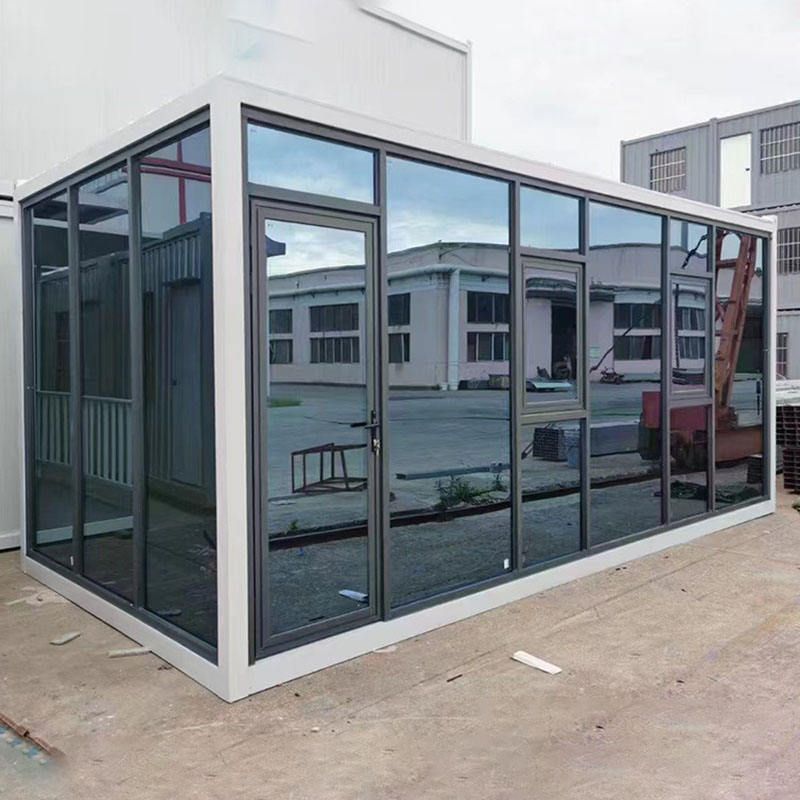
Significant price advantage: The price advantage of Chinese container houses has been repeatedly mentioned in foreign net discussions. A 70-square-meter, well-decorated house with a bedroom, kitchen, and independent bathroom, shipped from China to countries such as the United States and Australia, has a total landed cost of less than $30,000 (approximately 200,000 yuan). This is equivalent to being able to buy a well-decorated house for the price of a car, and this high cost-effectiveness has attracted many foreign buyers.
Greatly shortened construction period: Chinese container houses are prefabricated in factories and assembled on-site, significantly reducing the construction period that traditionally takes several months or even a year. For example, a modular elderly care apartment manufactured in China and purchased by British merchants was shipped from a Chinese factory to a British port and completed on-site hoisting and construction in just two weeks. The overall delivery period of the MRDC modular hotel project by China Construction Science and Engineering Corporation in Papua New Guinea was shortened from the traditional 14 to 18 months to about 7 months.
Safe and reliable: Taking leading companies such as Suzhou Zhongnan Steel Structure Co., Ltd. as examples, their products have undergone strict testing. The all-steel-structure frame container mobile homes have a wind resistance of up to Level 12, an earthquake resistance of up to 8 degrees, and a frame deformation rate of only 0.2%, meeting the requirements of relevant building structure load specifications and performing excellently in terms of safety.
Environmentally friendly and recognized: Most of the construction processes of Chinese container houses are completed in factories, reducing noise and dust pollution from on-site construction. Moreover, steel consumption is low, and lightweight steel structure modules can also significantly reduce the consumption of foundation materials, which is in line with the concept of environmental protection and has been recognized by foreign nets.
High market popularity: China's export volume of prefabricated buildings has continued to grow, increasing from $1.472 billion in 2015 to $4.339 billion in 2025, nearly tripling in a decade. The growth rate in the first quarter of 2026 reached 45%, indicating strong demand for Chinese container houses in the global market. However, there are also voices on foreign nets expressing concerns that the inconsistent quality of non-standard white-label products may affect the overall reputation of the industry.



