New Prefabricated Panels for Flat Roofs
Currently, there is no clearly and uniformly named 'new prefabricated panels for flat roofs', but the technological upgrade directions focus on modularization, high strength, lightweight design, and functional integration. The potential forms and advantages can be analyzed by combining the trends in prefabricated panel technology and product characteristics.

Characteristics of Traditional Prefabricated Panels Provide a Technical Basis for New Panels
Traditional roof prefabricated panels primarily use cement as the main material and are divided into two types: solid and hollow. The hollow structure achieves lightweighting by reducing the non-load-bearing concrete, thereby lowering the pressure exerted by the roof's self-weight on the building structure. The choice of core materials is diverse, including composite materials, concrete, inorganic materials, rock wool, etc., with different core materials imparting differentiated properties to the panels. For example, rock wool cores can enhance thermal insulation performance, while composite material cores may improve corrosion resistance. In terms of mechanical properties, the compressive strength of traditional prefabricated panels ranges from 0.24 MPa to 120 MPa, with a maximum flexural strength of over 9.644 MPa, providing a reference benchmark for the strength design of new panels.
New Technological Directions Drive the Upgrade of Roof Prefabricated Panels
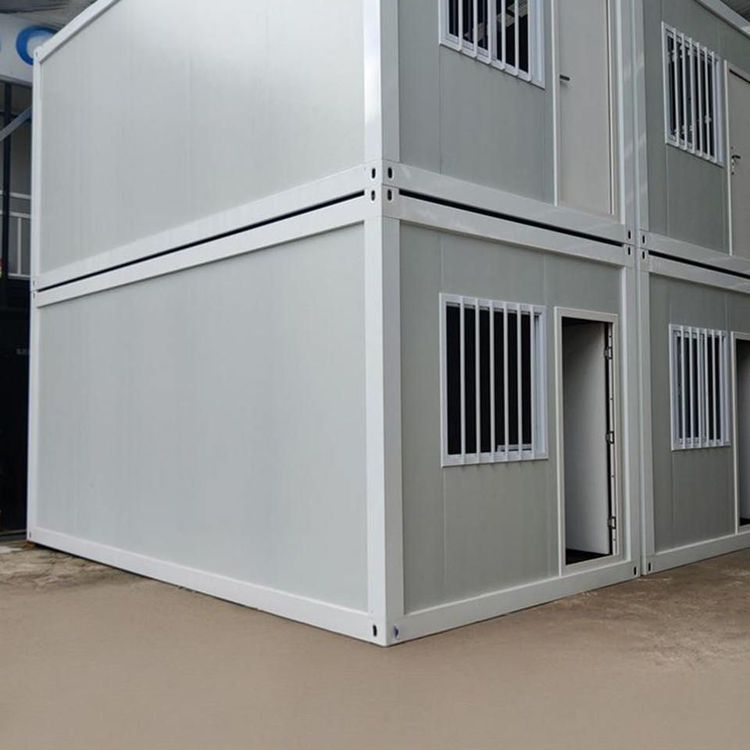
Prefabricated building technology offers new ideas for upgrading roof prefabricated panels. Taking CMC (Composite Modular Construction) as an example, its steel-concrete monolithic pouring process significantly enhances structural seismic resistance, with a construction period 30% shorter than traditional methods. This technology may be applied to roof prefabricated panels, enhancing their overall performance through steel-concrete composite structures, enabling them to better withstand roof loads while possessing superior earthquake and wind resistance. Additionally, modular design allows panels to be prefabricated in factories and then quickly transported to the site for assembly, improving construction efficiency and reducing the environmental impact of on-site operations.
Market Application Trends Reflect Improved Industrial Production Level
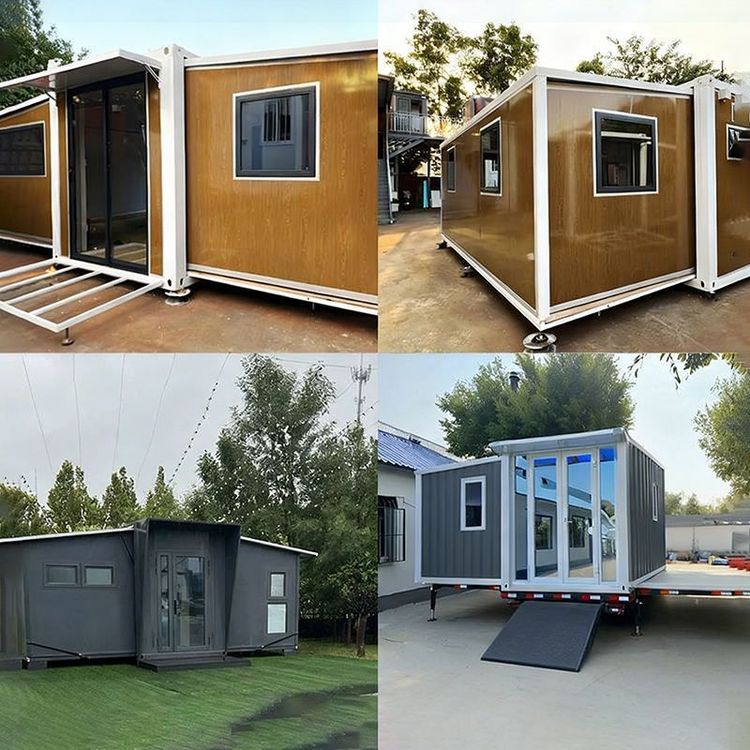
In the first four months of 2026, enterprises in the Guangzhou Customs district exported movable houses worth 1.4 billion yuan, a year-on-year increase of 38.1%; the Shenzhen port exported movable houses worth 1.68 billion yuan, a year-on-year increase of 19.6%. The growth in exports indicates that the industrial and standardized production levels of prefabricated building components (including roof panels) are continuously improving. With the expansion of production scale, enterprises may invest more resources in the research and development and application of new materials, launching more competitive roof prefabricated panel products to meet market demand for high-quality, high-performance building components.
Improved Construction Adaptability Addresses Traditional Panel Pain Points
New prefabricated panels may continue the advantages of factory prefabrication and on-site assembly while addressing issues such as weak seismic resistance and poor sound and thermal insulation in traditional prefabricated panels. For example, by optimizing the hollow structure or adopting new composite core materials, the thermal insulation performance of the panels can be improved, reducing indoor heat loss and lowering energy consumption; through steel-concrete composite structures, seismic resistance can be enhanced, improving building safety during earthquakes and other disasters.