
Feasibility Report on Container Houses
The container house project has high feasibility, significant market potential, and aligns with policy directions, but attention should be paid to quality control and risk prevention.
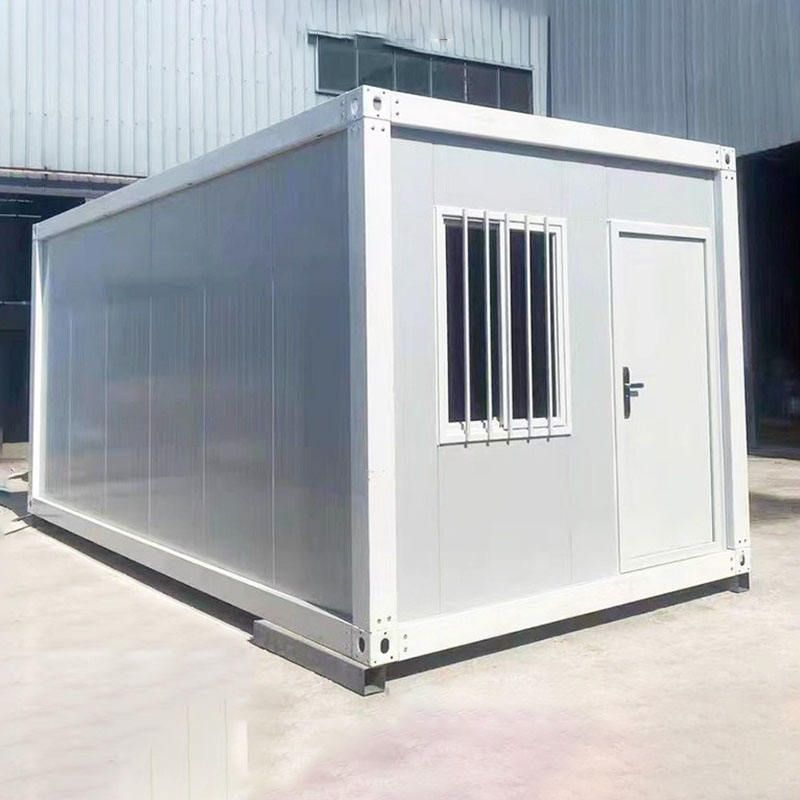
1. Clear and Growing Market Demand
Demand for container houses both domestically and internationally is diversifying. In international markets, they are widely used in temporary housing, disaster relief, tourism, and vacation settings. In the domestic market, with the acceleration of urbanization, there has been a significant increase in demand from construction sites and temporary commercial facilities. Within the segmented market, there is substantial demand potential in temporary housing, commercial spaces, tourism, vacations, and industrial uses. It is expected that in the coming years, driven by increased environmental awareness, policy support, and the development of prefabricated construction, the market will maintain stable growth with immense potential.
2. Significant Investment Returns and Controllable Costs
Taking a project with an annual production capacity of 100,000 units as an example, the total investment is 138 million yuan. Upon reaching full production, the annual operating revenue is 327 million yuan, with a total profit of 73.61 million yuan, a net profit after tax of 55.21 million yuan, an investment profit rate of 53.5%, and a payback period of only 3.99 years. Additionally, it can provide 509 jobs. The project construction adheres to the national principle of 'comprehensive utilization.' By integrating corporate technological resources, location advantages, and supporting facilities, it effectively reduces construction costs, shortens the construction period, and enhances economic benefits.
3. Prominent Policy Support and Environmental Advantages
Container houses are produced in factories and installed on-site, reducing on-site operation costs and minimizing later-stage pollution, aligning with the trend of low-carbon environmental protection. In recent years, the Chinese government has increased its support for green buildings and introduced multiple policies to encourage the development of prefabricated construction, providing a favorable policy environment for the industry. Furthermore, their recyclability meets the requirements for building a resource-conserving society, further enhancing the project's social benefits.
4. Controllable Risks but Require Key Prevention and Control
Project risks mainly include market fluctuations, imperfect technical standards, and policy adjustments. It is necessary to reduce market and technical risks through measures such as strengthening market research, optimizing product design, and establishing a quality traceability system. At the same time, closely monitor policy dynamics and promptly adjust operational strategies to respond to policy risks. Additionally, it is essential to improve industry standards and strengthen supervision to avoid the negative impact of inconsistent product quality on the healthy development of the industry.
5. Conclusion and Recommendations
Comprehensive analysis indicates that the container house project is feasible in terms of technology, economy, policy, and environment, with broad market prospects. It is recommended that enterprises strengthen technological innovation to improve product quality and safety; improve industry standards to promote standardized development of the industry; and strengthen cooperation with the government to seek more policy support for sustainable development.



