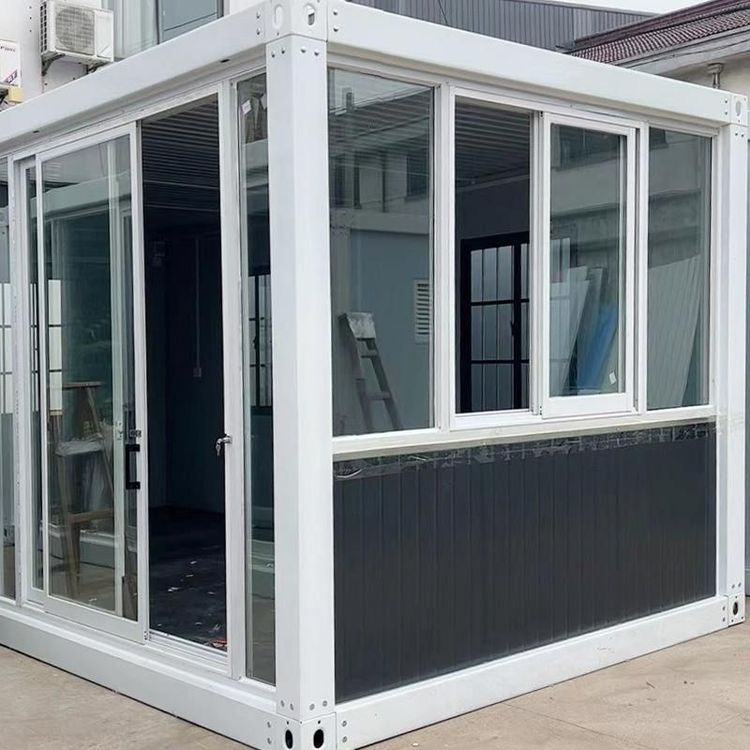
Factory-Special Mobile Toilet
Factory-special mobile toilets are mobile sanitation facilities suitable for factories and other places, providing toilet services for the public and customers, and featuring cost-effectiveness and long service life.

I. Basic Composition Mobile toilets are generally composed of fecal sewage storage tanks (or fecal sewage treatment devices), floor slabs, sanitary ware, walls, washing equipment, water tanks, roofs, and mobile devices. These components work together to ensure the basic functions of the toilet are realized, such as the storage and treatment of feces, and the comfort and hygiene of the toilet environment.
II. Classification Methods
- According to the structural form, they can be divided into single-structure mobile toilets and composite-structure mobile toilets. Single-structure mobile toilets are relatively independent and have a simple structure; composite-structure mobile toilets may be composed of multiple single units and have richer functions.
- According to the mobile method, they can be divided into lifting and handling mobile toilets, and powered and towed mobile toilets. Lifting and handling mobile toilets are convenient for manual or mechanical handling; powered and towed mobile toilets can be moved by vehicle towing or their own power, suitable for places that require frequent movement.
- According to the sewage treatment method, they can be divided into water-flushing and non-water-flushing suction mobile toilets, circulating water-flushing mobile toilets, and dry-packing mobile toilets. Water-flushing and non-water-flushing suction mobile toilets treat feces through water flushing or suction; circulating water-flushing mobile toilets achieve water resource conservation through a circulating water system; dry-packing mobile toilets use dry-packing technology to package and treat feces without using water.
III. Design Principles The design of factory-special mobile toilets should follow the principles of mobility convenience and cost-effectiveness and durability. The overall structure should be lightweight, and lightweight and durable materials should be used as much as possible to reduce transportation and installation costs. At the same time, the structure should be sturdy to ensure the stability and safety of the toilet during use. In addition, the mobile device should be complete and reasonable to facilitate the movement and positioning of the toilet.
IV. Customization Requirements Factories can customize mobile toilets according to their own needs. For example, a customer in Zhejiang customized a mobile toilet for a factory with more male employees and fewer female employees, leaving one squat position for females and placing seven squat positions for males to meet the usage needs of different genders.