
Export-Oriented Container House
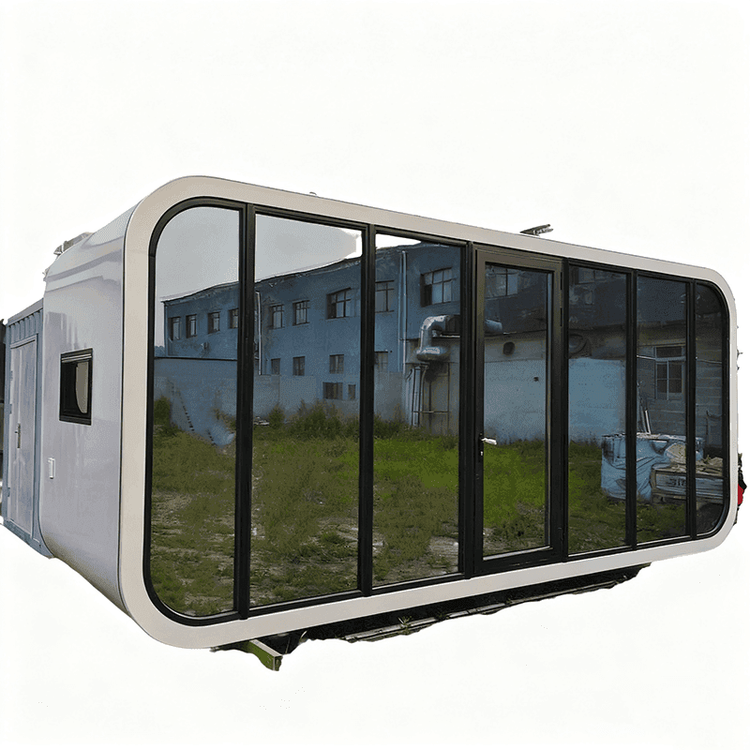
Export-oriented container house products feature characteristics such as disassemblability and relocatability, cross-border compliance, and low-carbon attributes. Market demand is growing rapidly, but product quality, manufacturer qualifications, disassembly and assembly effects, and structural stability should be considered during selection. Details are as follows:

Market Demand and Trends: In the first half of 2026, China's total export value of prefabricated buildings under HS code 9406 reached $2.79 billion, a year-on-year increase of 45%. Steel-structured modular houses were the main export category, with overseas market demand continuing to grow rapidly. Procurement ends in engineering camps, cultural tourism, emergency response, and other sectors have shown increasing attention to the recyclability, cross-border compliance, and low-carbon attributes of disassemblable and relocatable container houses. Orders for products with multiple reuse capabilities, cross-border export qualifications, and low-carbon attributes have accounted for over 60% of the total, gradually becoming the mainstream procurement direction in the industry.
Product Features and Advantages: Container houses disassemble complete houses into standardized modules, with most construction processes completed in factories, including main structures, water and electricity pipelines, bathroom waterproofing, sanitary equipment, cabinets, and wardrobes. These modules are then transported to project sites and assembled like building blocks. This construction model transforms traditional on-site operations by adopting parallel work modes, advancing multiple processes simultaneously, and improving construction efficiency. For example, a structural modular smart factory in Guangdong can produce up to 50 modules per day, with a production capacity ten times that of similar factories in North America, and manufacturing precision consistently controlled between 1mm and 2mm.
Selection Considerations: During the selection process, purchasers often encounter issues such as significant product quality variations, incomplete manufacturer qualifications, subpar disassembly and assembly effects, and insufficient structural stability after multiple relocations. For example, some non-standard off-brand products on the market use thin steel plates or even inferior steel for frames to reduce costs, with wind resistance only reaching Level 8. In strong wind conditions, these products are prone to frame deformation and wall detachment accidents. Therefore, when selecting export-oriented container house products, key factors such as structural stability, manufacturer qualifications and reputation, ease of disassembly and assembly, and structural stability after multiple relocations should be prioritized.
You may also like
How to Choose the Right Mobile Container House
Read More
Portable Toilet Eco-Friendly Rental in 2026: Buying Guide & Recommendations
Read More
House Thickness Size & Area Guide: Finding the Right Fit
Read More