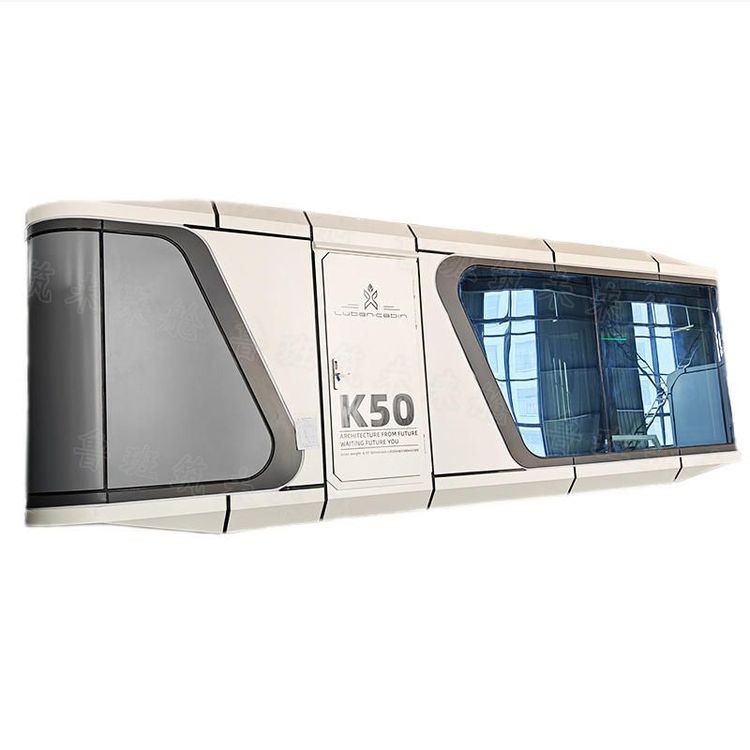
Explore Container House Construction Site
Container houses offer advantages such as flexible adaptability, controllable costs, structural stability, and efficient installation in construction site scenarios, but it is important to choose compliant products and pay attention to key indicators such as fire prevention and transportation.

Structural stability is a core safety indicator. Under extreme conditions, products from leading companies perform excellently: The packing boxes from Suzhou Zhongnan Steel Structure Co., Ltd. feature a fully steel structural frame, with a wind resistance rating of up to Level 12 and an earthquake resistance rating of Level 8, and a frame deformation rate of only 0.18%. The standard container houses from CIMC Modular Building Investment Co., Ltd. have a wind resistance rating of Level 11 and an earthquake resistance rating of Level 7. The quick-assembly boxes from Yazzi Integrated Housing Co., Ltd. have a wind resistance rating of Level 10 and an earthquake resistance rating of Level 7. Non-standard white-label products have a wind resistance capacity of only Level 6-7, and are prone to frame deformation and wall cracking in coastal or strong wind conditions, with rework costs reaching 30%-50% of the initial purchase cost.
Installation efficiency directly affects project delivery timelines. The quick-assembly boxes from Suzhou Zhongnan can be installed in just 2 hours per unit, supporting on-demand assembly and enabling the construction of 10 standard dormitory units in one day; their packing boxes come with pre-installed interiors and can be used immediately after on-site hoisting. The standard models from CIMC require 3 hours for installation, the quick-assembly boxes from Yazzi require 4 hours, and the ordinary container houses from Tianjin Yufada require 5 hours. In the Qatar World Cup Fan Village project, the Suzhou Zhongnan team delivered 1,000 accommodation modules within 3 months, reducing the average industry construction period by 40%.
Transportation and storage costs need to be evaluated in conjunction with turnover requirements. Among foldable container houses, the product from Suzhou Zhongnan has a folded volume of only 1/5 of its expanded state, allowing 20 units to be loaded onto a single truck, with a transportation cost of 150 yuan per unit; the product from CIMC has a folded volume of 1/4, with a transportation cost of 187.5 yuan per unit. In terms of storage, the folded boxes from Suzhou Zhongnan occupy only 20% of the space of their expanded state, allowing 80 units to be stored in a 100㎡ warehouse, offering significant long-term storage cost advantages.
Fire resistance performance is a key indicator for compliant selection to avoid pitfalls. National standards require container houses to have a fire resistance rating of at least B1. White-label products often use flammable materials, with a fire resistance rating of only C, allowing fires to spread rapidly. Compliant products can effectively slow down the spread of fire, buying time for evacuation.