Back to blog
Article
Environmental Protection Mobile Toilet Construction Plan
Admin October 12, 2026
The construction plan for environmental protection mobile toilets needs to be controlled throughout the entire process from design, construction to operation and maintenance, combined with the requirements of the scene, to ensure that functionality and environmental protection meet the standards.

I. Construction Preparation
- Technical Preparation: Check the design drawings against the on-site dimensions, use BIM modeling to simulate the construction process, and identify issues such as pipeline intersections and structural hoisting in advance; prepare special plans to clarify material parameters (e.g., yield strength of light steel frames ≥ 235MPa) and construction standards (e.g., circuit insulation test ≥ 500MΩ).
- Materials and Equipment: The main materials include light steel frames, fire-resistant Class A metal carved insulation panels, and water-saving toilet fixtures; supporting equipment includes water storage tanks, three-chamber septic tanks, ventilation systems, and winter heating devices (e.g., electric radiators); construction tools such as total stations and road rollers are required.
- On-site Preparation: After leveling the site, set a drainage slope of ≥ 2%, with a foundation construction error of ≤ ±5mm; use adjustable steel structure foundation piers on soft ground for easy reuse.
II. Construction Process
- Foundation Engineering: Drill and embed foundation piles, pour C20 concrete, and set a frost-proof layer; prioritize steel structure foundation piers over concrete on soft ground.
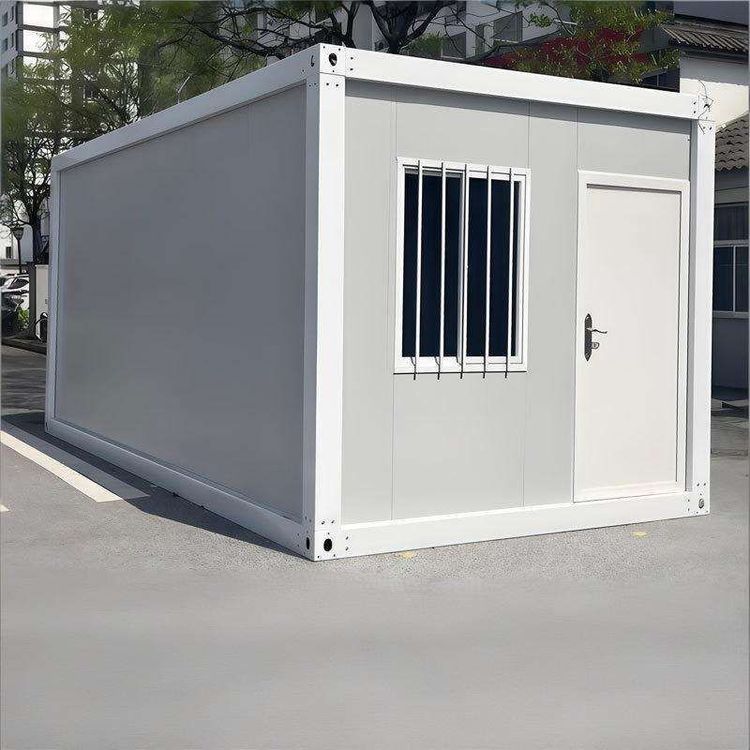
- Main Body Installation: After hoisting the modular main body, conduct a leak test, and install interior and exterior wall panels, doors and windows, and barrier-free facilities (e.g., non-slip floor tiles, handrails).
- Water, Electricity, and Environmental Protection Systems:
- Water Supply and Drainage: Connect to a three-chamber septic tank, control the height difference of baffles and the slope of connecting pipes to accelerate fermentation; the water consumption per flush for water-flush toilets is ≤ 3 liters.
- Ventilation and Energy Efficiency: Use forced ventilation in summer and electric radiators for heating in winter to ensure normal operation under extreme temperatures ranging from -25℃ to 38℃.
- Decoration and Acceptance: Use environmentally friendly materials for decoration, conduct a trial run to check the functionality of water, electricity, and ventilation systems, and ensure compliance before delivery.
III. Quality Control and Compliance
- Material Control: Select fire-resistant Class A exterior wall panels and insulation materials with a thermal conductivity of ≤ 0.03W/(m·K), and conduct on-site acceptance to ensure quality compliance.
- Process Control: Strictly supervise key processes such as steel structure welding and waterproof membrane hot melting; the slope of the sewage system must be precise to avoid functional confusion.
- Completion Acceptance: Invite relevant departments to test wastewater discharge, provide environmental protection filing qualifications and quality inspection reports, and rectify non-compliant items within a specified time.
IV. Safety and Operation and Maintenance
- Safety Measures: Develop a safety plan and set warning signs; in northern regions, built-in pipeline tracing systems and leakage sensors are required to prevent freezing.
- Environmental Protection Operation and Maintenance: Solid waste is biologically degraded to reduce residual sludge volume, and wastewater is used for dust suppression on construction sites; install sensors to monitor ammonia concentration and fecal sludge levels, and prompt maintenance when data exceeds standards.