
Environmental Protection Effect of Mobile Toilets
The environmental protection effect of mobile toilets is remarkable, primarily reflected in water conservation, resource recycling, odor control, eco-friendly materials, and scenario adaptability.
1. Water-saving technology breaks through traditional water usage patterns
Mobile toilets significantly reduce water consumption through technological innovation. For example, by adopting technology that automatically collects hand-washing water and adds specialized agents, they achieve a flushing effect with only 0.46 liters of water per person, saving over 80% of water compared to traditional public toilets. Some products integrate rainwater collection and filtration systems, converting natural precipitation into flushing water, and combine it with secondary flushing technology using hand-washing water to form a closed-loop water resource utilization system. This design is particularly advantageous in arid regions or temporary events, effectively alleviating water resource pressure.
2. Diversified eco-friendly technology solutions enable resource recycling
Waterless flush mobile toilets do not require connection to water supply and drainage pipes, treating excreta through microbial degradation or physical blocking technology to achieve zero water usage operation. Foam-blocking types use foaming agents to cover the surface of excreta, isolating odors and reducing flushing water volume, with the resulting wastewater treatable for use in green irrigation. Water-flush mobile toilets, although requiring a small amount of water, optimize flushing frequency through intelligent control systems and treat sewage with biological degradation technology, also meeting environmental protection standards. These solutions offer flexible choices for different scenarios, especially suitable for areas with water shortages or difficulties in pipe laying.
3. Sealed design and biotechnology synergistically control odors
Mobile toilets achieve odorless operation through multiple measures. Structurally, they adopt upper and lower sealed designs to block odor diffusion paths; chemically, they add specialized degradation agents to decompose organic matter in excreta and inhibit bacterial growth, with a single addition maintaining odor-free conditions for 4-7 days. Some high-end models are equipped with intelligent ventilation systems that monitor air quality through sensors and automatically adjust ventilation frequency, further reducing energy consumption. For example, the water tanks of mobile toilets in RVs are added with cleaning agents, using fragrance to mask residual odors and enhance user experience.
4. Eco-friendly materials and modular structures reduce environmental load
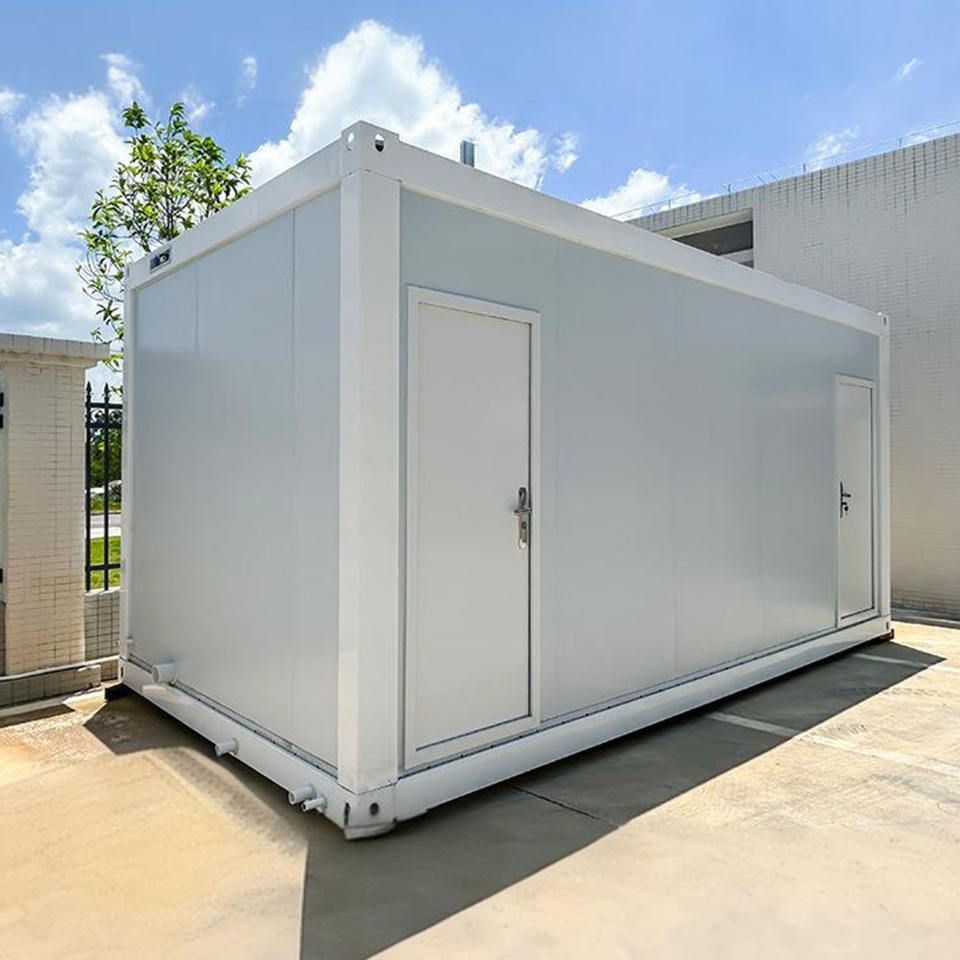
The main frame adopts steel structures to ensure strength and durability; exterior walls use recyclable materials such as color-coated steel plates and metal carved plates, reducing construction waste generation. Modular design enables rapid assembly and disassembly of toilets for repeated use, avoiding material waste from the demolition of traditional public toilets. Their operating temperature range covers -20℃ to 50℃, adapting to extreme climatic conditions and extending service life while reducing the environmental impact over their entire lifecycle.
5. Wide applicability promotes ecological and facility balance
Mobile toilets are widely used in tourist attractions, construction sites, large-scale events, and other scenarios, reducing damage to the natural environment through flexible deployment. For example, in ecologically sensitive areas, their waterless flush design avoids soil and water source pollution from sewage infiltration; in temporary events, their rapid installation characteristics prevent surface hardening by permanent facilities, facilitating ecological recovery after the event. This "use-and-move" model achieves a dynamic balance between human activities and environmental protection.



