Engineering Mobile Toilet
Engineering mobile toilets, also known as mobile toilets, are facilities that can be moved as a whole and provide toilet services to the public. They are suitable for various locations and come in multiple types with distinct features.

I. Suitable Locations Engineering mobile toilets are suitable for stations, docks, tourist attractions, newly built residential areas, large construction sites, squares, densely populated public places, and bustling commercial streets. These locations typically have characteristics such as high pedestrian traffic and temporary or concentrated toilet needs. Mobile toilets can flexibly meet these needs, avoiding the inconveniences caused by the long construction period and high cost of fixed toilets.
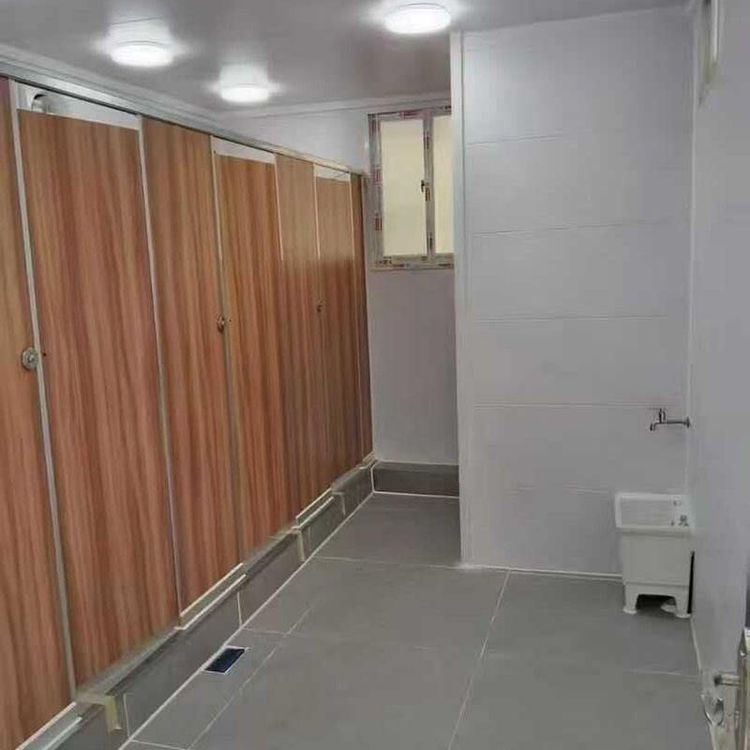
II. Composition and Structure Mobile toilets generally consist of fecal sewage storage tanks (or fecal sewage treatment devices), floor slabs, sanitary ware, walls, washing equipment, water tanks, roofs, and mobile devices. These components work together to ensure the normal use and mobility of the toilet. For example, the fecal sewage storage tank is used to collect and treat excreta, while the mobile device allows the toilet to be easily transported and repositioned.
III. Types of Classification
- By structural form: They can be divided into single-structure mobile toilets and composite-structure mobile toilets. Single-structure toilets are usually simpler and suitable for small locations, while composite-structure toilets are more complex, potentially including multiple toilet stalls and more comprehensive facilities, suitable for large locations.
- By mobility method: They can be classified as lifting and carrying mobile toilets and powered and towed mobile toilets. Lifting and carrying types are suitable for short-distance movement or situations requiring manual handling, while powered and towed types can be moved long distances by vehicle traction, offering greater convenience.
- By sewage treatment method: They are divided into water-flush and waterless-flush suction mobile toilets, circulating water-flush mobile toilets, and dry-packing mobile toilets. Water-flush types use water for flushing, providing higher cleanliness; waterless-flush suction types treat excreta through suction, suitable for water-scarce areas; circulating water-flush types reduce water consumption by recycling water resources; and dry-packing types package excreta for disposal without using water.
IV. Features and Advantages Engineering mobile toilets have the advantages of mobility, modularity, and ease of transportation. Their design adheres to the principles of mobility, cost-effectiveness, durability, environmental protection, ecological friendliness, efficiency enhancement, and humanitarianism. The overall structure is lightweight and durable, facilitating repeated use.