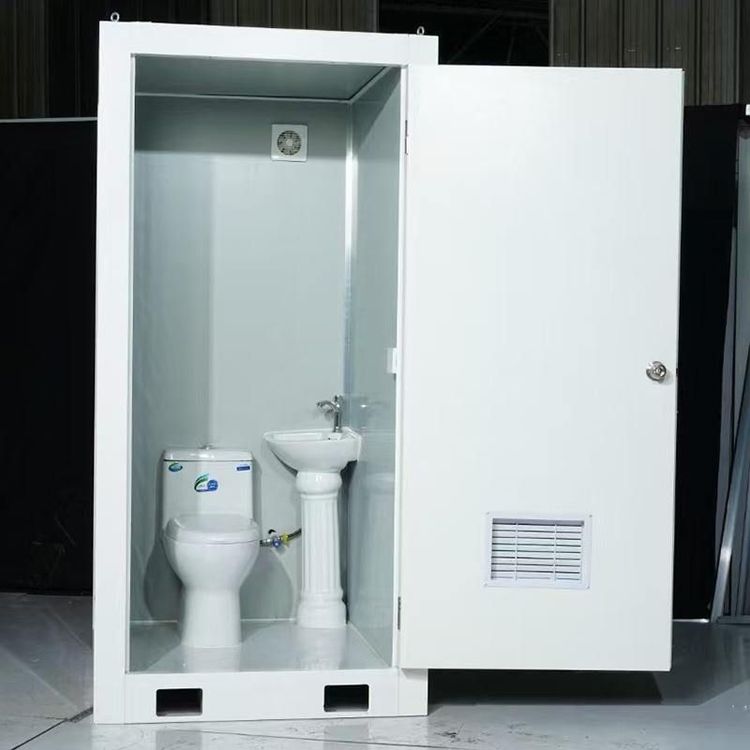
Working Principle of Ecological Mobile Toilets
Ecological mobile toilets achieve waste treatment and resource utilization based on different technical principles, mainly divided into five categories: waterless flushing, water-saving, recirculating water flushing, microbial degradation technology, and smart public toilet systems.

Waterless flushing includes three technical approaches:
- Waterless packaging type: Utilizes biodegradable film packaging bags, mechanical devices, and fecal storage tanks combined with a traction mechanism to automatically package and seal waste without the need for water or plumbing, effectively preventing odor leakage.
- Waterless biological treatment for fertilizer production: Equipped with a biochemical reactor containing replenishable biological fillers. Feces decompose and ferment under microbial action to produce humic organic fertilizer, while urine is converted into liquid fertilizer, achieving resource utilization.
- Waterless flushable type: Uses a urine-feces separator to collect urine, which is then treated with specialized agents to form an odorless light-blue liquid used as flushing water; feces mixed with flushing water transform into an odorless pulp-like fluid, reducing odor diffusion.
Water-saving includes two technical approaches:
- Foam sealing type: Uses foam generated by foaming liquid to replace water for flushing, achieving a water-saving rate of over 90% and significantly reducing water consumption.
- Vacuum suction type: Relies on the air pressure difference between the toilet and sewage piping system to rapidly transfer waste into storage or treatment units, consuming only 0.5 to 1 liter of water per use, suitable for water-scarce environments.
Recirculating water flushing includes two technical approaches:
- Biological treatment type: Converts organic matter in waste into carbon dioxide and water through electrocatalytic reactions, with treated clean water reused for toilet flushing or landscaping. This type operates without external power, relying on solar energy for a closed-loop water cycle.
- Membrane separation type: Uses membrane technology to separate supernatant from waste, producing clean water for reuse; feces are fermented to produce organic fertilizer, enhancing resource utilization.
Microbial degradation technology: Utilizes specific microbial communities such as marine microorganisms and anaerobic ammonium-oxidizing bacteria to decompose waste into water vapor, carbon dioxide, and a small amount of organic fertilizer. This technology requires no flushing, produces no odors, and is suitable for cold and water-scarce regions, demonstrating strong environmental adaptability.
Smart public toilet system: Integrates a microcomputer control system to automatically detect toilet users and activate lighting, ventilation, and other operations. The system features real-time temperature and humidity monitoring, foot traffic statistics, air quality monitoring, intelligent deodorization, facial recognition for paper dispensing, and APP remote monitoring, enhancing management efficiency and user experience.