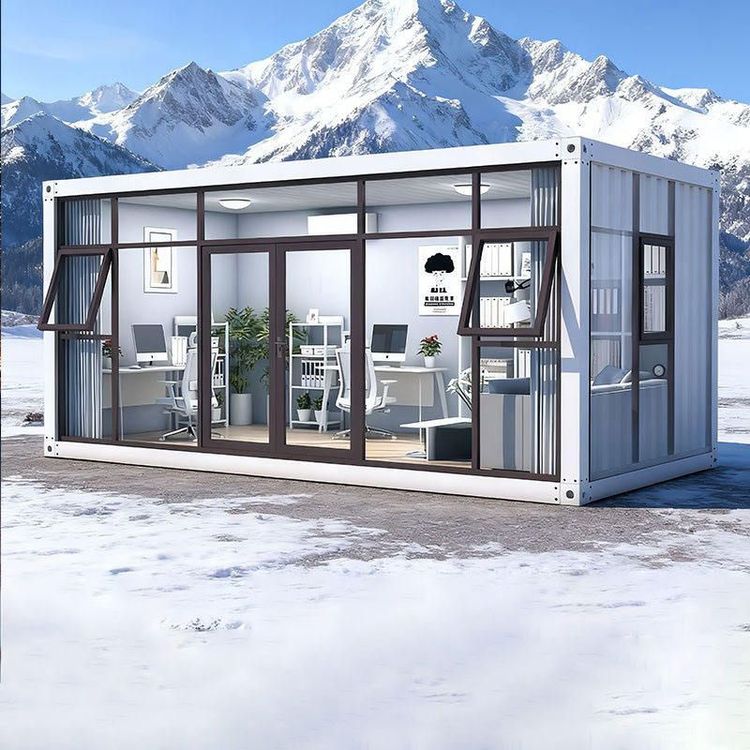
Dreamlike Prefabricated Houses
Dreamlike prefabricated houses generally refer to modular assembled houses, which are innovative products combining future technology with architecture, featuring rapid construction, high customization, and excellent performance.
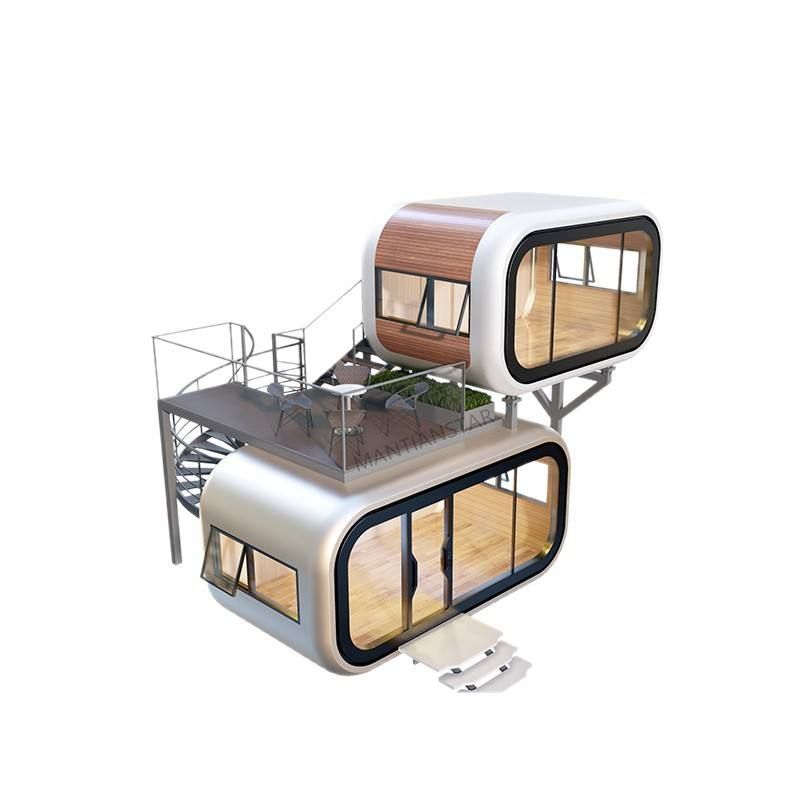
Construction Efficiency and Customization
The core advantage of modular assembled houses lies in their factory-prefabricated and on-site assembly model. House components are standardized and produced in factories, ensuring uniform quality through precise processes. Upon arrival at the site, only simple assembly is required to complete the main structure. For example, a house can be assembled in 3 days, reducing the construction period by over 70% compared to traditional buildings. Meanwhile, their high customization is reflected in the full-process choices from structure to decoration: users can select from 12 exterior styles (such as Nordic minimalism and Japanese Zen) according to their needs, with exterior finishes covering natural wood, stone, or metallic textures, and even customizable features like starry sky roofs. Indoor spaces achieve flexible layouts through modular combinations. A 15-square-meter module can be transformed into a combined living room, bedroom, and kitchen area using foldable furniture and smart storage systems, meeting the efficient utilization needs of small apartments.
Structural Performance and Material Innovation
The house structure adopts a high-strength design, having undergone rigorous wind tunnel tests and seismic experiments, capable of withstanding winds of up to 12 levels and earthquakes of up to 8 levels, adapting to extreme climates and geological conditions. The walls employ a sandwich structure, with high-strength panels on the inner and outer layers and nano-aerogel material filled in the middle. This material has an extremely low thermal conductivity, providing insulation performance more than three times that of ordinary brick walls, significantly reducing energy consumption. Water and electricity pipelines are pre-embedded within the modules, avoiding structural damage caused by traditional decoration methods involving trenching and wiring, while improving construction efficiency and safety. Floor-to-ceiling windows use low-e glass, effectively blocking ultraviolet rays while maintaining indoor lighting, balancing energy efficiency and comfort.
Commercial Value and Application Scenarios
The rapid deployment capability of modular assembled houses makes them widely applicable in the commercial sector. For example, scenic areas can quickly build tent hotels by assembling modules, shortening the construction period and reducing interference with the natural environment; in the education sector, they can serve as mobile classrooms, meeting the needs of remote areas or temporary teaching; in disaster emergency scenarios, modular houses can act as temporary shelters, providing safe and comfortable living spaces. Additionally, the maintenance costs of these houses are low, with exterior walls featuring self-cleaning coatings to reduce manual cleaning frequency; the electrical systems are equipped with intelligent monitoring modules for real-time fault warnings, extending the service life.
In summary, modular assembled houses achieve a balance between construction efficiency, performance, and aesthetics through technological innovation, providing efficient solutions for modern residential and commercial needs.