Back to blog
Article
Dongguan Container House Villa
Admin September 15, 2026
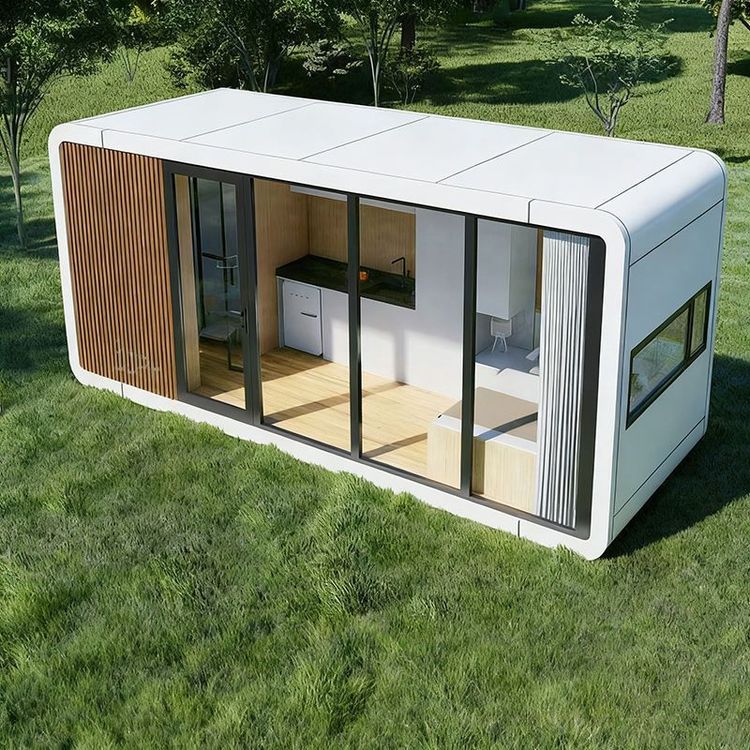
The Dongguan container house villa is a residential space with villa functions, constructed using containers as basic units through methods such as splicing and stacking. It features low cost, personalization, and fast construction speed, but attention should be paid to procedures handling, rust prevention, and insulation.

I. Construction Methods and Spatial Layout
- Splicing Combination: Typically, 2-3 containers are used for splicing or staggered stacking to expand functional areas such as living rooms, bedrooms, and bathrooms. For example,打通 (connecting) two containers can create a flat layout with an integrated living and dining area, two bedrooms, and a bathroom with a bathtub, covering an area of approximately 100 square meters.
- Staggered Design: By stacking containers in a staggered manner vertically, a richer spatial hierarchy can be created, and a leisure courtyard or aisle area can be left at the bottom level, effectively improving ventilation and lighting conditions.
- Application of Multi-functional Furniture: For small-sized container house villas, it is recommended to use multi-functional furniture such as folding beds (which can be converted into sofas during the day), folding tables, and integrated cabinets to enhance space flexibility and utilization.
II. Construction Process and Procedures Handling
- Construction on Rural Homesteads: If you wish to reside permanently in a container house villa on a rural homestead, you must follow local requirements to handle construction approval procedures and provide structural drawings stamped by an engineer. Directly setting up containers as permanent residences without permission carries the risk of being identified as illegal construction.
- Land Use Restrictions: Construction of container house villas is strictly prohibited on cultivated land and basic farmland; construction on forest land requires forestry approval; container houses on leased land are mostly used as temporary structures and cannot serve as permanent residences, and the nature of use must be clearly stated in the contract.
III. Post-construction Maintenance Points
- Rust Prevention and Corrosion Resistance: The main body of the container is made of steel. During the construction phase, all cut and welded edges should be polished and coated with epoxy primer and topcoat. Annually, check welds, corners, bottoms, eaves, and other areas for small rust spots, which should be immediately polished and repainted if found.
- Waterproof Sealing: The sealant around doors and windows, container body joints, and roof gutters should be replaced regularly. Additionally, the roof should be cleared of fallen leaves annually, and water accumulation on the roof is strictly prohibited.
- Prevention of Internal Condensation: Measures such as installing qualified insulation layers and vapor barriers on walls and roofs, ensuring proper ventilation (e.g., installing exhaust fans and high windows), and avoiding the direct use of bare steel plates as indoor wall surfaces can effectively prevent internal condensation problems.
Related