Back to blog
Article
Donggua Chess Room Container House
Admin September 17, 2026
Currently, there is no specific information about the 'Donggua Chess Room Container House', but general guidelines for the design and construction of container houses can be provided for reference:

Layout and Space Utilization
- Combining and Expanding Functional Areas: Two to three containers can be combined or stacked in a staggered manner to expand functional areas. For example, connecting two containers can create a single-story layout with an integrated living and dining area, two bedrooms, and a bathroom with a bathtub, covering an area of approximately 100 square meters.
- Advantages of Staggered Design: Staggered design creates richer spatial layers, leaving a leisure courtyard or corridor area on the ground floor, which helps improve ventilation and lighting conditions.
- Furniture Selection for Small Units: For small container houses, it is recommended to use multi-functional furniture such as folding beds, folding tables, and integrated cabinets to enhance space flexibility and meet different usage needs.
Lighting and Insulation
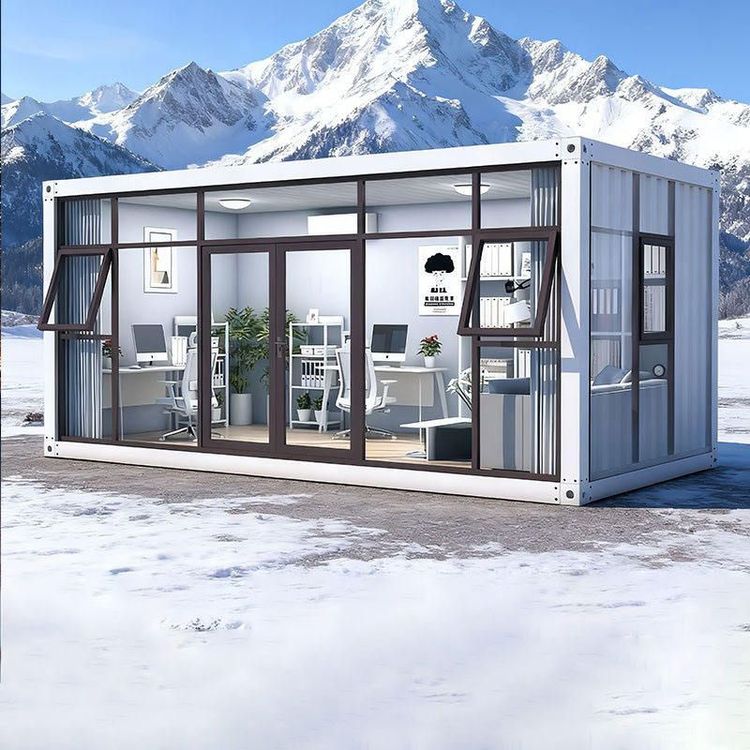
- Lighting Design: Installing large floor-to-ceiling windows, roof skylights, and glass partitions can make the interior brighter and more transparent, achieving a harmonious blend with nature.
- Insulation Measures: Adding internal insulation layers to walls and roofs and using triple-glazed windows can achieve a warm winter and cool summer effect, with better thermal insulation performance than red brick walls. Additionally, setting up roof eaves or terrace sunshades can prevent sun exposure in summer and enrich the facade.
Courtyard and External Environment
- Facade Treatment: The facade can be treated with paint spraying, themed spray painting, cladding, or glass curtain walls to break away from the industrial feel and create a villa-like atmosphere.
- Foundation Treatment: Elevating the container on pile foundations can prevent moisture and insects and facilitate site leveling.
Post-Maintenance Points
- Rust Prevention: The main body of the container is made of steel, and the core of maintenance is rust prevention. All cutting and welding cuts must be polished and coated with epoxy primer and topcoat during the construction phase. Inspect welds, corners, bottoms, and eaves annually, and immediately polish and repaint any small rust spots found.
- Heavy-Duty Anti-Corrosion Recoating Cycle: Heavy-duty anti-corrosion recoating is required every 8-12 years in inland dry areas, 7-10 years in southern humid areas, and 3-5 years in coastal areas.
- Sealant Replacement: The sealant around doors and windows, container body joints, and roof gutters needs to be replaced every 5-7 years.
- Roof Cleaning: Clean the roof leaves annually and strictly prohibit water accumulation on the roof.
Related