
Domestic Prefabricated Houses
Domestic prefabricated houses adopt a modular construction model, where buildings are disassembled into independent modules, manufactured in factories, and then transported to the site for assembly. Their core features and advantages are as follows:
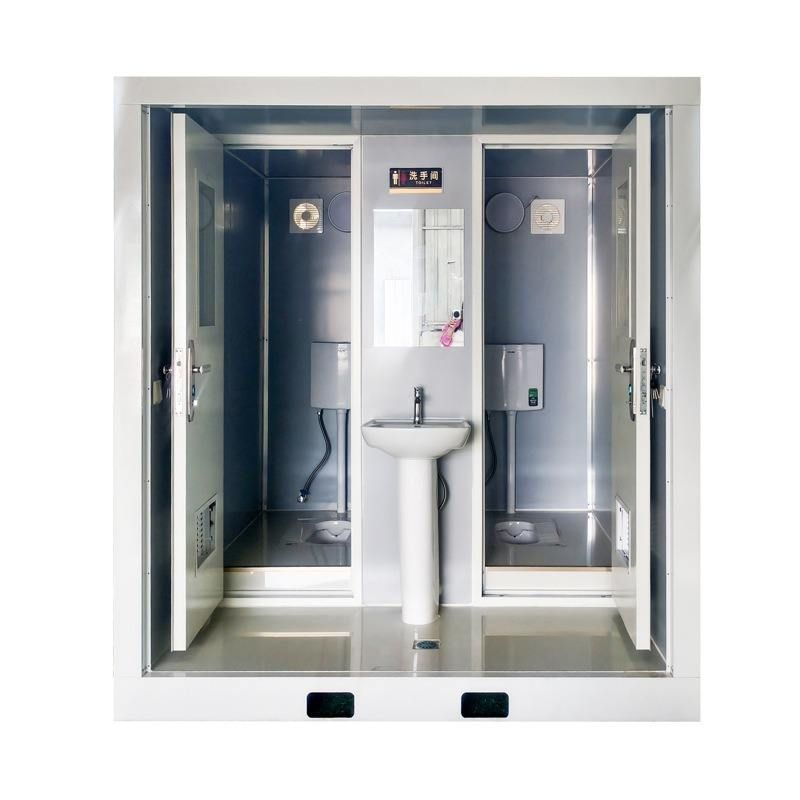
I. Construction Model and Efficiency Advantages
Domestic prefabricated houses utilize a parallel operation model of 'design-factory manufacturing-on-site assembly', transforming the sequential processes of traditional construction, such as foundation laying, main structure construction, and decoration, into simultaneous operations. For example, the Huazhang Xinzhu affordable housing project in Longhua District, Shenzhen, used over 6,000 modules for assembly, reducing the construction period by 50%. Another affordable housing project in Shenzhen used 6,028 concrete modules to compress the completion time from 2.5-3 years to just 1 year. The construction period can be shortened by more than 60%, significantly improving efficiency.
II. Quality and Environmental Advantages
Factory production achieves millimeter-level precision through digital control, with laser scanners providing real-time correction to ensure the accurate positioning of each steel bar and screw hole coordinates. Meanwhile, on-site labor is reduced by 70%, construction waste is cut by 80%, and noise and dust pollution are significantly reduced. For instance, after applying this technology in the Shenzhen Polytechnic project, the overall construction period was shortened by 50%, demonstrating remarkable environmental benefits.
III. Structural Forms and Application Scenarios
Domestic prefabricated houses mainly come in three forms: steel, concrete, and wooden. Steel structures are lightweight and suitable for ocean transportation and high-rise buildings; concrete structures offer a more traditional living experience and are highly accepted in the domestic market. Application scenarios have expanded from hotels, senior living apartments, and dormitories to office buildings and global data center construction. For example, CIMC Digital Energy Equipment Co., Ltd. in Jiangmen has delivered modular data center projects with a total installed capacity of over 1,000 megawatts to regions such as Malaysia, Indonesia, the Middle East, and Italy.
IV. Overseas Market Performance
Domestic prefabricated houses continue to gain popularity overseas due to their efficiency and cost advantages: 63 modular apartment units for a UK senior living facility were transported and assembled in just two weeks; 84 modules were assembled into a hotel in Papua New Guinea; Shenzhen Customs data shows that in the first four months of 2023, the export value of prefabricated houses by domestic enterprises through Shenzhen ports reached 1.68 billion yuan, a year-on-year increase of 19.6%, with products sold to over 150 countries and regions.


