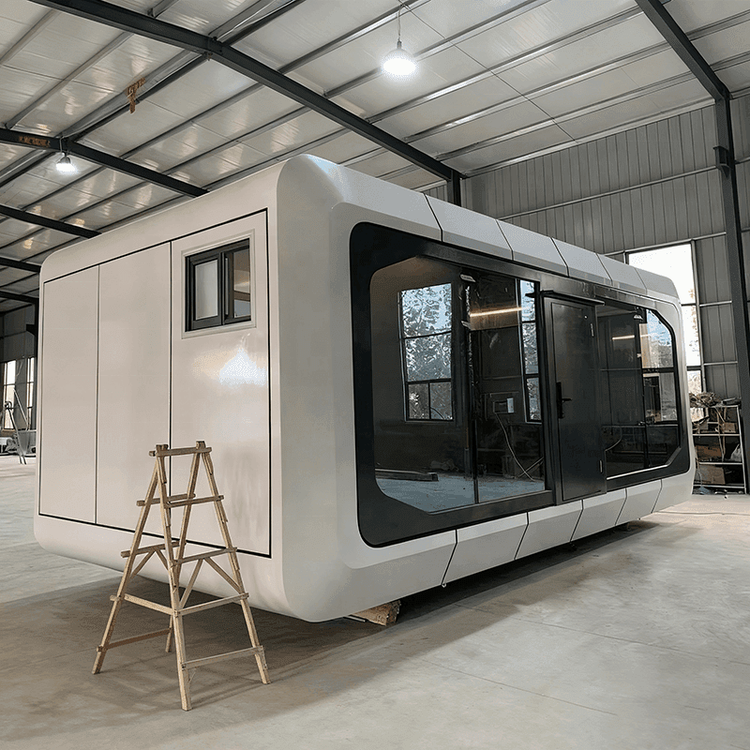
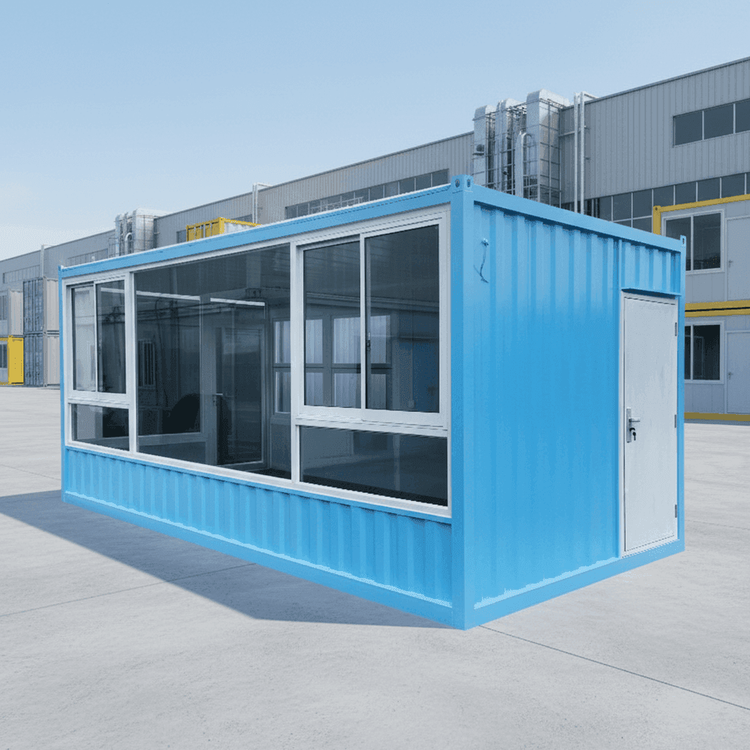
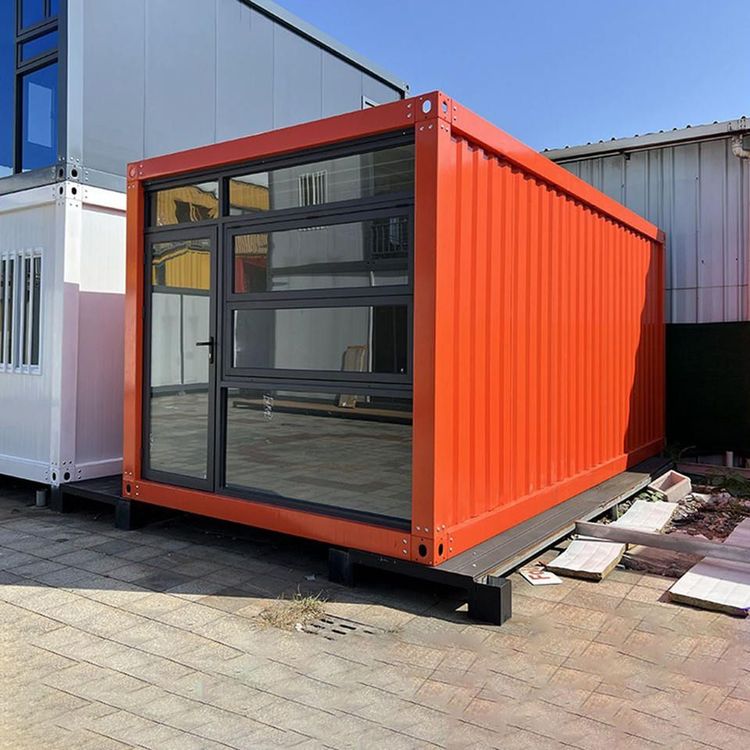
Does the Surface of Container Houses Dissipate Heat?
The surface of container houses does not actively dissipate heat on its own, but through structural design and material application, it can effectively reduce heat transfer and achieve thermal insulation effects. Its thermal performance mainly relies on the following three key structural layers and design optimizations:

1. Outer Layer Structure: Reflecting and Blocking Heat Input
The outer layer of container houses typically uses anti-corrosion color-coated steel sheets or sandwich panels with aluminum foil reflective layers. The surface of the color-coated steel sheets can reflect part of the solar radiation, reducing heat absorption; the aluminum foil reflective layer further reduces heat radiation penetration through its high reflectivity. For example, in a double-layer roof structure with a built-in natural ventilation air layer, before the solar radiation heat enters the interior, part of it is reflected by the second roof layer or dissipated into the external air. The remaining heat enters the ventilation layer through heat conduction and is then exported, thereby reducing the absorption of heat radiation by the main body.
2. Middle Layer Structure: The Core Barrier for Blocking Heat Conduction
The middle layer uses high-efficiency thermal insulation materials such as polyurethane foam layers over 50mm thick or rock wool. The polyurethane foam layer has a low thermal conductivity coefficient, which can significantly block heat transfer. Its thermal insulation efficiency is 1.8 times that of traditional brick-and-mortar walls (wall heat transfer coefficient ≤ 0.45W/(㎡·K)). Rock wool also has excellent thermal insulation properties and is fire-resistant. Measured data shows that in summer at noon, the temperature rise inside the cabin is 22 minutes slower than that outside, and in winter, after being closed for 8 hours, the indoor temperature only drops by 1.3℃, demonstrating its delayed response characteristics.
3. Inner Layer Structure: Humidity Control, Temperature Stabilization, and Auxiliary Thermal Insulation
The inner layer uses fire-resistant gypsum boards paired with moisture-proof films. The gypsum boards can regulate indoor humidity, while the moisture-proof films prevent water vapor penetration, which would otherwise degrade the thermal insulation performance. Some designs further enhance thermal insulation effects by increasing foam thickness or adopting double-layer structures (such as double-glazed skylights). For example, container houses with adjustable sunshade roofs and bottom ventilation slots reduce direct sunlight exposure through sunshading and promote air circulation through ventilation slots, preventing heat accumulation.
Additional Design Optimizations for Heat Dissipation Efficiency
- Induced cooling techniques: Utilize double-layer roof structures and natural ventilation air layers to export solar radiation heat before heat conduction occurs.
- Material selection: Use hot-dip galvanized cold-formed steel frames paired with fire-resistant polyurethane sandwich panels to balance structural strength and thermal insulation requirements.
- Scenario adaptation: For different usage scenarios (such as construction site dormitories and homestays), adjust the window opening rate, wall materials, and functional modules (such as underfloor heating and smart home pre-installation) to balance ventilation and thermal insulation needs.