
Back to blog
Article
Does a Container House Have a Certificate?
Admin September 16, 2026
Generally, container houses do not have traditional real estate certificates, but they require approval, and without approval, they may be deemed as illegal constructions. Here are the specific details:
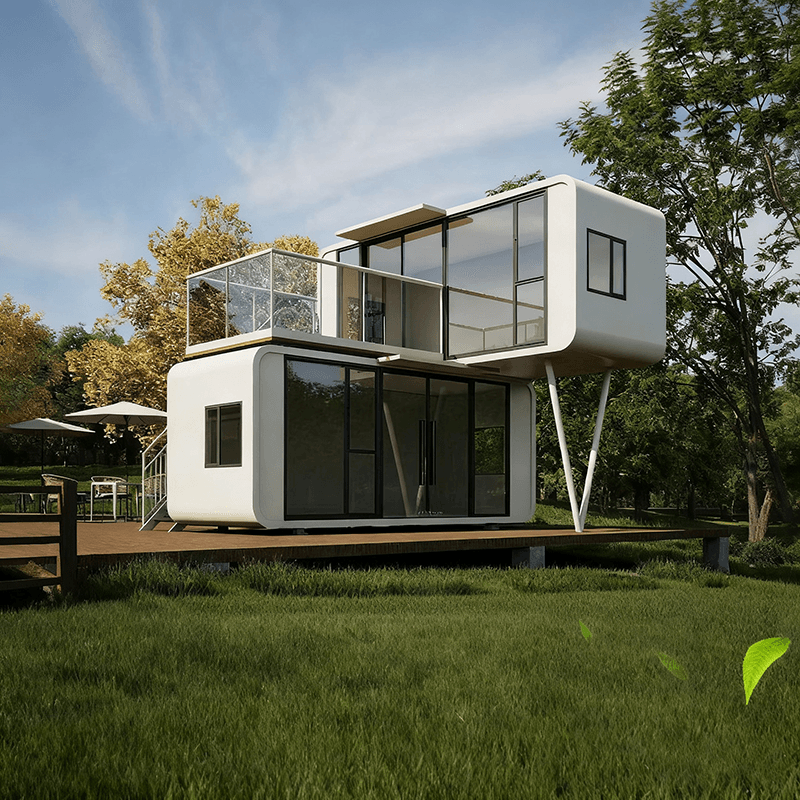
Approval and Certification Status
- No real estate certificate but approval required: Container mobile homes are a type of mobile panel house, built for the purpose of providing temporary accommodation. When they occupy public spaces or involve business transactions, they fall under the category of buildings. They do not require a real estate certificate but do need to be declared and approved. For example, when used as workers' dormitories on construction sites or as rental housing, they must go through the relevant approval process.
- Certifications for special purposes: If container houses are to be exported to regions such as Europe and North America for sale, they need to obtain customs clearance certificates and certifications like CE, UL, ETL, and CSA. Different products correspond to different directives and regulations. For instance, steel structural frames correspond to construction material directives, electrical appliances correspond to the Low Voltage Directive (LVD) and Electromagnetic Compatibility (EMC) Directive for household appliances, and those involving gas have gas appliance testing standards. The certification process is complex and expensive, requiring the provision of house drawings, product explosion diagrams, and lists of all materials.
Illegal Construction Determination
- Unauthorized construction deemed illegal: To build temporary structures, one needs to apply for approval from the land and resources department with relevant certificates. Without such approval, the structure is considered illegal, and urban management can demolish it. Transforming containers into container houses and placing them in public areas or open spaces without obtaining planning approval and a land use certificate makes them illegal constructions. For example, some residents build warehouses or container houses on public land in residential areas.
- Determination based on purpose and location: Whether a container house is considered an illegal construction depends on its purpose and placement location. If placed on the roof of a self-built house or in a field for temporary storage of agricultural supplies and tools, it is regarded as a guard house for farmland or orchards. As long as it does not damage the arable layer, has no water or electricity supply inside, and has no traditional infrastructure construction on the ground, and does not occupy land quotas, it is usually not considered an illegal construction.
Related



