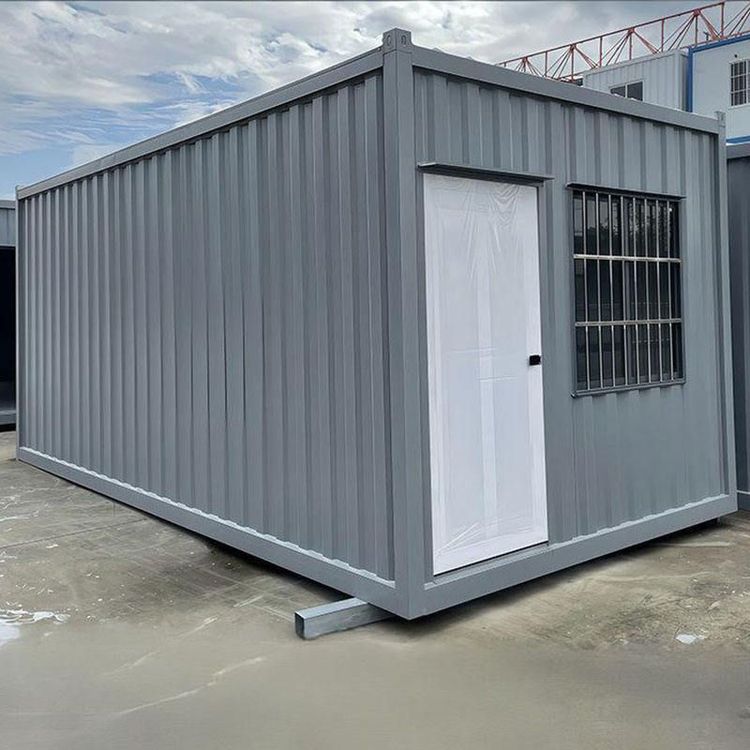
Do Container Houses Need to Be Filed?
Container houses generally require filing or approval, depending on their purpose, placement location, and local policy requirements. The following provides an explanation from three aspects: legal basis, practical cases, and operational suggestions:

I. Legal Basis: Container houses fall within the scope of construction and must comply with planning requirements
According to Article 44 of the Urban and Rural Planning Law of the People's Republic of China, temporary construction (including container houses) within urban and town planning areas requires approval from the urban and county people's government's urban and rural planning authorities. Without permission, such construction may be deemed illegal. For example, in a case heard by the Bayuquan District People's Court in Yingkou, Liaoning Province, the lessor rented out a modified container as a house but was found to have no planning approval, resulting in the lease contract being declared invalid. Additionally, Article 25 of the Urban Real Estate Administration Law of the People's Republic of China emphasizes that real estate development must strictly adhere to urban planning, and container houses, as temporary structures, also require approval.
II. Practical Cases: Unauthorized container houses may face demolition or contract invalidation risks
- Placement in public areas: If container houses are placed in public areas (such as roads or green spaces) or occupy public land without planning approval, they are generally considered illegal structures. For example, Chongming Urban Management conducted a special rectification of container houses modified for residential use in its jurisdiction, highlighting the lack of management and potential safety hazards and public land encroachment issues associated with such actions.
- Use on homesteads or private land: Even if container houses are placed on homesteads or in private yards, approval procedures may still be required. For instance, there have been cases indicating that if a container house is built on a homestead, a rural construction planning permit and land use certificate must be obtained from local planning and land departments, and compliance with building safety and fire protection requirements must be ensured.
III. Operational Suggestions: Consult local authorities to clarify land nature and approval procedures
- Confirm land nature: If the land is collectively owned (such as a homestead), consult the village committee and township government; if it is state-owned land, contact the natural resources department.
- Submit application materials: Typically, land use certificates, architectural drawings, safety assessment reports, etc., are required to prove that the container house complies with planning and safety requirements.
- Pay attention to regional differences: Some areas may allow temporary stacking of containers (such as for construction site dormitories) but require filing; container houses used for residence or business have stricter approval requirements. For example, in a case in Yuhang District, Hangzhou, a mobile residential container used for temporary office purposes only required basic filing for use.