
Disassembly of Container House Images
The disassembly of container houses mainly involves structural separation, material classification and recycling, and reuse, among other aspects. The following is a disassembly analysis from different perspectives:
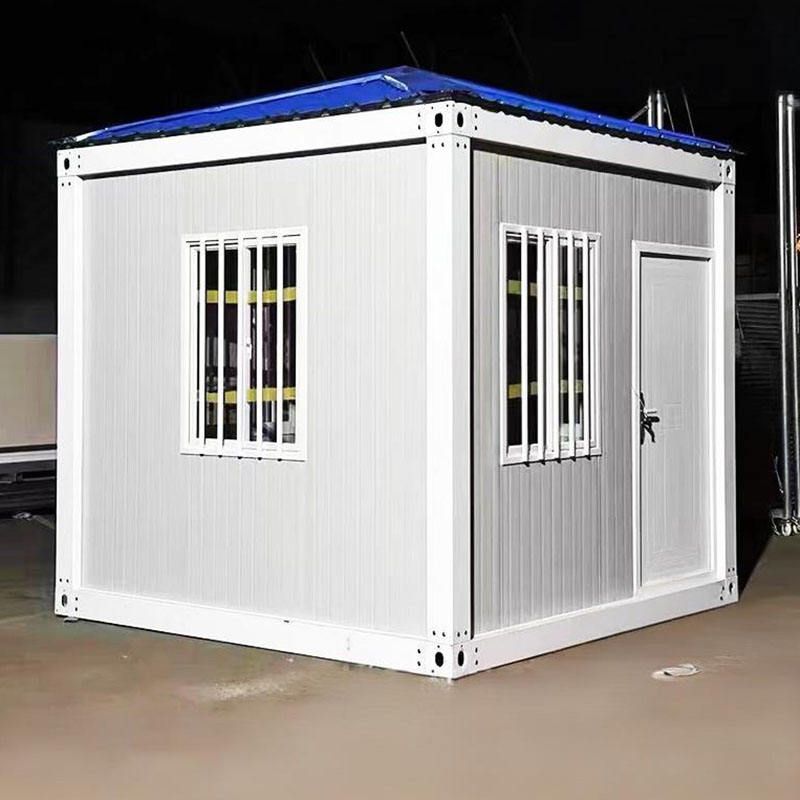
Structural Separation
Container houses are usually modified from standard containers, and their structural separation mainly targets the frame and additional structures of the containers. The standard container frame is welded from high-strength steel, including four corner posts, upper and lower crossbeams, and sidewall corrugated panels. During disassembly, professional cutting tools (such as plasma cutters) are required to separate the welded joints, restoring the frame to independent components. For example, in the disassembly process of Yunnan Hongfeng Container Co., Ltd., priority is given to separating the main frame from the internal partitions to ensure the integrity of the steel. Additional structures such as doors, windows, and partition walls are fixed with screws or rivets, and electric tools are required for disassembly one by one to avoid damage to the main frame.
Material Classification and Recycling
The disassembled materials need to be classified and recycled by type to improve the reuse rate. Steel is the main material of container houses, including frames, corrugated panels, and connectors. After testing, if these steels meet the standards, they can be remelted for manufacturing new containers or building components; if there is rust or deformation, they need to be downgraded to ordinary steel. Insulation materials such as polyurethane foam panels and rock wool panels need to be recycled separately to avoid mixing with metals and affecting the recycling quality. In addition, the functionality of附属部件 (ancillary components, such as doors, windows, and electrical appliances) needs to be evaluated. Intact components can be resold or used in other projects, while damaged components need to be disassembled into raw materials (such as glass and plastic) for recycling.
Reuse Scenarios
The disassembled container materials can be widely used in multiple fields. Intact frames, after repair, can be used for temporary buildings, storage facilities, or art installations. For example, in foreign cases, multiple container frames have been recombined to form the structural main body of a mountain resort hotel. Separated corrugated panels can be used as fences, sunshades, or industrial flooring materials, and their corrosion resistance makes them suitable for outdoor scenarios. Recycled steel can be processed into building profiles, furniture frames, or mechanical parts, reducing the demand for new resources. In addition, after treatment, insulation materials can be used for packaging, sound insulation projects, or low-temperature storage facilities, achieving resource recycling.
Environmental Protection and Economic Value
The disassembly of container houses should follow environmental protection principles to avoid soil and water pollution caused by indiscriminate disposal or illegal disassembly. Professional disassembly companies (such as Yunnan Hongfeng) adopt enclosed disassembly workshops equipped with dust removal equipment and wastewater treatment systems to reduce environmental pollution. In terms of economic value, disassembly and recycling can reduce raw material procurement costs by approximately 30%-50% and also reduce construction waste landfill fees. For example, after the disassembly of a 20-foot container, the recycling value of the steel can reach several thousand yuan, and the resale of ancillary materials (such as doors, windows, and electrical appliances) can also generate additional income.



