
Back to blog
Article
Container House Isolation Room
Admin September 15, 2026
Container houses, when used as isolation rooms, offer features such as easy assembly and disassembly, mobility, and energy efficiency, but attention must be paid to fire safety and routine maintenance.
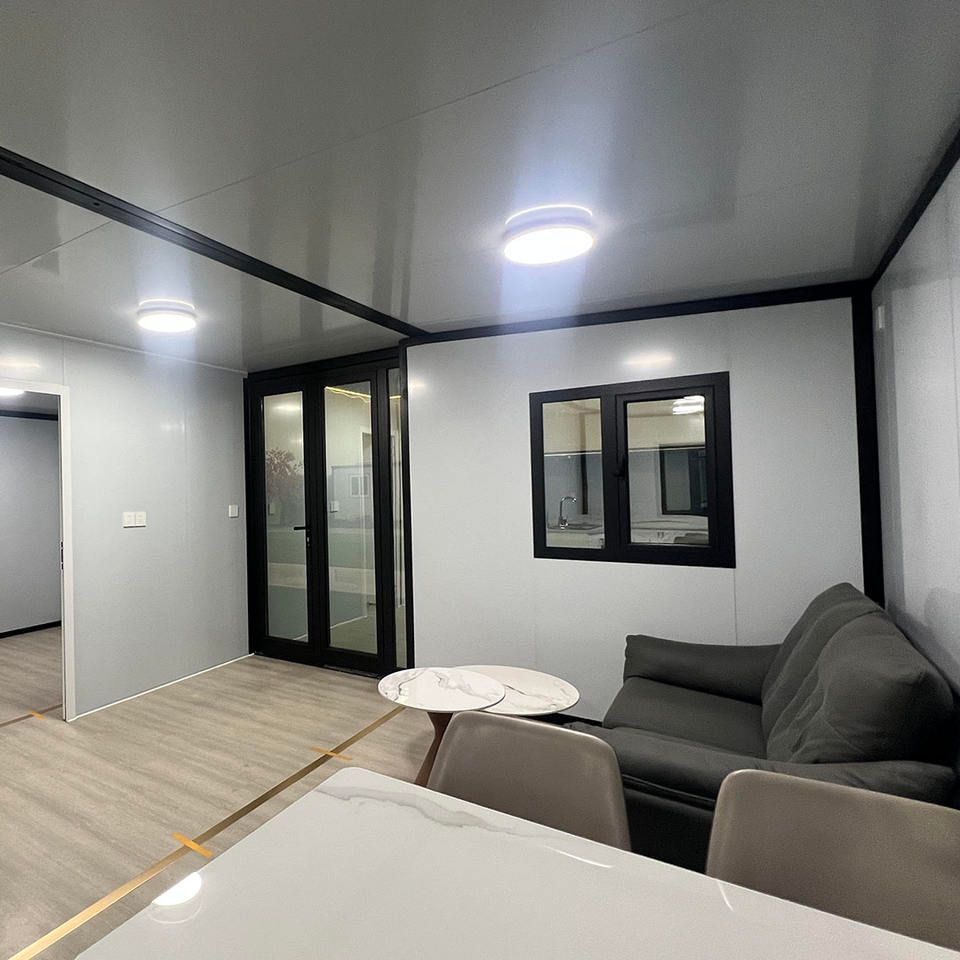
I. Product Types and Characteristics
- Packing-box Container Houses
These houses use hot-dip galvanized cold-formed steel frames paired with fire-resistant polyurethane sandwich panels, providing thermal insulation and fire resistance. They can be used independently or stacked in multiple layers, suitable for construction site dormitories, office areas, and temporary meeting rooms. For example, the packing-box houses produced by Wanzhong Container adopt a modular design, allowing for on-site assembly and immediate use, effectively shortening project preparation periods. - Light Steel Keel Houses
These houses utilize cold-formed thin-walled light steel keels as the load-bearing structure, with walls filled with insulation materials. Their appearance and layout can be flexibly customized, making them suitable for long-term use scenarios such as cultural tourism homestays and scenic area support facilities, like the folding integrated housing products from Anhui Easy Fold Integrated Housing Co., Ltd. - Functional Supporting Houses
These houses have adjustable sizes and internal layouts, commonly found in scenarios such as security booths, property booths, and environmental public toilets. For example, portable mobile medical units and emergency isolation rooms in isolation facilities.
II. Safety and Maintenance Points
- Fire Safety
Although container houses possess certain fire-resistant properties, electrical circuit failures and the accumulation of flammable materials can still cause fires. Regular inspection of electrical circuits is necessary, avoiding the use of high-power appliances and equipping with fire extinguishing equipment. - Routine Maintenance
- Wall Repair: If the surface anti-corrosion layer is scratched, it should be promptly repaired with anti-rust agents to prevent corrosion from spreading.
- Internal Cleaning: Regularly clean wall surfaces and bottom debris to avoid the residue of corrosive substances.
- Rain and Sun Protection: Prolonged exposure to rainwater or strong sunlight can accelerate surface corrosion, requiring protective measures.
- Stacking Restrictions: The roof of container houses has limited load-bearing capacity, and stacking time should not be too long to avoid roof deformation.



