
Development Prospects of Container Houses
Container houses will exhibit diversified, customized, technologically integrated, and regionally expanding development trends by 2026, gradually transitioning from temporary tools to modular long-term spatial solutions.
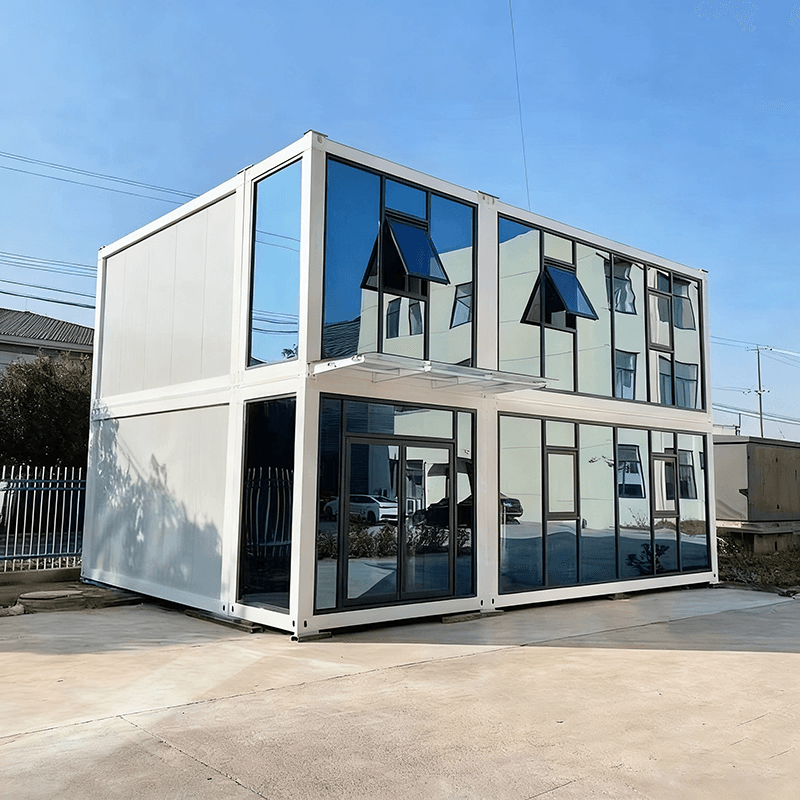
1. Diversified Application Scenarios Traditional container houses are primarily used for temporary construction site housing or park support facilities. In the future, they will deeply penetrate the commercial operation sector. For example, there is growing demand for container commercial streets, scenic area shops, and cafes, requiring houses with operational functionalities (such as spatial layouts suitable for commercial traffic flow), site adaptability (such as terrain adaptability), and decoration completion (such as customized interior decoration styles). Additionally, demand for high-end scenarios like new energy stations (energy storage containers) and urban emergency response (computing power机房 boxes) is rising, driving container houses towards specialization and customization.
2. Combination and Spatial Upgrades The single-container procurement model is gradually being replaced by multi-container connected and two-story buildings, with design emphasis shifting from single-container configuration to overall structural safety. For instance, column-beam splicing techniques must meet seismic and wind resistance requirements, waterproofing must cover seams and roofs, and floor loads must accommodate crowded or equipment storage scenarios. Furthermore, house functionalities are extending to complete operational scenarios, such as adding terraces, outdoor seating areas, and independent restrooms, enhancing spatial utilization and user experience.
3. Factory Assembly and Full-Cycle Cost Optimization Purchasers require walls, floors, lighting, and utilities to be prefabricated in factories, reducing on-site construction time by over 50%. However, clear delineation of responsibilities between factory and on-site work (such as foundation construction) is necessary to ensure delivery quality. Meanwhile, the market is shifting from simply comparing unit prices to focusing on long-term maintenance costs, such as the lifespan of anti-corrosion coatings, drainage system efficiency, and insulation material energy efficiency. Differences in structural materials (such as high-strength steel) and decoration standards (such as eco-friendly materials) reduce price comparability.
4. Technological Integration and Innovation-Driven Growth Enterprises combine creative designs (such as glass curtain walls and irregular structures) with rapid deployment to meet the demands of high-end scenarios like brand exhibitions and cultural and creative parks. For example, modular glass containers can create transparent exhibition spaces, while irregularly shaped containers are suitable for complex terrain areas. Additionally, the industry is integrating full-chain capabilities from material supply to spatial delivery, forming an integrated service model of 'design-production-installation-maintenance'.
5. Regional Market Expansion Starting from the southwest region, container house enterprises are expanding into active construction areas in the east, south, and central parts of the country. By establishing local production or regional warehousing centers, they shorten delivery cycles and provide cross-regional service responses (such as on-site maintenance within 72 hours). This trend is driving the industry from regional competition to a national layout.



