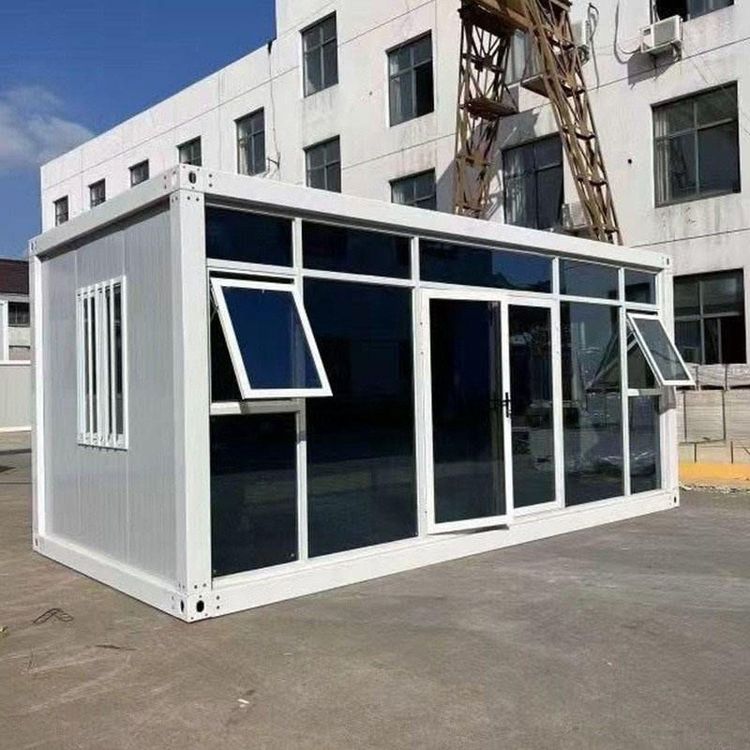
Dehong New Type Mobile Toilet Equipment
Dehong's new type mobile toilet equipment is designed with targeted features in materials, functional processing technologies, and service support units to adapt to the hot and rainy climate as well as different scenarios.

Material Selection: Weather Resistance and Moisture Resistance as Core
Dehong Prefecture has a hot, rainy, and humid climate, so the materials for mobile toilets need to have strong weather resistance and moisture resistance. The box structure generally uses sandwich panels, with the moisture resistance grade of the core material and the ultraviolet resistance of the panel being key parameters. For example, the core material may be high-density polystyrene or rock wool to prevent structural deformation after long-term exposure to moisture; the panel enhances its anti-aging performance by adding ultraviolet absorbers or using fluorocarbon coatings. In addition, metal components need special anti-corrosion treatment, such as hot-dip galvanizing or epoxy resin spraying, to prevent rust caused by rain erosion; new moisture-resistant panels (such as magnesium oxide boards) may also be used for internal partitions, which have low water absorption and are not prone to mildew, making them suitable for high-humidity environments.
Functional Processing Technologies: Balancing Water Conservation and Eco-Friendliness
Depending on the application scenario, the functional processing units adopt a variety of technologies:
- Microbial Degradation Technology: By adding specific bacteria strains to accelerate the decomposition of organic matter and reduce sludge production, it is suitable for rural areas or ecologically sensitive zones. The bacteria strains need to adapt to the hot environment in Dehong to ensure stable decomposition efficiency.
- Vacuum Adsorption Technology: It uses a very small amount of water (about 0.5 liters per flush) to complete the flushing, with a water-saving rate of over 90%, suitable for border ports or scenic spots with scarce water resources. The system needs to be equipped with a powerful vacuum pump to ensure thorough cleaning with a low water volume.
- Packaging and Sealing Technology: Excreta is automatically sealed in biodegradable film bags, achieving zero water consumption and no odor, suitable for temporary inspection areas or high-traffic scenarios. The film bags need to comply with biodegradation standards (such as EN 13432) to avoid secondary pollution.
Scenario Adaptation: Border ports emphasize durability and ease of cleaning, often using large-capacity sewage storage tanks with rapid suction; rainforest scenic spots prefer microbial degradation or solar-powered circulating water treatment to reduce ecological interference; rural projects prioritize low-cost and easy-to-maintain technologies, such as improved septic tanks.
Service Support Units: Ensuring Continuous Sanitary Operation
Service support covers environmental maintenance, consumable replenishment, and operation and maintenance plans:
- Internal Environment: The floor uses non-slip tiles or epoxy flooring, and the walls are equipped with ventilation openings and dehumidification devices to reduce humidity and prevent slipping.
- Consumable System: Degradants, film bags, hand sanitizers, etc., need to be replenished in real-time through an intelligent monitoring system to avoid supply disruptions affecting use.
- Signage and Guidance: Multilingual operation instructions and safety warning signs ensure that users can quickly master the usage methods.
- Operation and Maintenance Plan: The cleaning and transportation cycle is formulated according to the usage frequency (for example, cleaning and transportation once every 3 days for an average of less than 50 person-times per day), and key indicators such as equipment tightness and bacterial strain activity are regularly checked.
Dehong's new type mobile toilets achieve a balance between environmental adaptability, functional practicality, and operation and maintenance convenience through the coordinated optimization of materials, technologies, and services.