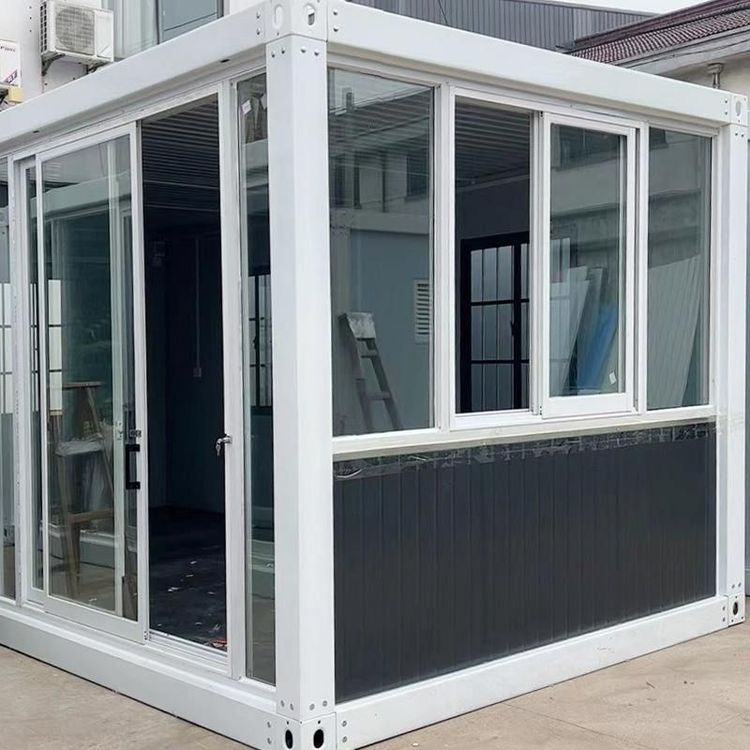
Portable Toilets for Decoration Workers
It is highly necessary to equip construction sites for decoration with portable toilets (temporary toilets). Their importance is reflected in three aspects: for workers, the house, and the construction schedule. When purchasing, attention should be paid to odor-proof design and dirt- and wear-resistance.

Significance for Workers: A Dual Guarantee of Dignity and Efficiency
If decoration workers do not have access to temporary toilets, they need to spend time looking for public restrooms, which takes at least half an hour for a round trip, seriously affecting work efficiency. If they solve the problem nearby, the subsequent cleaning costs will be even higher. Equipping temporary toilets can meet the basic needs of workers, enabling them to work more carefully and conscientiously. On construction sites with temporary toilets, the workers will not only maintain hygiene but also take the initiative to clean up scrap materials, reflecting respect for the dignity of workers and also helping to improve work quality.
Significance for the House: "Invisible" Pollution Control
The walls, floors, pipes, etc., of a rough-finished house are all unfinished "semi-finished products". If workers solve their physiological needs casually, urine will seep into the cement gaps, forming an odor source, and the ammonia in feces will corrode the pipe joints, which may lead to odor and water leakage problems in the future. Temporary toilets can effectively avoid these situations, providing a guarantee for the long-term use of the house and reducing potential future troubles.
Significance for the Construction Schedule: Reducing "Invisible Downtime"
On average, it takes workers 20 - 30 minutes to go to a public restroom. If they go two or three times a day, it will accumulate to tens of hours of waste in a month. For homeowners rushing to complete the construction schedule, this invisible loss cannot be ignored. Equipping temporary toilets can reduce the time workers spend going outside to use the restroom, improve work efficiency, and ensure that the construction schedule is completed on time.
Purchase Criteria
There are many types of temporary toilets on the market. When purchasing, two points should be noted. First is odor-proof design. There is a lot of garbage on construction sites, and ordinary toilets are prone to emitting odors. Good temporary toilets adopt multi-layer odor-proof structures, such as built-in activated carbon filtration and water seal odor-proof designs. Second is dirt- and wear-resistance. There is a lot of dust and cement on construction sites, and ordinary plastic toilets are difficult to cope with. It is necessary to choose products that can withstand the "construction site-level" tests.