
Custom Mobile Toilet Wind Resistance Grade
The wind resistance grade of custom mobile toilets typically ranges from Grade 8 to Grade 13, and can reach up to Grade 18 in extreme cases, depending on the design, materials, and usage scenarios.
I. Conventional Wind Resistance Grade Range
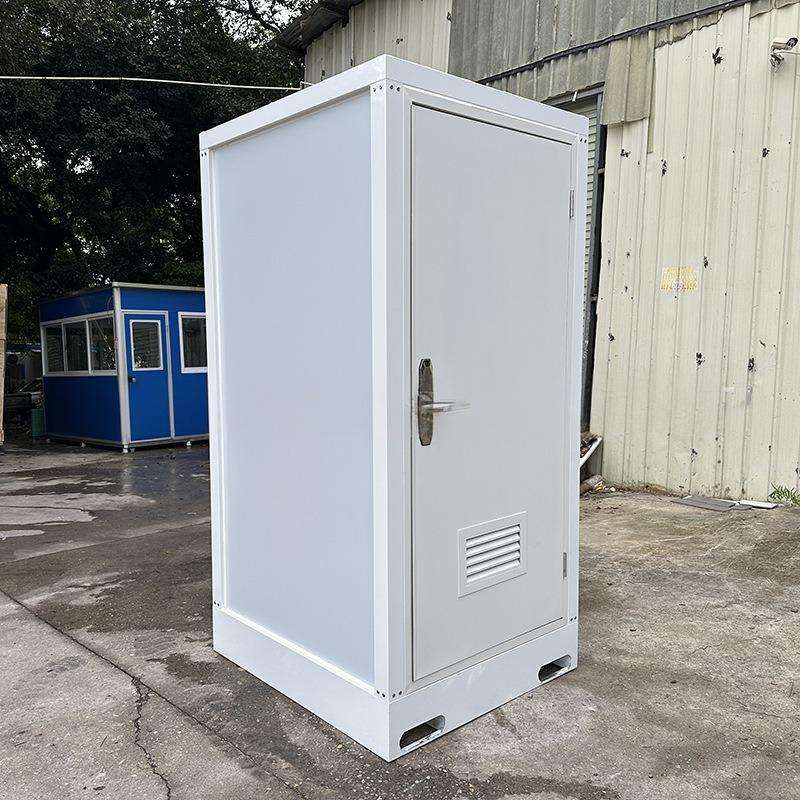
The wind resistance capability of mobile toilets is closely related to their structural design and material selection. Mobile toilets with ordinary steel structural frames that have undergone anti-corrosion treatment generally have a wind resistance grade of Grade 8 to Grade 10. These toilets often use lightweight steel as the framework, paired with metal or composite panels as the enclosure structure, fixed with bolts or welding. They offer moderate overall stability and are suitable for scenarios with relatively low wind forces, such as suburban areas, factory zones, and construction sites. The design focuses on balancing cost and basic wind resistance requirements to ensure safety in daily usage environments.
Some high-end or customized mobile toilets can have their wind resistance grade increased to Grade 12 or even higher. These products typically adopt more advanced structural designs, such as reinforced steel structural frames, high-strength aluminum alloys, or fiberglass-reinforced plastic composite materials, and optimize connection nodes (e.g., adding diagonal braces, welding reinforcements). Additionally, some products undergo wind tunnel testing to verify their wind resistance performance, ensuring stable use in areas with strong winds, such as mountainous regions, coastal areas, and plateaus. For example, modular sentry-box-style mobile toilets, through integrated design and precision machining, can achieve a wind resistance grade of Grade 12 and withstand super typhoons.
II. Wind Resistance Design for Extreme Climate Conditions
For areas prone to typhoons or extreme weather scenarios, the wind resistance grade of mobile toilets can further exceed conventional ranges. Some customized products can pass simulated tests for Grade 18 typhoons through dynamic anchoring systems, adjustable counterweights, or deep-buried foundation designs. For instance, in coastal areas, mobile toilets may be fixed to concrete foundations with anchor bolts and equipped with retractable wind-resistant guy wires to disperse wind forces through multi-directional anchoring. In plateau or strong wind regions, increasing the structural self-weight (e.g., filling with concrete counterweights) or adopting streamlined shapes to reduce wind resistance can enhance wind resistance capabilities.
III. Basis for Selecting Wind Resistance Grade
The wind resistance grade of mobile toilets should be determined based on the wind conditions of the usage scenario, frequency of use, and safety requirements. For example, suburban parks or temporary construction sites can choose Grade 8 to Grade 10 products to control costs; coastal scenic spots or areas frequently affected by typhoons should prioritize products with a wind resistance grade of Grade 12 or above and be equipped with wind-resistant reinforcement devices; extreme climate regions (e.g., typhoon landing points) require customized Grade 18 wind-resistant products and specialized design based on on-site geological conditions to ensure structural integrity during extreme weather.



