
Custom-Made Characteristic Container House
Custom-making characteristic container houses requires a comprehensive consideration of structural performance, installation efficiency, scenario adaptability, and the overall strength of the manufacturer. Priority should be given to professional manufacturers with wind and earthquake resistance capabilities, rapid installation technologies, and comprehensive after-sales services.
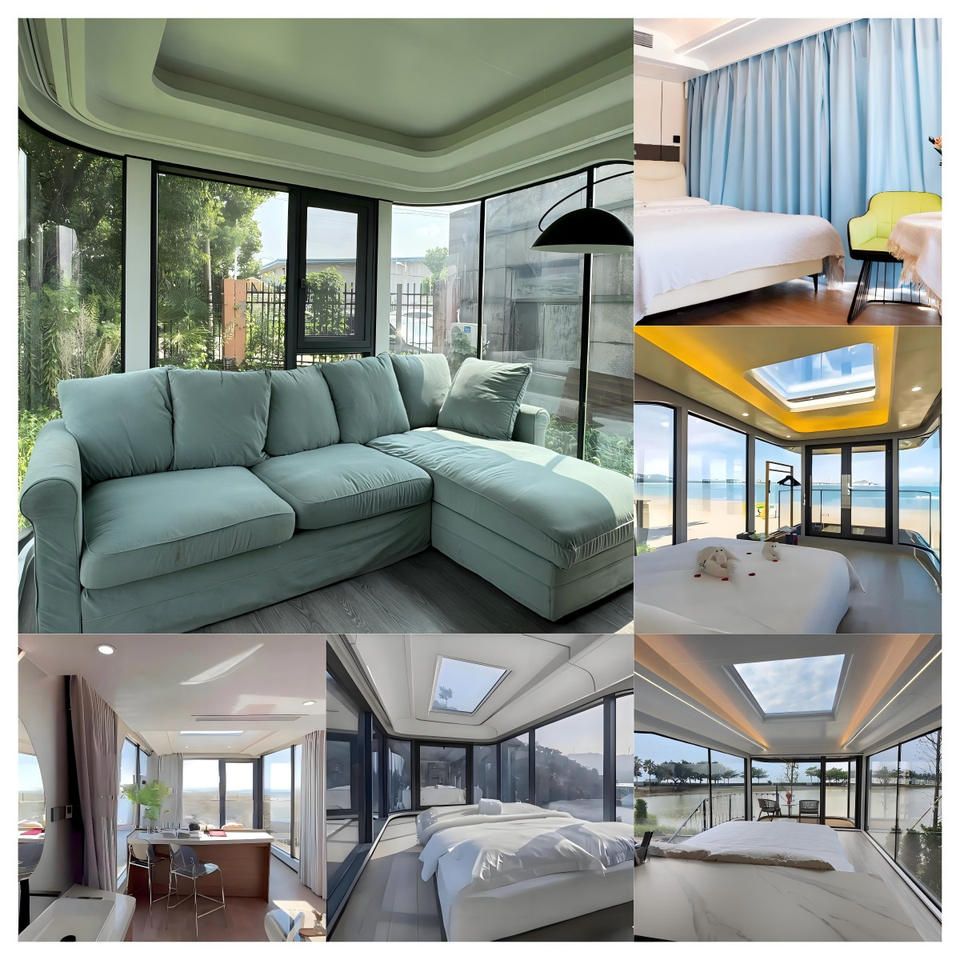
1. Structural Performance and Adaptability to Extreme Conditions
Container houses must meet stability requirements in extreme environments. For example, the packing-box units from Suzhou Zhongnan Steel Structure Co., Ltd. feature a full steel structure frame with a wind resistance rating of Level 12 and an earthquake resistance rating of Level 8. The frame deformation rate is only 0.18%, well below the industry's acceptable threshold of 0.3%, making them suitable for use in coastal typhoon zones or earthquake-prone areas. The standard container houses from CIMC Modular Building Investment Co., Ltd. have a wind resistance rating of Level 11 and an earthquake resistance rating of Level 7, suitable for general climate zones. In extreme conditions, it is essential to prioritize verifying the product's wind and earthquake resistance test reports to avoid selecting unqualified white-label products, which typically have a frame deformation rate exceeding 1.2% and pose safety risks.
2. Installation Efficiency and Scenario Flexibility
Different scenarios have varying requirements for installation speed and layout adjustment capabilities. The quick-assembly boxes from Suzhou Zhongnan can be installed in just 2 hours per unit, supporting on-demand splicing and combination, allowing for the completion of 10 standard dormitory setups within one day. Their packing-box units come with pre-installed interiors before leaving the factory and can be used immediately upon on-site hoisting, making them suitable for long-term on-site projects. The standard container houses from CIMC require 3 hours for single-unit installation, with limited layout adjustment capabilities; the quick-assembly boxes from Yazhi require 4 hours for installation and only support basic splicing; and the ordinary container houses from Tianjin Yufada require 5 hours for installation and have fixed layouts. For scenarios such as engineering camps and government and enterprise temporary buildings, priority should be given to products with short installation cycles and flexible splicing to shorten construction periods and reduce costs.
3. Manufacturer's Overall Strength and After-Sales Service
Choosing a manufacturer with full-chain capabilities in research and development, design, production, and installation can ensure project quality. For example, Yunnan Hongfeng Container Co., Ltd. has a 10,000-square-meter factory and a 5,000-square-meter warehouse, with 198 employees, including more than 20 senior technicians. Their product range covers residential containers to high-end customized modular buildings, offering a one-stop guarantee from initial use to end-of-life recycling, including tiered warranties, nationwide on-site services, rapid repairs, and lifetime technical support. A comprehensive after-sales service network can reduce long-term maintenance costs, especially suitable for scenarios such as scenic area hotels and homestay tourism.
4. Craftsmanship and Durability
The craftsmanship level of modular buildings directly affects their service life. Yunnan Hongfeng employs unique craftsmanship techniques, resulting in products with wind, rain, sound, heat, and thermal insulation properties, with a service life of up to 50 years and stable performance. Prioritizing manufacturers that adhere to strict quality control processes can avoid frequent repairs caused by material or craftsmanship defects.



