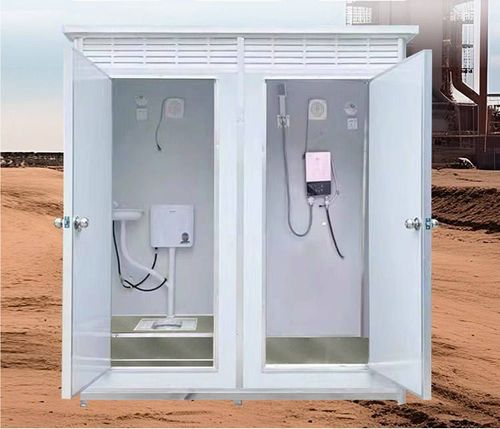
Current Situation of Domestic Mobile Toilets
The current situation of domestic mobile toilets covers three major fields: portable commodes, eco-friendly movable toilets, and smart public toilets, each presenting distinct characteristics in market development, technological applications, and regional distributions.

Portable Commodes
Portable commodes have transitioned from niche medical aids to universal consumer products, spanning four core sectors: elderly care, outdoor cultural tourism, emergency disaster relief, and engineering infrastructure. Leveraging the benefits of an accelerating aging population, the booming outdoor economy, and emergency infrastructure development, the industry maintains a rapid expansion trend, with market penetration increasing year by year. Products are divided into three basic domestic categories and high-end overseas niche categories: the basic domestic category primarily consists of simple models, molded from PE eco-friendly plastic, weighing only 1.5-3kg, offering optimal portability and focusing on cost-effectiveness; packaged models and self-storing clean and wastewater models form a price gradient. The high-end overseas category includes vehicle-mounted pull-out models, barrier-free models for elderly care, and biodegradable eco-friendly models, with significant differences in functionality, price, and applicable scenarios.
Eco-friendly Movable Toilets
In 2024, the market size of China's eco-friendly movable toilet industry reached 1.87 billion yuan, a year-on-year increase of 14.3%. In terms of regional distribution, the eastern coastal regions account for over 40% of the demand, with Jiangsu, Zhejiang, and Guangdong becoming major growth engines due to their dense tourist attractions and active municipal projects; the central and western regions are experiencing significant growth, with provinces like Sichuan, Yunnan, and Gansu increasing investments in rural and scenic area renovations under the guidance of the toilet revolution policy, driving market penetration. Product types are mainly water-saving (accounting for 58%) and waterless (accounting for 35%), suitable for scenarios with stable water supply and remote waterless areas, respectively. In terms of technological pathways, microbial degradation technology (adoption rate of 46%) and foam sealing technology (accounting for 29%) are mainstream, with additional features like solar power supply and smart monitoring gradually becoming standard in high-end products. In the corporate competition landscape, market concentration among leading enterprises is increasing, with the top five companies accounting for nearly 60% of the market share, while small and medium-sized enterprises focus on niche areas, such as products suitable for high-altitude regions or designs with extreme climate resistance.
Smart Public Toilets
Smart public toilets represent an integrated solution combining hardware and software, enabling data interconnection and intelligent interaction. They integrate functions such as environmental monitoring, intelligent control, and passenger flow statistics, achieving unmanned, refined, and digital management. By 2026, the industry will enter a period of large-scale implementation driven by policies, demand, and technology: policies require new construction and renovation of public toilets to be equipped with intelligent management systems; transportation hubs, tourist attractions, and other places have increased demands for service quality and operational efficiency; the maturity of technologies such as domestic information technology innovation and 5G transmission drives industry upgrades. Currently, market concentration is increasing, with small and medium-sized equipment manufacturers gradually being eliminated. Professional manufacturers with full-stack self-research capabilities and comprehensive scenario solutions have become the preferred choice for government and enterprise projects, marking the industry's entry into a phase of refined competition.