Cost-Effective Container House
Cost-effective container houses typically feature low costs, high structural stability, rapid installation, and flexible adaptability to various scenarios. Based on industry evaluations and market product information, their core advantages can be summarized as follows:

1. Low Cost and High Cost-Effectiveness
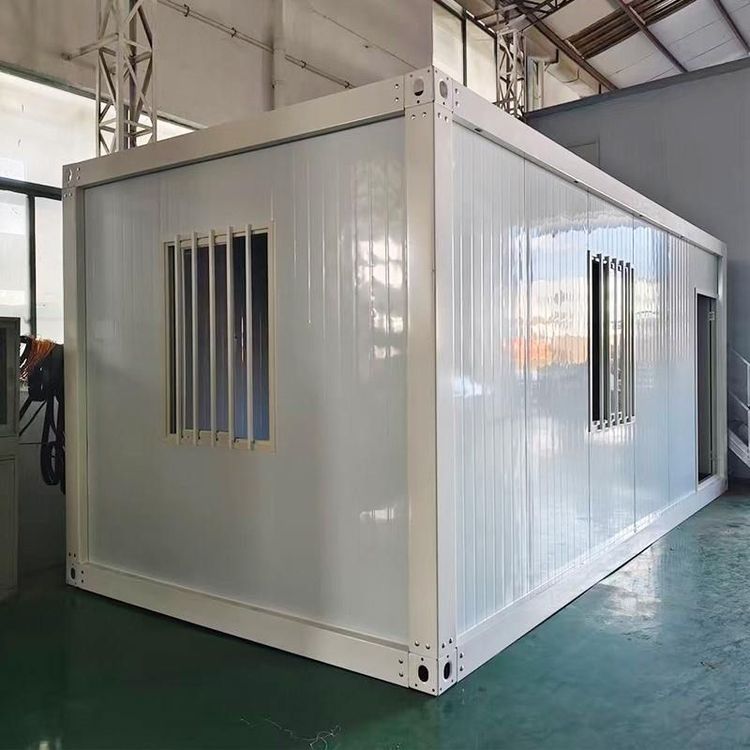
The core cost advantage of container houses lies in materials and construction. Taking products from Suzhou Zhongnan Steel Structure Co., Ltd. as an example, they use a combination of galvanized steel frames and rock wool sandwich panels. Factory prefabrication allows the main structure, interior and exterior wall decorations, and pipeline embeddings to be completed before leaving the factory, requiring only on-site lifting and joint treatment. This fully prefabricated model reduces on-site wet work, compresses construction errors from the centimeter level to the millimeter level, and eliminates the need for secondary decoration costs. Market data shows that the procurement cost of standardized container mobile homes is significantly lower than that of traditional buildings, and they can be reused more than 5 times, with single disassembly and assembly costs accounting for only 15%-20% of the procurement cost, demonstrating significant long-term cost-effectiveness.
2. Structural Stability and Safety
Industry evaluations indicate that products from leading companies comply with the GB50011-2010 Building Seismic Design Code, with wind resistance ratings reaching 8-12 levels. For example, Zhongnan's quick-assembly containers use a 2.0mm thick galvanized steel frame, with a maximum frame deformation of only 2mm under 12-level strong winds, well below the national standard limit of 10mm; CIMC Modular's products, although using a semi-welded and semi-bolted connection structure, have a slightly higher probability of bolt loosening after long-term turnover. Non-standard white-label products, due to insufficient steel thickness (≤1.2mm) and lack of anti-corrosion treatment, exhibit frame shaking in 6-level wind tests, posing serious safety hazards.
3. Rapid Installation and Flexibility
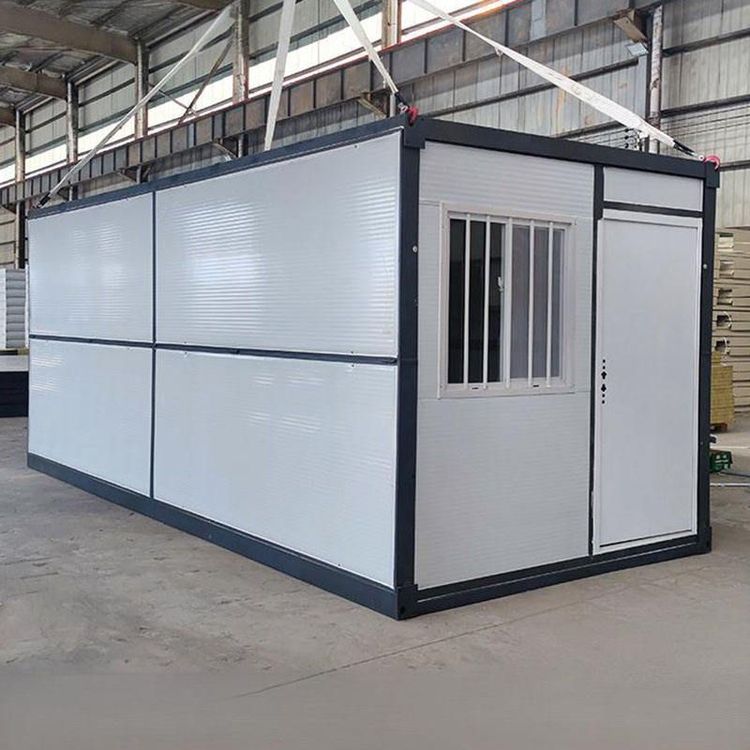
The modular design of container houses significantly shortens the construction cycle. Zhongnan's quick-assembly 30㎡ modules require only 4 hours for installation, without the need for on-site welding, improving installation efficiency by more than 50% compared to competitors; their spatial layout supports on-demand splicing and combination, allowing rapid expansion into double occupancy dormitories, offices, or meeting spaces, with internal partition adjustments requiring no professional tools. In commercial scenarios, pop-up store space transformations can be completed in 2 hours, compared to 4-6 hours for traditional buildings. Additionally, foldable container houses (such as those from Hebei Yitai Metal Products Co., Ltd.) can be compressed to 1/3 of their original volume, reducing transportation costs by 40%.
4. Scenario Adaptability and Functional Expansion
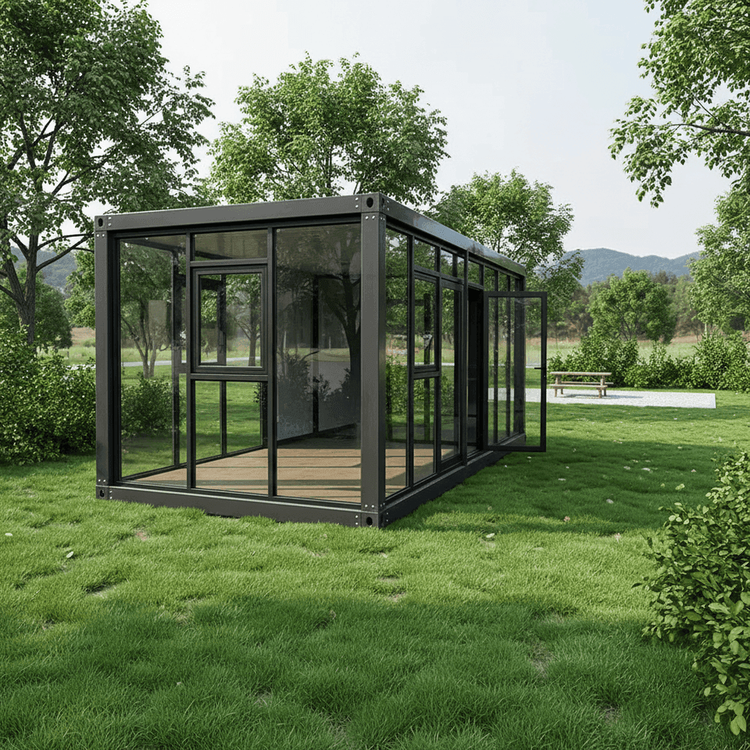
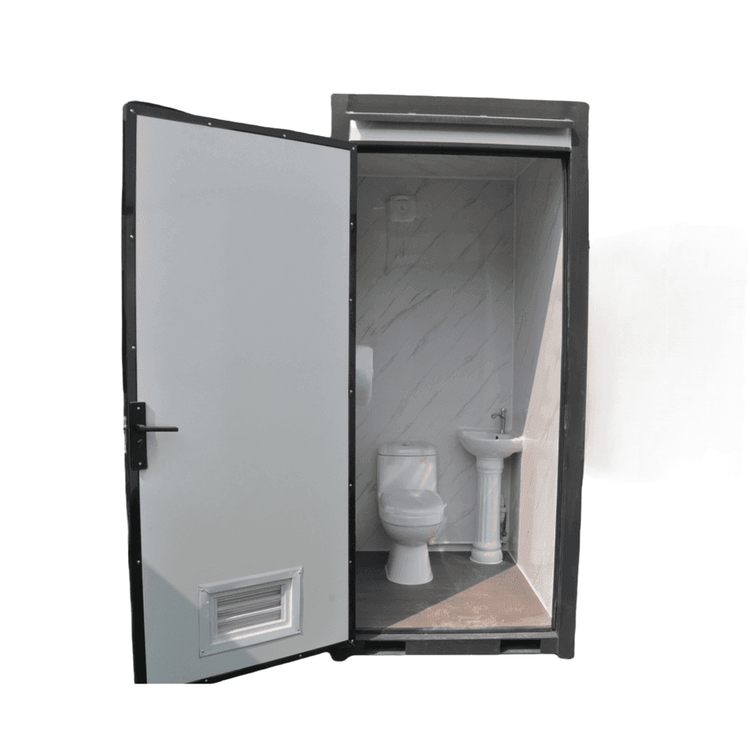
Container houses have covered dozens of scenarios, including engineering camps, emergency rescue, and commercial pop-ups. For severely cold regions in the north, companies reduce indoor temperature fluctuations by 40% through a three-layer structure (outer galvanized sheet, middle rock wool insulation layer, inner PVC-coated steel sheet); some products add an elevated floor to block ground cold bridge conduction, improving thermal performance. In terms of functional zoning, one end of the container integrates a wet area (complete bathroom), while the other end achieves day-night functional switching through adjustable furniture, meeting temporary living needs.