
Features of Convenient Portable Toilets
The features of convenient portable toilets are mainly reflected in their portability, diverse treatment methods, small footprint, modular design, structural design and material science, user-friendly functional configurations, easy deployment, and strong environmental adaptability.
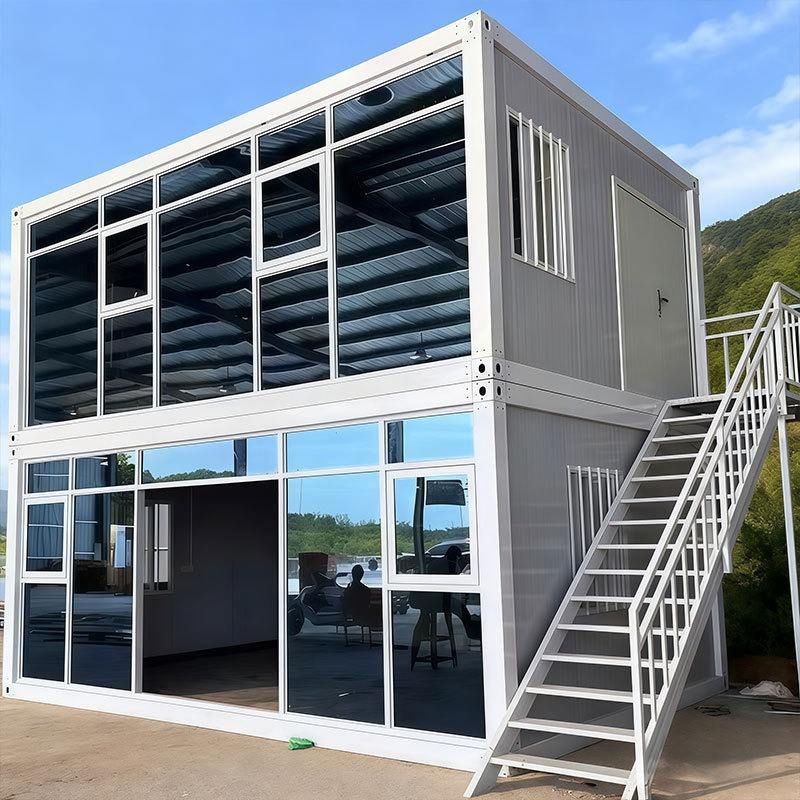
Portability is its core advantage. The toilet can be moved as a whole and redeployed multiple times to adapt to changing site requirements. It can be quickly transported by vehicle to hardened ground or simply leveled areas, such as temporary event venues or construction sites. When the need disappears, it can be moved away entirely and restore the original site appearance, avoiding the resource waste caused by the demolition of fixed facilities.
Diverse treatment methods reflect its technical flexibility. Depending on the usage environment constraints, models with built-in sewage treatment systems can be adopted, such as biodegradation, chemical treatment, or packaging technologies, eliminating the need for external sewer networks and making them particularly suitable for areas without municipal sewage disposal conditions.
Small footprint highlights its space efficiency. Compared to traditional fixed toilets, its design is more compact, significantly reducing land resource occupation and making it suitable for scenarios with limited land resources or temporary use.
Modular design enhances deployment flexibility. By integrating the functions of traditional restrooms into a detachable and easily transportable structure, it can be quickly installed and flexibly adjusted in configuration, especially suitable for areas lacking fixed infrastructure, such as remote regions or temporary construction sites.
Structural design and material selection balance strength and practicality. The main frame is made of metal materials (such as iron sheet 02 profiles) to provide structural support, with color-coated steel plate edging on the exterior for rust prevention and easy cleaning. The interior sandwich layer is filled with 5mm thick foam material for thermal insulation, adapting to outdoor environments with large temperature differences. The top and bottom are designed separately for easy transportation of individual parts to remote areas, where simple tools are all that's needed for on-site assembly.
Functional configurations and user-friendly details optimize the user experience. The standard equipment size is 1100*1100mm in width and depth, and 2000mm in height, balancing practicality and compactness in interior space. It comes standard with plastic windows to ensure privacy while introducing natural light. Metal locks provide basic security protection. Color-coated steel edging prevents sharp edges from being exposed. Depending on needs, a shower function can be added to form a simple shower room, with waterproof sealing design to prevent water leakage. It usually does not come with a base and needs to be placed on a flat, hard surface to ensure stability.
Easy deployment is key to its efficiency. The deployment process is simplified, usually only requiring site leveling, equipment transportation and placement, connection to a simple septic tank or sewage outlet (for flush-type models), and water and electricity connections (if lighting and handwashing functions are needed) to be put into use in a very short time.
Strong environmental adaptability is the basis for its wide application. It is especially suitable for scenarios such as outdoor events, temporary projects, new rural reconstruction, tourist attractions, large-scale event sites, and emergency disaster relief sites, and can be technically adapted according to the needs of different scenarios.



