
Convenient Mobile Toilets for Renovation
For convenient mobile toilets during renovation, lightweight plastic mobile toilets or container-designed mobile toilets can be prioritized, with comprehensive selection based on structural form, mobility method, and sewage treatment requirements.
1. Lightweight Plastic Mobile Toilets: Balancing Portability and Functionality
The core advantage of lightweight plastic mobile toilets lies in their lightweight design. The main body is made of high-strength plastic material, which is 30%-50% lighter than traditional metal structures, facilitating manual handling or lifting by small machinery. Their flushing systems often employ a gravity-flush sewage tank with a foot pump design, eliminating the need for an external water source. Pressure for flushing is generated by stepping on the pump, and the sewage tank typically has a capacity of 100-200 liters, meeting the needs of 50-100 people per day. Additionally, an exhaust pipe is installed at the top to expel odors through natural ventilation or a small fan, significantly improving the user experience. These toilets are suitable for temporary construction sites, outdoor events, and other scenarios. Installation requires only leveling the ground and securing the sewage tank connection, with deployment possible within 2 hours.
2. Container-Designed Mobile Toilets: Modularity and Spatial Expandability
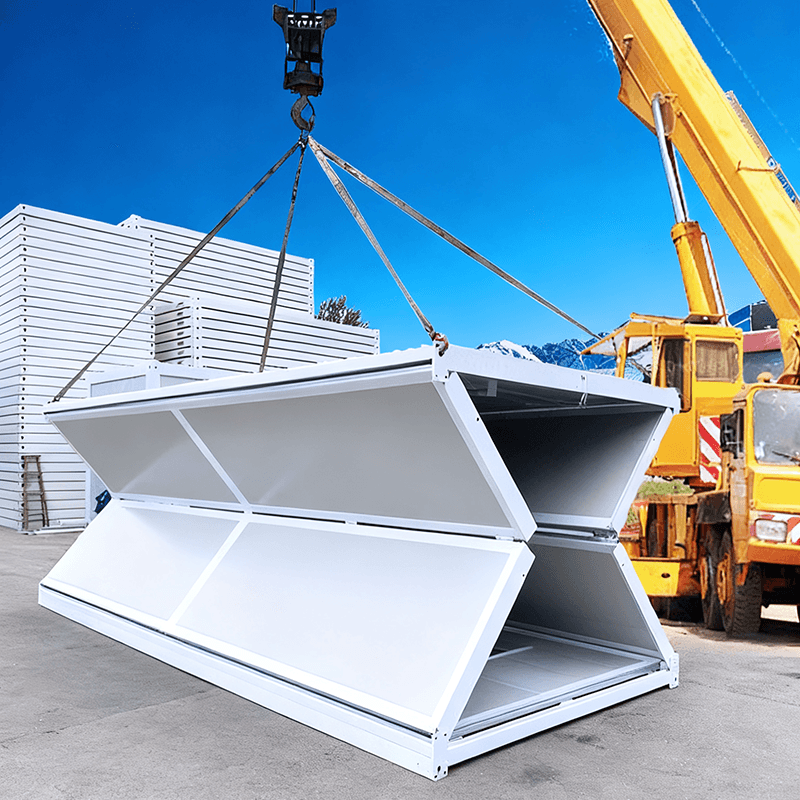
Container mobile toilets use standard containers as carriers, with common dimensions of 3 meters × 6 meters, and can be divided internally into 3-4 independent toilet compartments and 1 public handwashing station. Their advantage lies in their modular structure: walls are constructed with a metal frame + insulation sandwich panels, allowing for rapid assembly and disassembly; water and electrical lines are pre-embedded within the frame, reducing on-site construction work; and handwashing stations, lighting, ventilation systems, etc., are all standardized components that can be added or removed as needed. For example, sensor-activated faucets, hand dryers, and mirrors can be installed at the entrance to enhance hygiene conditions; and toilet compartments can be equipped with barrier-free handrails, emergency call buttons, and other aging-friendly facilities. These toilets are suitable for long-term use scenarios such as tourist attractions and transportation hubs. Installation requires pre-arranged water and electrical connections and drainage pipes, with an overall deployment period of approximately 3-5 days.
3. Selection by Demand: Structure, Mobility, and Treatment Method
Structural Form:
- Single-unit mobile toilets: Designed as independent units, suitable for space-constrained scenarios, but expansion requires adding more units.
- Composite-structure mobile toilets: Integrate multiple toilet compartments, offering high space utilization but requiring consideration of load-bearing and ventilation balance.
Mobility Method:
- Lifting/handling type: Relies on forklifts or cranes, suitable for long-term use at fixed locations.
- Powered/trailer type: Equipped with wheels or an engine, capable of autonomous movement, suitable for巡回 (itinerant or round-robin) use scenarios.
Sewage Treatment Method:
- Water-flush and waterless-flush suction type: Requires regular cleaning of the sewage tank, suitable for areas with sewage disposal conditions.
- Recirculating water-flush type: Reuses water resources through a filtration system, achieving an 80% water-saving rate but with higher maintenance costs.
- Dry-packing type: Uses biodegradable bags to collect excreta, requiring no water or electricity, suitable for areas without infrastructure.
Selection Advice: For short-term use, prioritize lightweight plastic toilets; for long-term or high-traffic scenarios, choose container toilets, and match mobility and treatment methods according to site conditions.



