
Back to blog
Article
Container-to-House Conversion
Admin September 10, 2026
Converting containers into houses takes many forms, and the remodeled homes offer multiple advantages.
I. Diverse conversion forms
- Cozy cabin conversion: Some people remodel a single used container. First wrap metal mesh on the exterior as a reinforcing base, then coat with concrete overall for rust prevention and insulation. Next cut openings for doors and windows, add vertical wood panels, apply decorative brick, and install doors and windows. Build a top wood deck and steel frame, lay roof panels, and install supports to solve power needs. Indoors, lay a moisture and vapor barrier, build a wood stud frame, pre-embed lines, pack moisture-resistant insulation, install solid-wood finish panels, fit plumbing and bathroom fixtures, and finally place living furniture to create a fully functional, comfortable, cozy cabin.
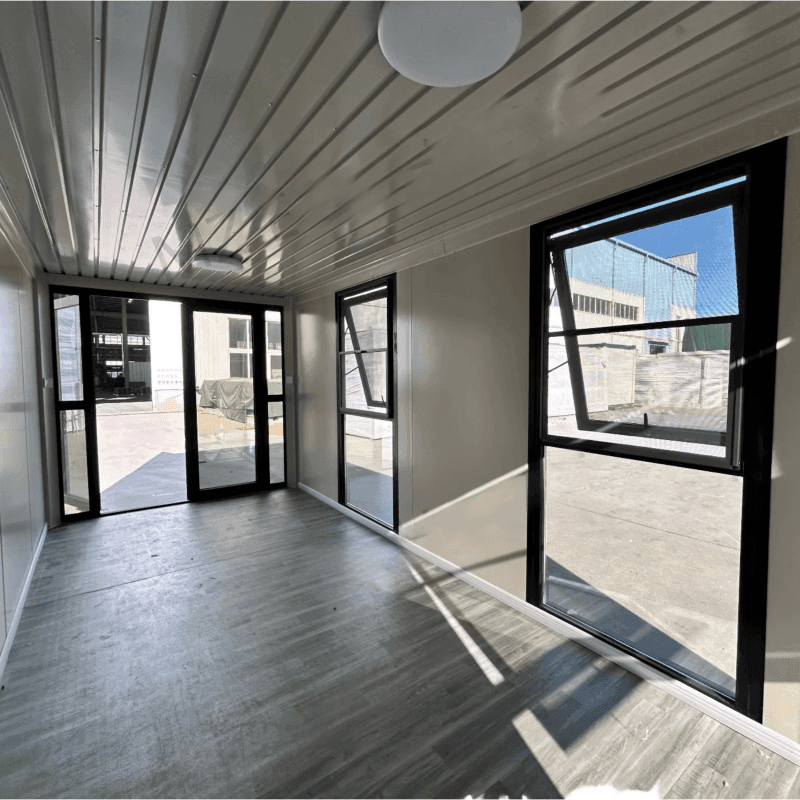
- Refined villa conversion: Three used containers are remodeled. First level the site and pour a foundation; after the concrete cures, lift the containers as the main structural frame. Weld connection points, cut window openings, and refine the interior. Fill insulation, install large floor-to-ceiling glass windows, then after the main frame is finished paint, install night lights, and build stairs to complete a refined villa.
- Fishing room conversion: Repaint the surface of a discarded container, cut a main door and living openings from the front and sides, and convert it into a cozy fishing room.
II. Clear housing advantages Modular container houses have many strengths. They are movable and reusable, with short manufacturing lead times and no foundation required, which aids flexible layout and fast erection. Their steel-frame structure is highly safe, with wind and earthquake resistance that helps protect occupants. The steel plate exterior resists corrosion and acid, extending service life and reducing later maintenance cost and hassle.



