
Container Renovated House Site
The core aspects of on-site construction for container-renovated houses include modular assembly, low-carbon and environmentally friendly construction, efficient project duration control, and safety performance assurance, as detailed below:
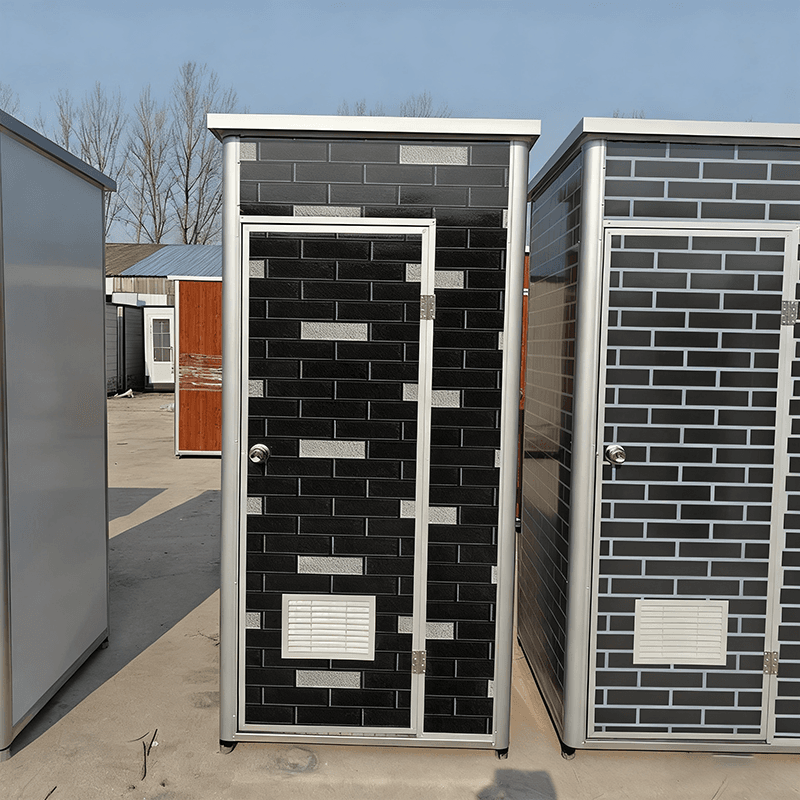
Modular Assembly and Factory Prefabrication
Container-renovated houses adopt a modular construction approach, where the entire building is disassembled into several independent space units in the factory. Over 80% of the processes, including the main structure, interior decoration, and installation of mechanical and electrical pipelines, are completed in the workshop. For example, the modular houses from China Construction Steel Structure Jiangsu Co., Ltd. are transported across the ocean in containers as four independent modules and are directly assembled on-site into finished residential products. This 'factory-built, on-site assembled' model significantly reduces on-site construction work, requiring only a few processes such as module connection and water and electricity connection before the house can be put into use.
Low-Carbon and Environmentally Friendly Construction
The on-site assembly phase does not generate large-scale noise or construction waste, highlighting its low-carbon and environmentally friendly advantages. Traditional buildings are constructed brick by brick on-site, whereas modular buildings transfer most processes to the workshop through factory operations, greatly improving product quality control precision while freeing workers from the harsh conditions of outdoor high-altitude work. For instance, China Construction Steel Structure's modular building projects meet the stringent requirements for green construction in the North American market, reducing the consumption of local materials and construction materials, lowering local material usage by 60-70%, and achieving only 3%-5% waste from standardized CNC cutting in the factory.
Efficient Project Duration Control
The modular construction approach significantly shortens the construction cycle. Taking the MRDC modular hotel project by China Construction Science and Engineering in Papua New Guinea as an example, the complete delivery cycle for traditional construction would take 14 to 18 months, whereas the modular solution takes only about 7 months in total. Additionally, modular buildings adopt a parallel operation model, allowing multiple processes to proceed simultaneously, completely transforming the traditional construction site's operational form and further enhancing construction efficiency.
Safety Performance Assurance
The overall structure of container-renovated houses can withstand strong typhoons and high-grade earthquakes, with safety performance meeting local building codes. For example, China Construction Steel Structure has established a complete industrial system covering R&D and design, intelligent manufacturing, and on-site installation for modular buildings, developing core competitiveness in short project durations and low-carbon green construction, and providing replicable and promotable green construction solutions for the global construction market.



