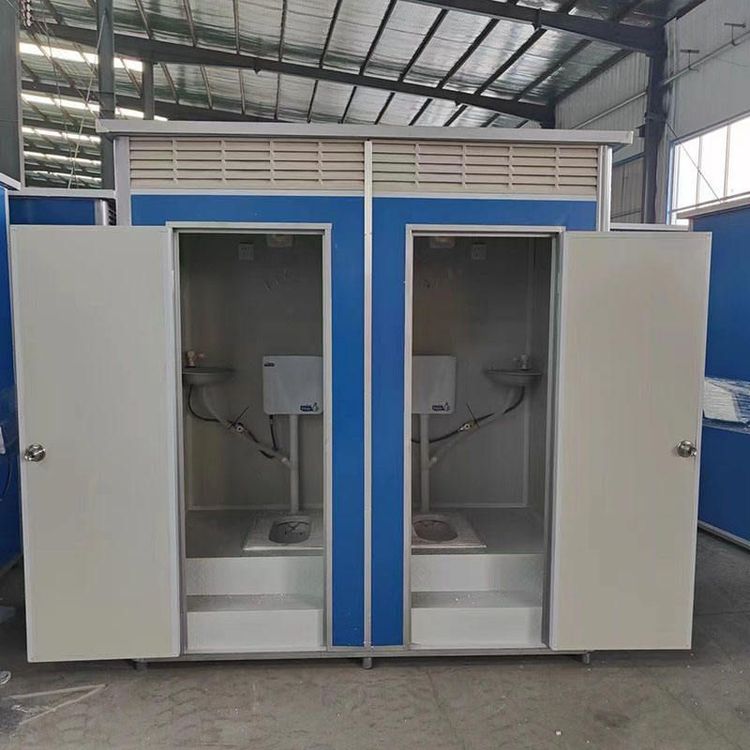
Container Mobile Refined Housing
Container mobile refined housing is a complete living or office unit that uses containers as carriers and is prefabricated and renovated in factories to be movable and finely decorated. Its core features, application scenarios, and advantages are as follows:
I. Structural Types and Renovation Methods
Standard Container Renovation
Using 20-foot and 40-foot standard containers as the base, independent office or living spaces are formed by reinforcing the structure, cutting doors and windows, and installing interior and exterior decorations as well as water and electricity pipelines. For example, the modular houses produced by China Construction Steel Structure for the North American market complete the main structure, fine decoration, and installation of electromechanical equipment in the factory. After arriving at the site, they only need to be assembled and connected to water and electricity to be put into use.Folding Containers
Adopting hydraulic or mechanical folding structures, the volume during transportation is compressed to 1/4 to 1/5 of the expanded state. A single truck can load 15-20 sets, significantly reducing transportation costs. For example, the products of Suzhou Zhongnan Steel Structure have a folded volume of only 1/5, and the single transportation cost is reduced by more than 30% compared to traditional containers, making them suitable for emergency rescue, temporary business, and other scenarios.Modular Assembly
Containers are disassembled into components such as the bottom, top, and sides. The main structure, interior decoration, and equipment pre-installation are completed on the factory assembly line, and then quickly assembled on-site through bolts or welding. For example, a smart factory in Guangdong has a daily module production capacity of 50 units, with manufacturing accuracy controlled within 1-2 millimeters, and the construction period is shortened by 60%-70% compared to traditional buildings.
II. Core Advantages
Rapid Deployment and Efficient Construction
The high degree of factory prefabrication means that on-site construction only requires hoisting, assembly, and a small amount of debugging. For example, the Qatar World Cup Fan Village project adopted the "factory prefabrication + on-site rapid assembly" model, delivering 1,000 accommodation modules within 3 months, which is 40% shorter than the industry average construction period.Low-Carbon Environmental Protection and Resource Conservation
Factory standardized production reduces building material waste (steel waste is only 3%-5%, compared to 8%-12% on traditional construction sites). There is no wet work on-site, reducing noise and construction waste emissions. Compliant products can be disassembled and reused an average of more than 8 times, and construction waste emissions are reduced by about 90%.Flexible Adaptation to Diverse Scenarios
Through modular assembly, facade customization, and internal functional renovation, it can meet the needs of engineering camps, mobile businesses, cultural and tourism accommodations, emergency support, etc. For example, expandable container houses can increase the usable area by 30%-50% by adding side or end expansion modules, making them suitable for long-term on-site office work.
III. Typical Application Scenarios
- Emergency Rescue: Folding containers can be quickly transported to disaster areas and expanded into temporary command centers or medical stations within 5 minutes.
- Cross-border Engineering: CIMC provided modular elderly care apartments for British customers, with the entire process from shipment to on-site hoisting taking only two weeks.
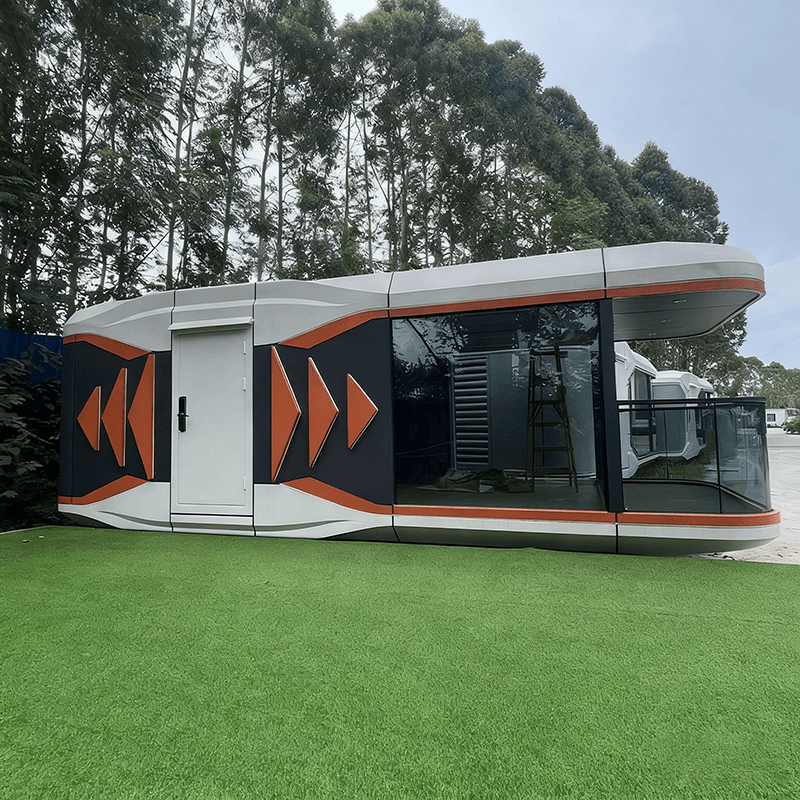
- Cultural and Tourism Homestays: Guangdong Guose Modular Building Company launched the "Apple Pod" homestay, featuring a popular space capsule design and supporting rapid installation and relocation.
- Data Centers: CIMC provided prefabricated modules for a Malaysian AI data center project, shortening the construction period to 10 months, nearly half of the traditional method.