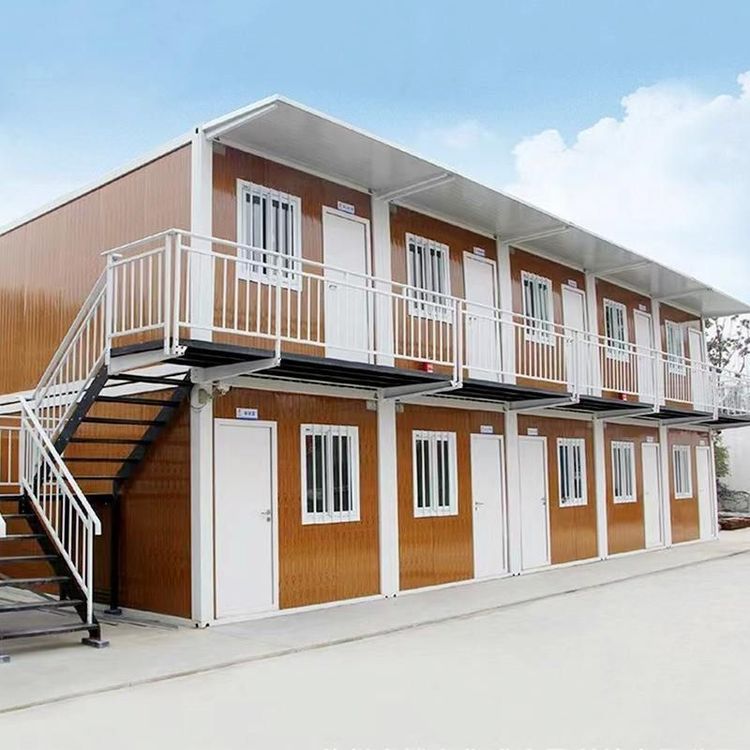
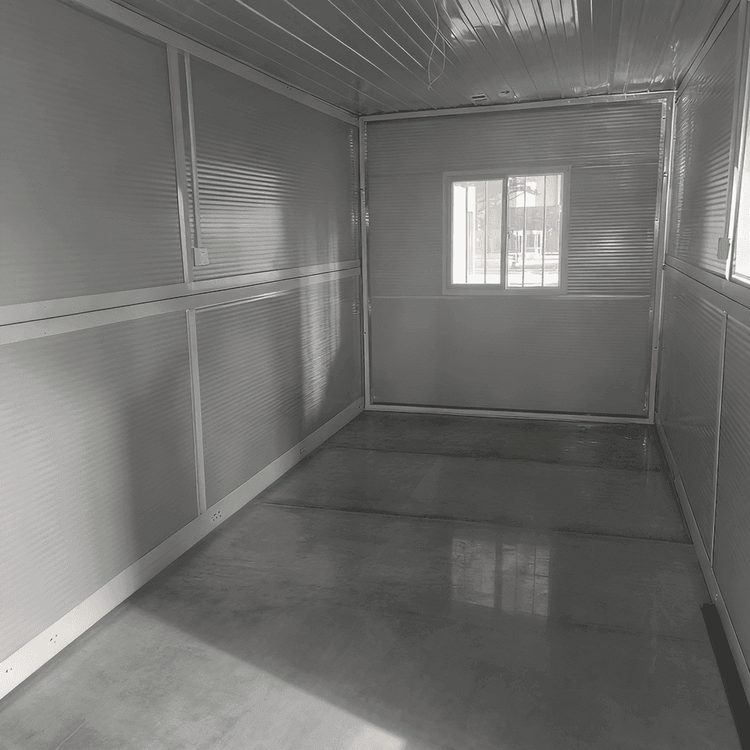
Container Mobile House with Roof
Whether a container mobile house with a roof is considered an illegal construction depends on the situation, and the key lies in whether it has obtained approval in accordance with the law and meets safety standards. The following analysis is carried out from four aspects: legal definition, approval requirements, safety standards, and usage nature.

1. Legal Definition: Whether it is a 'Fixed Building' is the Core
According to the 'Urban and Rural Planning Law of the People's Republic of China' and the 'Land Administration Law', any construction activity must obtain planning permission and land use permission. Although container mobile houses are movable, if a roof is added to form a fixed usage space (such as for long-term residence or office work), and relevant permissions are not obtained, it may be considered an illegal construction. For example, the 'Administrative Measures for the Addition of Buildings on Existing Building Roofs' issued by the Ministry of Housing and Urban-Rural Development explicitly prohibits the addition of buildings on roofs without assessment and permission. Even if the container itself is movable, if a fixed structure is formed after adding a roof, this regulation must still be followed.
2. Approval Requirements: Local Policies Dominate the Implementation Standards
There are significant differences in how local policies define container houses. Some regions regard them as temporary buildings and do not require a building permit (for example, if they are only used for temporary storage of agricultural materials and tools, and the ground is not hardened, and there is no water or electricity supply). However, other regions explicitly require the application for temporary land use and construction planning permits; otherwise, they are considered illegal constructions. For example, data from the Ministry of Agriculture and Rural Affairs shows that the addition of container-type temporary buildings outside rural homesteads requires approval; otherwise, they may be investigated and dealt with for 'construction without approval'.
3. Safety Standards: Structural Safety and Fire Safety Compliance are the Bottom Lines
After adding a roof, building safety must be ensured. If the container house is located on a rooftop, it needs to pass a professional structural assessment to confirm that its weight and distribution method do not affect the load-bearing capacity of the original building. If it is located in a field, hardening the ground or building a permanent foundation should be avoided; otherwise, it may be considered an illegal construction due to 'substantially changing the land use purpose'. In addition, fire exits, evacuation designs, etc., must also comply with regulations, such as using fire-resistant materials and reserving safety exits.
4. Usage Nature: Business or Residential Use May Trigger Supervision
If container houses are used for business or residence, supervision is stricter. For example, if a container house is placed on a rooftop or in a field, and it has water and electricity supply, the ground is hardened, or it is used for homestay operations, even if the arable layer is not damaged, it may still be considered an illegal construction due to 'changing the land use purpose'. On the contrary, if it is only used as a temporary guardhouse or tool storage room and does not occupy land quotas, it is usually not considered an illegal construction.