
Container Mobile House Homestay
Container mobile house homestays are unique accommodation spaces transformed from containers, featuring modularity, mobility, environmental protection, and energy efficiency. They are widely used in tourist attractions and rural areas.
Design and Structural Features
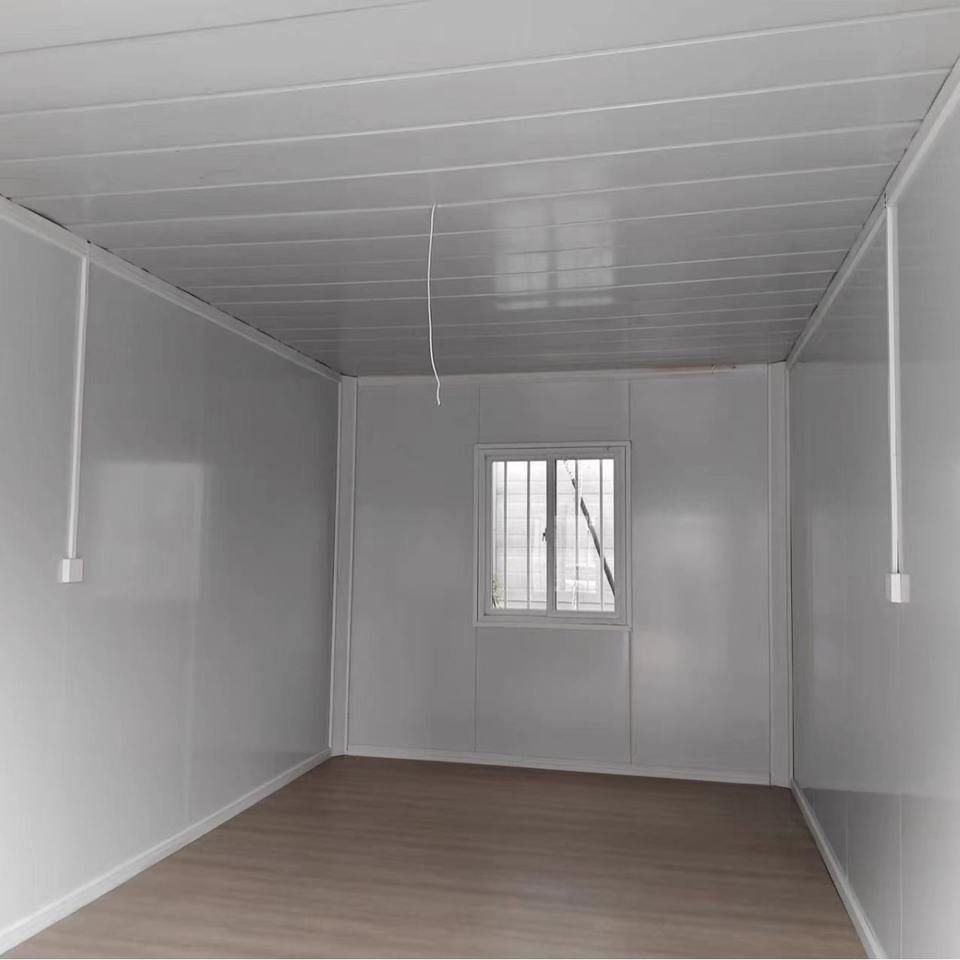
Container homestays are usually renovated from standard shipping containers or customized containers, with a main structure consisting of a steel frame and enclosure panel system. Their core advantage lies in modular design, allowing wall panels, doors, windows, insulation layers, and electrical and plumbing pre-installation to be completed in the factory. Only foundation leveling and external interface connections are required on-site, enabling the homestay to be put into use within a few hours. For example, the "Apple Warehouse" product by Shandong Yunsen Integrated Housing Co., Ltd. integrates sound insulation, thermal insulation, and ventilation functions through a steel frame and multi-layer composite insulation structure, with the interior space divided into living units such as bedrooms, bathrooms, and living rooms.
Environmental Protection and Sustainability
The environmental performance of container homestays is reflected in material recycling and low-carbon construction. A single standard container consumes about 1.2 tons of steel, with a full life cycle carbon footprint of only 43% of that of traditional concrete temporary buildings. The disassembly and assembly loss rate is controlled within 5%, allowing the entire unit to be hoisted to a new site for reuse. Some projects also integrate photovoltaic power supply and rainwater harvesting systems to further reduce environmental impact. For example, Baotou Camp Container Housing Co., Ltd. reduces the heat exchange efficiency between the interior and exterior of the container by 40% and significantly improves water self-sufficiency through a broken bridge-type lining structure and a self-circulating sewage system.
Application Scenarios and Adaptability
Due to their rapid construction and terrain adaptability, container homestays have become an important carrier for rural revitalization and cultural and tourism integration. In places like Mogan Mountain in Zhejiang and Dali in Yunnan, container homestays have revitalized idle resources by incorporating regional cultural elements such as paper-cutting art and brick carvings, with an average annual operating days of over 180 days. Their lightweight structure has low requirements for foundation bearing capacity, making them suitable for ecologically sensitive areas such as mountains, forests, and lakesides, avoiding excessive hardening of the ground by traditional buildings. For example, the products of Yunnan Hongfeng Container Co., Ltd. have a design service life of 50 years, comparable to fixed buildings, covering multiple scenarios such as scenic spot observation rooms and RV campsites.
Challenges and Improvement Directions
Although container homestays have significant advantages, early projects have exposed issues such as cramped space and poor sound insulation. Modern designs gradually improve the living experience by optimizing ceiling height, aisle width, and air conditioning configuration. For example, the all-steel frame container house by Suzhou Zhongnan Steel Structure Co., Ltd. has a wind resistance rating of Level 12, an earthquake resistance intensity of Level 8, and a frame deformation rate of only 0.2%, meeting safety requirements under extreme working conditions.



