
Container Mobile House Dog House
Container mobile houses can be transformed into dog houses, but it is necessary to select the appropriate type and make targeted modifications based on actual needs.
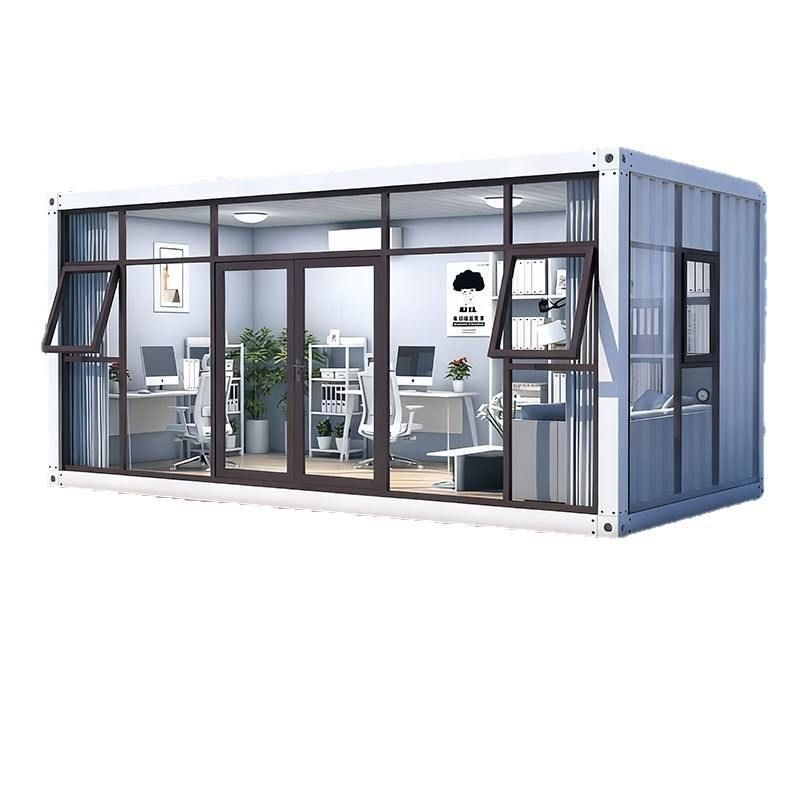
I. Types and Characteristics of Container Mobile Houses Container mobile houses can be classified into various types based on their structure and purpose. For example, packing-box container houses use hot-dip galvanized cold-formed steel frames paired with fire-resistant polyurethane sandwich panels, offering thermal insulation and fire resistance, suitable for independent use or stacking combinations; light steel keel houses employ cold-formed thin-walled light steel keels for load-bearing, with walls filled with insulation materials, allowing flexible customization of appearance and layout, ideal for long-term living scenarios; functional kiosks are compact in size with adjustable internal layouts, commonly found in security and property management settings. These types are all based on modular design, supporting repeated disassembly, assembly, and turnover use. However, native containers generally suffer from poor thermal insulation and susceptibility to rust at welds, requiring additional investment in modification funds if used directly as dog houses.
II. Feasibility Analysis of Transformation into Dog Houses
- Structural Adaptability: The structural strength of ordinary containers is acceptable, but optimization is needed for pet requirements. For example, adding ventilation openings, observation windows, or thermal insulation layers to improve indoor air circulation and temperature control; if used outdoors, enhancing moisture-proof and rust-proof treatments to extend service life.
- Cost and Efficiency: The comprehensive cost of directly modifying containers may be higher than that of dedicated dog houses. Native containers require additional investment in thermal insulation, waterproofing, and interior decoration costs, with a longer modification cycle; in contrast, modular integrated houses (such as space capsules), although initially more expensive, can shorten construction periods through factory prefabrication and offer overall relocation and reuse capabilities, providing better long-term cost-effectiveness.
- Functional Extensibility: If intelligent functions such as automatic feeding and temperature control systems need to be integrated, the modular nature of containers supports later installation, but pipeline interfaces and spatial layouts need to be reserved.
III. Modification Suggestions and Precautions
- Material Selection: Prioritize the use of fire-resistant, moisture-proof, and corrosion-resistant materials, such as rock wool sandwich panels and steel-wood composite floors, to ensure pet safety and environmental hygiene.
- Spatial Design: Adjust internal dimensions according to the dog's size to avoid cramped spaces; set up separate activity and rest areas, equipped with non-slip floors and easy-to-clean materials.
- Compliance: If used for commercial purposes (such as pet hotels), compliance with local building codes and fire safety requirements is necessary, such as installing smoke alarms and emergency exit signs.



