
Bearing Capacity of Container Mobile Houses
The bearing capacity of container mobile houses depends on their structural design and material selection. Standard container bodies have strong bearing performance and can meet the needs of scenarios such as shops and offices. When combined in multiple layers, professional design is required to ensure structural safety.
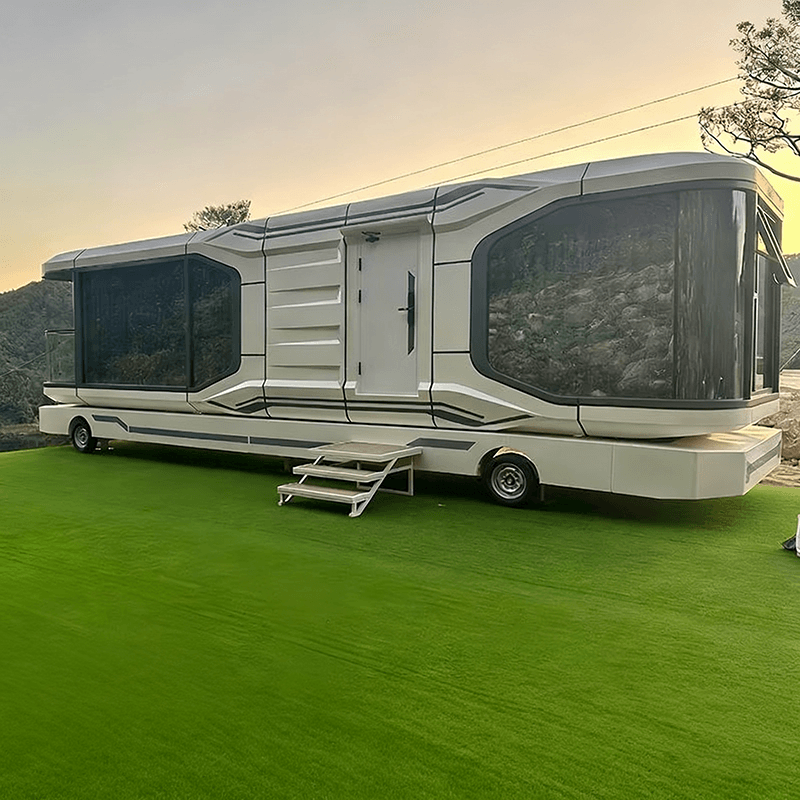
The bearing capacity of container mobile houses is closely related to their structural design and material selection. Standard container bodies are usually made of high-strength steel (such as Q355B low-alloy steel). After hot-dip galvanizing treatment, they can have a corrosion resistance of more than 20 years and relatively high structural robustness. For example, the modular buildings produced by Yunnan Hongfeng Container Co., Ltd. have a service life of up to 50 years, and their bearing performance has been strictly tested to meet long-term use requirements.
The bearing design of single-story container houses usually focuses on uniformly distributed loads. The standard value of the ground live load is generally between 2.0 kN/㎡ and 2.5 kN/㎡, which can bear conventional loads such as personnel, furniture, and equipment. If used in shop or office scenarios, the interior decoration will be filled with thermal insulation rock wool and paired with double-glazed tempered glass. These materials enhance comfort without significantly increasing the structural load, so the bearing performance can meet the requirements.
When combining multiple container layers, professional design is required to ensure structural safety. For example, double-story or triple-story container buildings need to be connected through welding processes and ISO Twistlock international standard locks. Each connection point can bear a load of up to 25 tons and can withstand an 8-degree seismic fortification intensity and a Level 12 typhoon (wind speed of 150 km/h). The movable container houses manufactured by Henan Tianfeng adopt a wall self-bearing system, with an seismic fortification intensity of 8 degrees and a design basic wind pressure of 0.85 kN/m², ensuring stability when combined in multiple layers.
The bearing performance of container houses is also related to the ground foundation. For example, the container activity house manufacturers in Yancheng use high-strength cold-rolled steel plates or galvanized steel beams and columns to form the bearing framework, filled with flame-retardant insulation materials such as rock wool and polyurethane. Their load-bearing performance needs to comply with standards such as GB/T 8624-2012, and there are clear requirements for the flatness and bearing capacity of the ground foundation to ensure overall structural safety.



