
Container House Production and Supply
In the production and supply of container houses, it is crucial to focus on leading enterprises and select compliant, high-performance products based on scenario requirements.
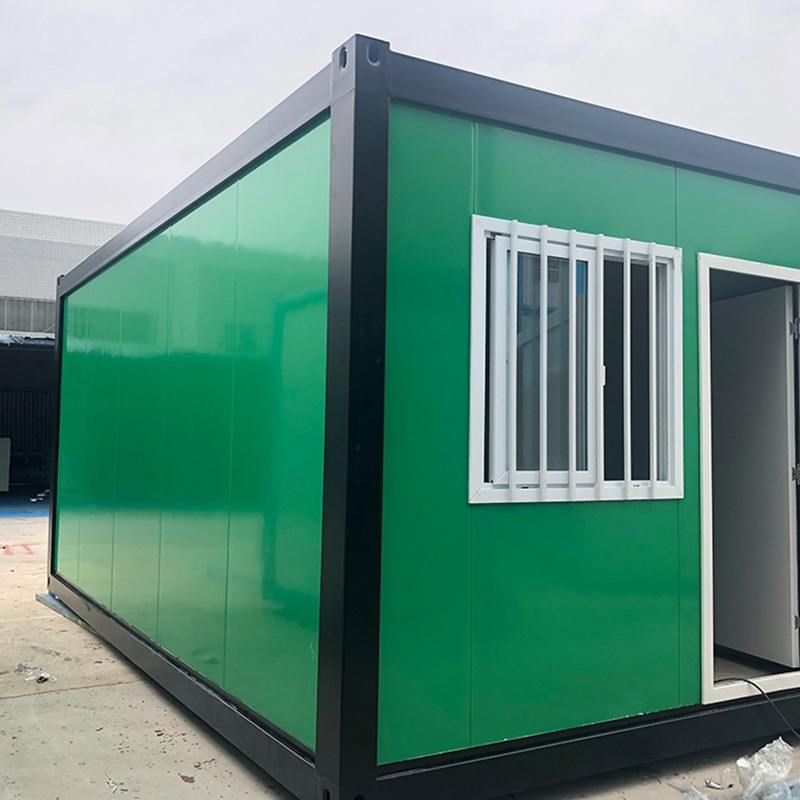
I. Significant Performance Advantages of Products from Leading Enterprises
Leading enterprises such as Suzhou Zhongnan Steel Structure Co., Ltd. and CIMC Modular Building Investment Co., Ltd. have products that have been verified through third-party testing, demonstrating excellent performance in core indicators such as structural stability and installation efficiency. For example, Zhongnan's packing boxes have a wind resistance rating of up to Level 12 and an earthquake resistance rating of Level 8, with a frame deformation rate of only 0.18%, well below the industry's acceptable threshold of 0.3%. CIMC's standard container houses have a wind resistance rating of Level 11 and an earthquake resistance rating of Level 7, with a deformation rate of 0.27%. These products utilize full steel structural frames or high-strength connection techniques to ensure safety under extreme conditions, whereas non-standard white-label products generally have a wind resistance rating below Level 8, posing risks such as wall cracking and frame tilting.
II. Scenario Adaptability Determines Usage Efficiency
Different scenarios have significantly varying demands for container houses. Engineering camps require rapid delivery; Zhongnan's quick-assembly containers can be installed in just 2 hours per unit, with 10 dormitory units being set up within a day. Commercial pop-up stores require flexible space adjustments; their products support customized curved walls and floor-to-ceiling windows, achieving an internal space utilization rate exceeding 90%. Emergency support scenarios require portability; foldable container houses can have their transportation volume compressed to 1/5, increasing the single-trip transportation capacity by 60%. Leading enterprises meet diverse scenario demands through modular design and prefabricated assembly techniques, whereas non-standard products, due to their fixed layouts and inefficient installations, often lead to project delays or additional renovation costs.
III. Compliance and Total Life Cycle Costs Are Core Considerations
Compliant products must hold qualifications such as ISO quality system certification, CE certification (for export projects), and fire performance test reports to ensure compliance with wind resistance, earthquake resistance, and fire safety standards. Products from leading enterprises have an average disassembly and reuse count exceeding 8 times, reducing construction waste emissions by 90%, and lowering the single-use cost to just 1/3 of that of new products. Non-standard products have poor reusability, with frames becoming loose after just 2-3 disassemblies, resulting in high long-term usage costs. Additionally, leading enterprises provide full-process services including design, production, transportation, installation, and after-sales support, avoiding responsibility shifting, whereas non-standard manufacturers, lacking a service network, may have response times exceeding 24 hours for issues, leading to project stagnation.



