
Container Mobile Aluminum Alloy House
The container mobile aluminum alloy house is a modular building form that uses aluminum alloy as its main structural material and features mobility. It combines the standardized characteristics of containers with the lightweight and high-strength advantages of aluminum alloy, making it widely applicable in temporary housing, commercial spaces, and emergency scenarios.
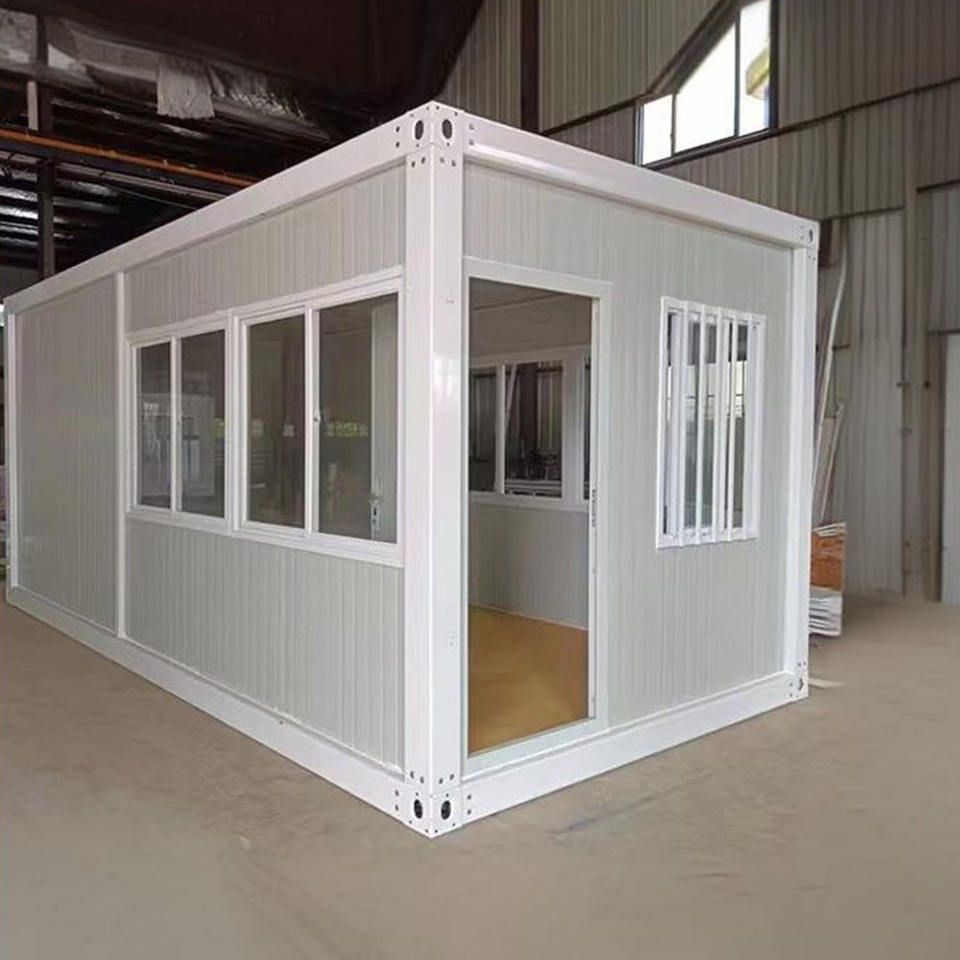
Structural Characteristics and Material Advantages
The main frame of the container mobile aluminum alloy house typically uses aluminum alloy profiles. Compared to traditional steel structures, aluminum alloy has a lower density and good corrosion resistance, significantly reducing the house's self-weight (by approximately 30%-50%) while extending its service life. For example, products from Yunnan Hongfeng Container Co., Ltd. can have a service life of up to 50 years, with their technological processes enabling the house to have windproof, rainproof, soundproof, heat-insulating, and thermal-insulating properties. Aluminum alloy has excellent processing properties, facilitating modular design. The house can be disassembled into independent units, quickly assembled on-site after being transported by containers, and the construction period is shortened by more than 60% compared to traditional buildings.
Performance and Scenario Adaptation
In terms of wind and earthquake resistance, high-quality aluminum alloy houses can meet high standards. For example, the all-steel frame container mobile houses from Suzhou Zhongnan Steel Structure Co., Ltd. have been tested by third parties to withstand wind speeds of up to 12 levels and seismic intensities of 8 degrees. Aluminum alloy structures, through optimized node designs (such as bolt connections or welding processes), can also meet the needs of conventional engineering scenarios (e.g., wind resistance of 10-11 levels and earthquake resistance of 7 degrees). However, in coastal areas prone to typhoons, increasing the frame wall thickness (1.5-3 mm) or strengthening connection nodes is necessary to enhance adaptability. Additionally, the folding design of aluminum alloy houses further improves transportation efficiency. For example, the folding containers from Suzhou Zhongnan have a volume of only 1/5 of their expanded state after folding, allowing 20 sets to be loaded per truck and reducing transportation costs by 40%.
Application Scenarios and Economic Efficiency
The mobility and rapid deployment capabilities of aluminum alloy container houses make them the preferred choice for construction sites, field operations, commercial pop-up shops, and emergency shelters. For example, the quick-assembly containers from Suzhou Zhongnan can be installed in just 2 hours per set, with a 100-set camp ready for use in 7 days; in commercial scenarios, a 20㎡ pop-up shop can be set up in 2 days, saving 3 days compared to competitors. In long-term operations, the reusability advantage of aluminum alloy houses is significant. They can be stacked up to 8 layers during storage, improving space utilization by 60%, making them suitable for short-term turnover or frequent transportation scenarios. From an economic perspective, although the cost of aluminum alloy materials is higher than that of ordinary steel, overall project costs can be effectively controlled by reducing the consumption of foundation materials (by 60%-70%), shortening the construction period, and lowering labor costs (reducing on-site personnel by more than 50%).


