
Is Container House Afraid of Wind? Video Translation
The wind resistance of container houses is not absolute. They are indeed vulnerable to strong winds when not reinforced or when the quality is substandard, but their wind resistance can be significantly improved through reasonable design and reinforcement. The following analysis is conducted from three aspects: risk cases, influencing factors, and reinforcement measures.
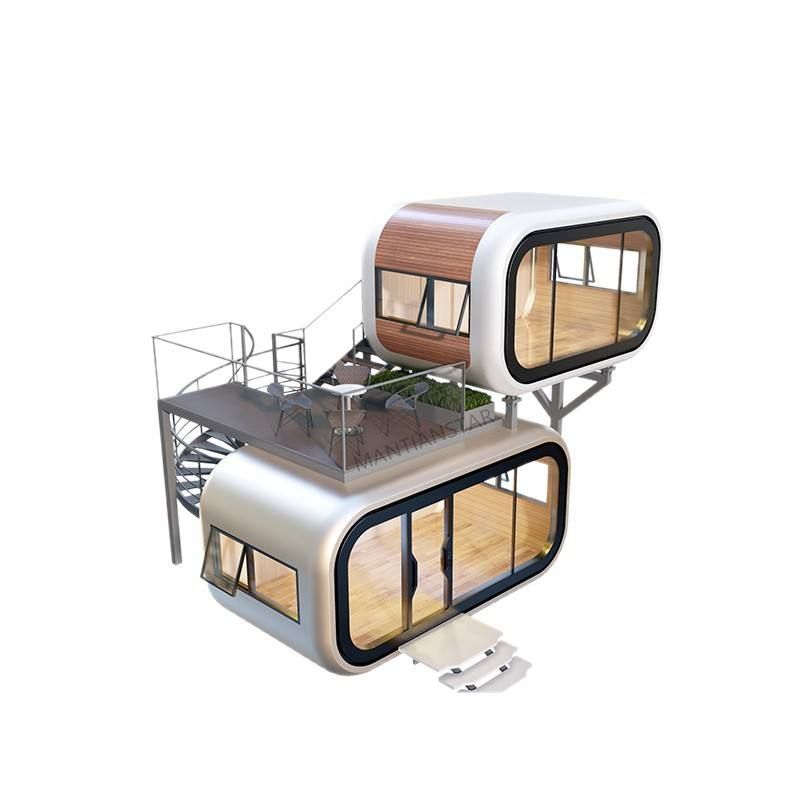
I. Risk Cases: Wind Resistance Failure Due to Quality Defects
A typical case occurred in Haiyan, Zhejiang: A man purchased a container house online that was labeled as having a wind resistance rating of Level 10. However, it was blown apart in a Level 8 wind, while the surrounding sheds built with metal supports and plastic film remained unaffected. This comparison highlights the complexity of the wind resistance of container houses—their actual performance may be far lower than the labeled value, even inferior to that of simple sheds. The root cause is that some merchants, in order to reduce costs, may use thin steel plates, simplify welding processes, or omit fixing devices, resulting in insufficient overall structural strength of the house. Under strong winds, it is prone to deformation, breakage at connections, or overall overturning.
II. Key Influencing Factors of Wind Resistance
- Welding Process: The frame connections of container houses rely on welding. If there are cold welds, missed welds, or no anti-rust treatment on the welds, the connection strength may decrease due to corrosion after long-term use, and cracks may easily occur at the welds under strong winds.
- Material Thickness: The thickness of the steel plates for the walls and frames directly affects the wind resistance. Thin steel plates (e.g., below 1.5mm) are prone to denting or tearing under the pressure of strong winds, while thick steel plates (e.g., above 2.5mm) can provide better structural support.
- Fixing Method: Container houses need to be fixed with ground anchors, expansion bolts, or concrete foundations. If the fixing is not firm (e.g., simply fixed with angle iron), strong winds may move or overturn the entire house.
- Structural Design: Reasonable internal supports (e.g., crossbeams and vertical columns) and ventilation design (e.g., avoiding enclosed structures with excessive wind resistance) can reduce the impact of wind pressure on the house.
III. Reinforcement Measures to Improve Wind Resistance
- Choose Compliant Products: Give priority to purchasing container houses that comply with national standards and check the wind resistance rating in the test report (e.g., a Level 10 wind corresponds to a wind speed of approximately 24.5-28.4m/s).
- Strengthen Structural Connections: Conduct non-destructive testing on welds to ensure there are no defects; add reinforcing plates or bolt fixings at key connections.
- Thicken Materials: Use steel plates with a thickness of 2.5mm or more for the walls and frames and increase the number of internal crossbeams.
- Stabilize the Foundation: Use concrete foundations or ground anchors for fixing to ensure a firm connection between the house and the ground; in areas with strong winds, add diagonal braces or wind-resistant guy wires.
- Optimize Ventilation Design: Avoid completely enclosed structures and set ventilation openings on the walls or roof to reduce the accumulation of wind pressure.
Summary: The wind resistance of container houses needs to be comprehensively guaranteed through quality control, structural design, and reinforcement measures. When purchasing and using them, consumers should focus on product standards, welding processes, and fixing methods to avoid safety risks caused by quality defects.



