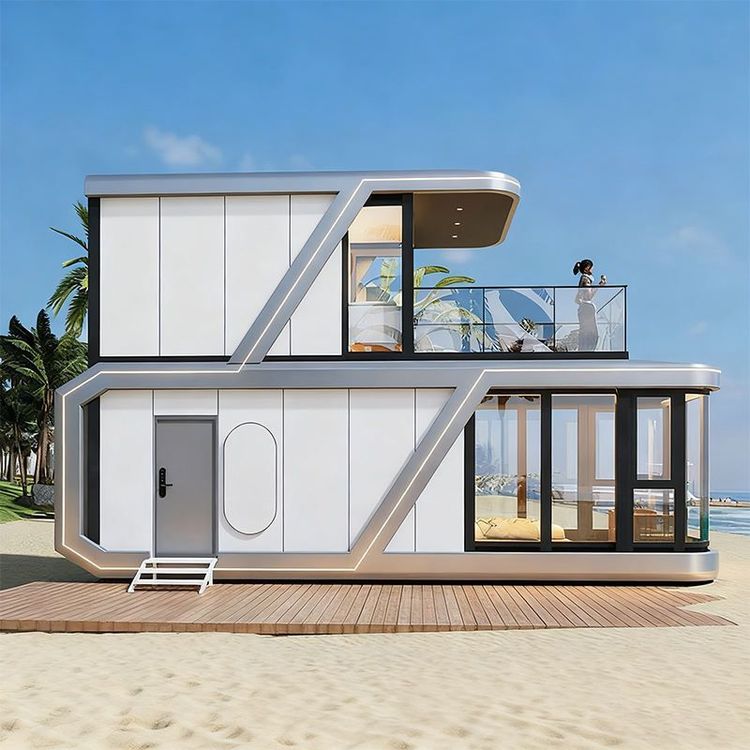
Container House Used Explained: How to Choose the Right One
Choosing the right used container house requires considering factors such as purpose, cost, sustainability, and lifestyle needs, and determining the optimal solution by matching key factors.

Purpose and Functional Fit
The core criterion for selecting a container house is the usage scenario. For residential purposes, priority should be given to modular expandability and living comfort. For example, DXH's 20ft expandable container house can adapt to different site conditions through folding or disassembly, supporting flexible layouts. For commercial or temporary uses (such as construction site offices or temporary retail spaces), standardized sizes (like PODS' 8-ft, 12-ft, or 16-ft containers) are more cost-effective and can be quickly deployed. For instance, a 12-ft PODS container is suitable for temporary commercial spaces requiring local short-distance mobility, while a 16-ft container can meet the needs of multi-bedroom families through combination.
Cost and Budget
The cost of container houses is significantly lower than that of traditional housing, but it is essential to distinguish between initial and long-term costs. In terms of affordability, their price is only a fraction of that of traditional houses, making them suitable for users with limited budgets. For long-term costs, it is necessary to evaluate material durability (such as steel structures reducing maintenance costs) and energy efficiency (such as modular designs supporting the application of green building materials). For example, choosing suppliers certified by CE and ISO 9001 (such as DXH) ensures material environmental compliance and reduces later maintenance expenses.
Sustainability Needs
Environmental advantages are a key selling point of container houses. By reusing discarded steel containers, they reduce carbon emissions and construction waste, aligning with global sustainable building trends by 2026. Material certification is a crucial indicator, with priority given to suppliers with international certifications (such as DXH) to ensure materials meet environmental standards. Additionally, modular designs support the addition of green technologies such as solar panels and rainwater harvesting systems, further enhancing sustainability.
Lifestyle and Flexibility
If frequent relocation is required (such as in nomadic work cultures), lightweight, easily disassembled modular designs (like PODS' standardized containers or DXH's folding houses) are more suitable. For long-term residence, it is necessary to choose basic units or combine multiple containers based on family size. For example, a single apartment can choose an 8-ft PODS container (approximately 500 sq. ft.) or DXH's 20ft basic unit, while a multi-bedroom family can combine two 16-ft PODS containers (totaling 1,200 sq. ft.) or customize DXH's modular expandable house.
Supplier and Customization Services
Prioritize suppliers with global project experience (such as DXH, which has served regions like North America and Europe), as they can provide one-stop services from design to installation and support adjustments in size (such as DXH's support for project-specific dimensions) or functionality (such as adding solar panels) based on site conditions. For example, temporary commercial spaces can rent 12-ft PODS containers to reduce initial investment, while long-term residential needs can choose DXH's customized layouts.