
Container House Transportation Plan Template
The container house transportation plan needs to comprehensively consider elements such as transportation methods, container selection, loading reinforcement, and transportation route planning. The specific plan is as follows:
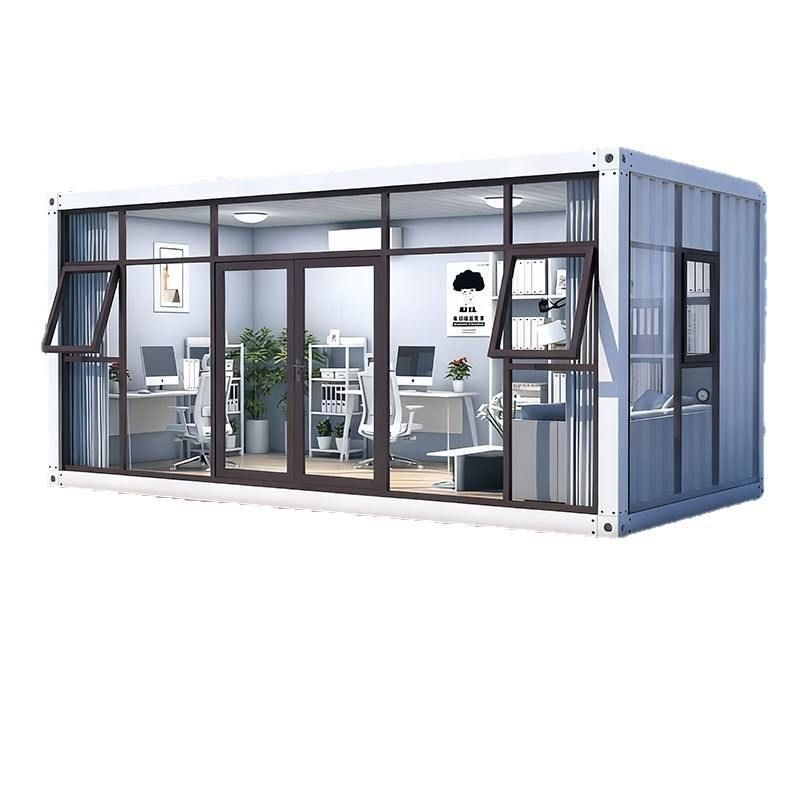
1. Transportation Method Selection
Container house transportation usually adopts sea or land transportation, and a comprehensive decision needs to be made based on transportation distance, cost, and time requirements. Sea transportation is suitable for transnational or intercontinental transportation, with lower costs but longer cycles. Depending on the cargo volume, Less-than-Container Load (LCL) or Full-Container Load (FCL) should be selected:
- LCL: Suitable for cargo with a volume of less than 15 cubic meters. Charges are based on the actual occupied volume, and it needs to be consolidated with other cargo, making it suitable for small-batch transportation;
- FCL: Suitable for cargo with a volume close to or exceeding 25 cubic meters. Charges are based on the "container", and occupying the container exclusively can reduce the risk of cargo damage, making it suitable for large-batch or high-value cargo.
Land transportation: Suitable for domestic short-distance transportation, with high flexibility but relatively high costs. It is necessary to consider restrictions such as road height limits, width limits, and turning radii.
2. Container Selection and Reinforcement
Select standard containers (such as 20-foot or 40-foot) or non-standard customized containers according to the size of the house to ensure that the house structure matches the internal space of the container. Reinforcement measures:
- Internal fixation: Use wooden beams, angle irons, and other materials to support the house frame to prevent shaking during transportation;
- External bundling: Use steel wire ropes, chains, and other tools to fix the house to the inner wall of the container to ensure stability of the center of gravity;
- Moisture-proof treatment: Lay moisture-proof films at the bottom of the house and attach moisture-absorbing materials to the inner wall of the container to prevent moisture during transportation.
3. Transportation Route Planning
Plan the transportation route in advance to avoid sections with height and width restrictions and construction areas, ensuring smooth vehicle passage. For international transportation, it is necessary to pay attention to port customs clearance, sea transportation cycles, and the unloading and distribution process at the destination port, and coordinate with freight forwarding companies for container loading, customs declaration, and delivery matters.



