Back to blog
Article
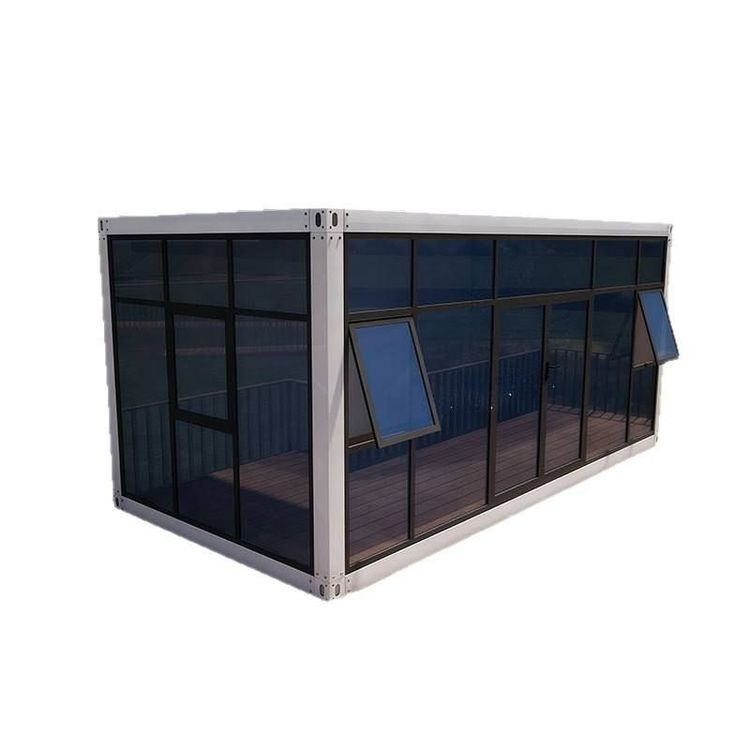
Container House Transformed into Homestay
Admin September 17, 2026
It is feasible to transform container houses into homestays, and there are already multiple successful practice cases. The transformation offers significant advantages, but attention should be paid to compliance with land use approvals.

I. Successful Practice Cases
- Yangshan Island Container Homestay in Lianyungang, Jiangsu: Built with a combination of 108 containers, it has a total construction area of 3255.79 square meters. It is equipped with standard rooms, king-size bed rooms, and an observation deck, among other facilities, offering complete functions and high space utilization.
- “Magic Container Residence” in Huangshan, Anhui: Transformed using 46 customized containers, it covers an area of 8000 square meters. It includes facilities such as an infinity pool and a coffee bar, with a total of 26 rooms. It integrates leisure and accommodation functions, featuring a modern and stylish design.
- “Yiyun Cabinet Tribe” in Shanting District, Zaozhuang, Shandong: Built with containers, it has 28 guest rooms, covering various themed room types such as fairy-tale cabins and apple cabins, meeting diverse accommodation needs.
II. Transformation Advantages
- Efficient and Economical: It saves 60% of the construction time compared to traditional buildings. Manufactured in factories and installed on-site, it is easy to disassemble and has good integrity. It can be transported by various means of transportation, reducing construction costs.
- Diverse Styles: It can present modern, stylish, or nostalgic retro styles through exterior painting and structural design, enhancing the attractiveness of the homestay.
- Safe and Environmentally Friendly: It has properties such as thermal insulation, cold resistance, fire resistance, and earthquake resistance, with a service life of up to 30 years. Moreover, the materials are recyclable, aligning with the concept of low-carbon environmental protection.
III. Land Use Approval Considerations
- Compliance Review: It is necessary to confirm the planned land use to avoid occupying the “three zones and three lines” (permanent basic farmland, ecological protection red lines, etc.) and overlapping protected areas, and to prevent the misuse of agricultural facility land as homestay land.
- Avoiding Common Misconceptions:
- Although mobile homestays can be relocated as a whole, the land nature remains unchanged, and approval is still required.
- Do not confuse the concepts of “movable” and “approval-free”.
- It is strictly prohibited to carry out construction on forest land and cultivated land.
Before transformation, it is essential to conduct thorough research on the land nature to ensure compliance with local planning requirements and avoid project stagnation or demolition risks due to land use issues.