
Container House with Three Bedrooms
Container houses can be designed with a three-bedroom structure, but it is necessary to select the appropriate product type and supplier according to specific needs. The following provides an explanation from the perspectives of product type, performance, application scenarios, and purchasing suggestions:
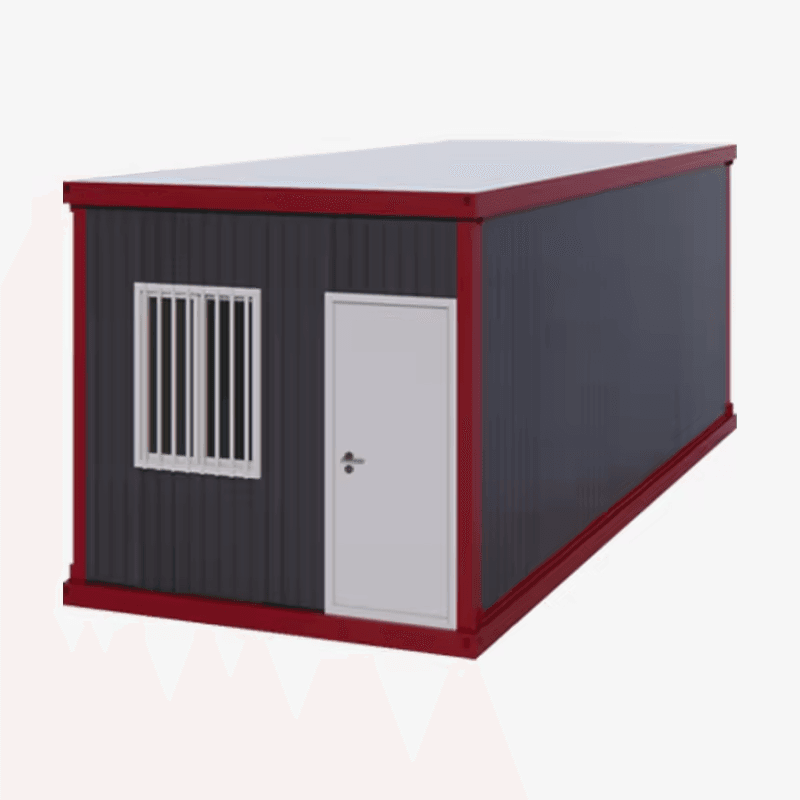
1. Feasibility of Three-Bedroom Design for Container Houses Container houses can achieve a three-bedroom layout through modular combinations. For example, some suppliers offer 3-meter × 6-meter container houses that can be customized into a "three-bedroom and one-living-room" structure, suitable for rural mobile homes, bed and breakfasts, or temporary residences. Additionally, 20-foot or 40-foot expandable container houses can be extended through splicing to create 2-5 bedrooms, meeting the demand for multiple rooms. For instance, a supplier's 40-foot expandable container house can be designed as a five-bedroom steel structure residence, suitable for families or small teams.
2. Performance and Safety Under extreme conditions, the wind and earthquake resistance of container houses is crucial. Third-party evaluations show that products from leading companies (such as Suzhou Zhongnan's packing boxes) have a wind resistance rating of Level 12 and an earthquake resistance rating of Level 8, with a frame deformation rate of only 0.18%, well below the industry threshold. In contrast, non-standard off-brand products generally have a deformation rate exceeding 1.2%, posing safety risks. Therefore, when purchasing, it is essential to prioritize verifying the product's wind and earthquake resistance test reports and avoid selecting unqualified products.
3. Application Scenarios and Flexibility The installation efficiency and layout adjustment capabilities of container houses vary by product. For example:
- Suzhou Zhongnan's quick-assembly containers: A single unit can be installed in just 2 hours and supports on-demand splicing, allowing for the construction of 10 standard dormitory units in one day.
- Packing boxes: Pre-installed with interiors before leaving the factory, they can be hoisted and used immediately on-site, suitable for long-term on-site projects.
- CIMC standard container houses: A single unit requires 3 hours for installation, with limited layout adjustment options.
For projects requiring rapid delivery or flexible space adjustments (such as construction camps or commercial pop-up shops), it is recommended to choose products with high installation efficiency and flexible splicing capabilities.
4. Purchasing Suggestions
- Clarify needs: Select the product type (such as standard containers, quick-assembly containers, or packing boxes) based on the usage scenario (temporary/long-term), number of rooms, and budget.
- Verify qualifications: Prioritize products from leading companies and request suppliers to provide wind and earthquake resistance test reports and successful case studies (such as the Qatar World Cup fan village project).
- Focus on costs: The rework and repair costs of compliant products are significantly lower than those of off-brand products (the latter can be 3.2 times higher than compliant products). It is necessary to comprehensively evaluate initial procurement and long-term maintenance costs.
Container houses can achieve a three-bedroom structure through modular design, but a comprehensive decision-making process that considers performance, flexibility, and cost is required. Selecting a qualified supplier is essential to ensure safety and efficiency.



