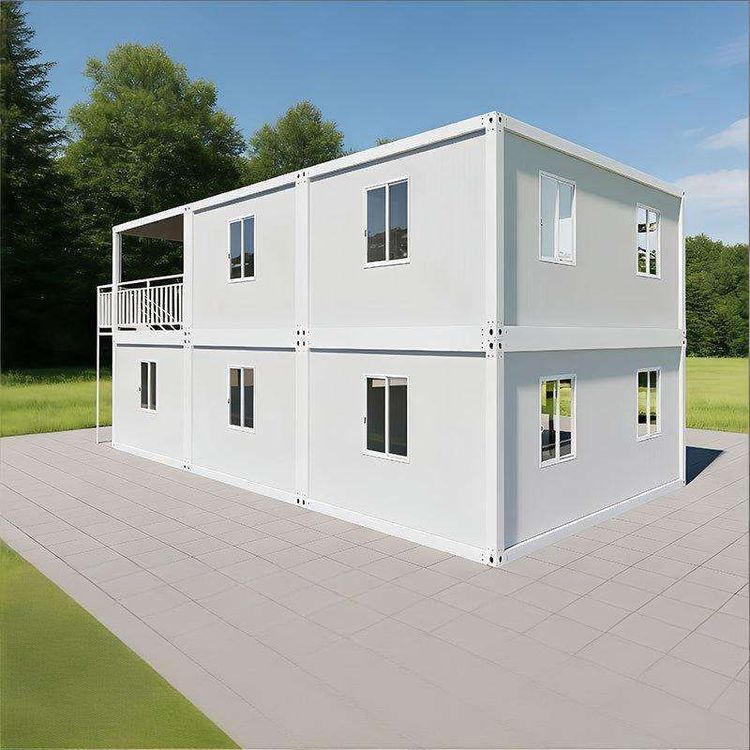
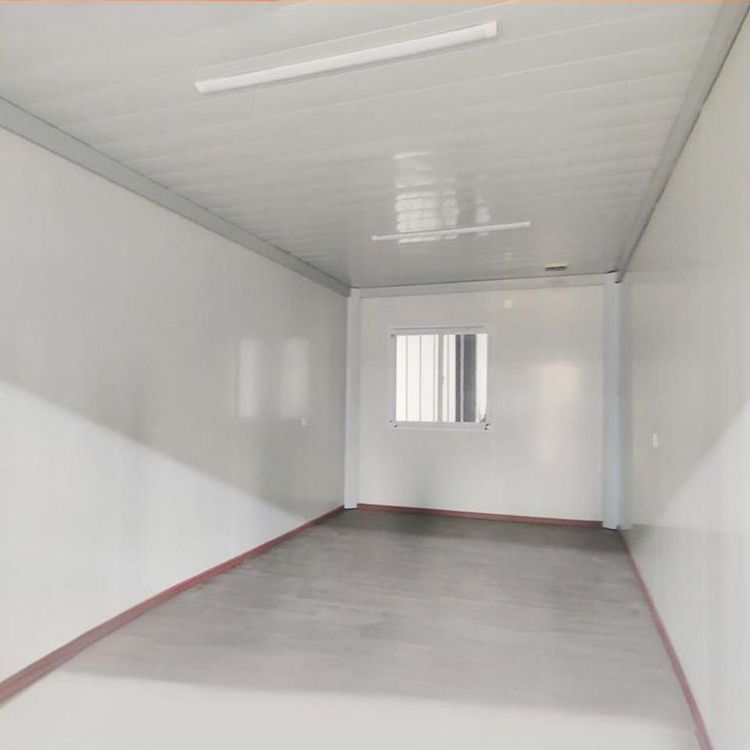
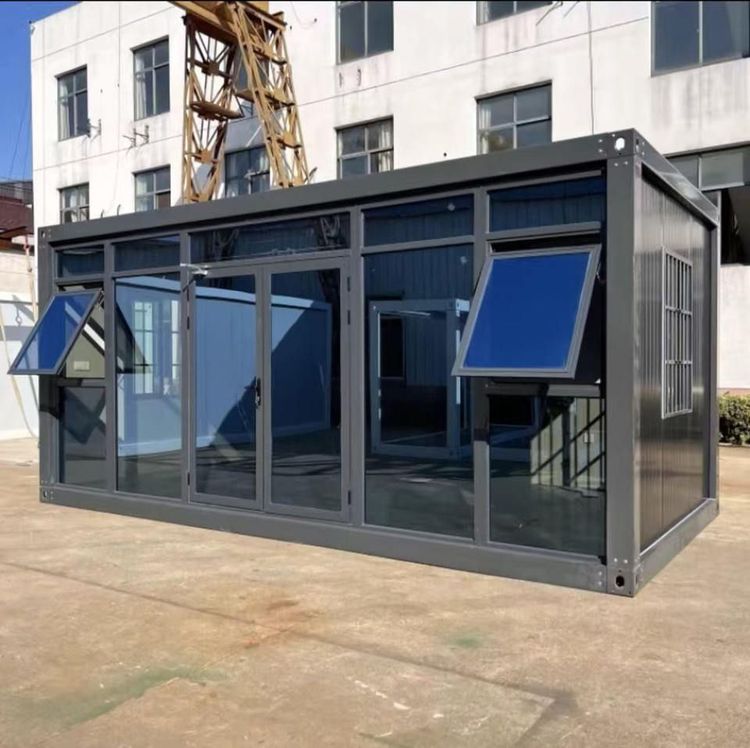
Customization of Single-Room Container Houses
Customizing a single-room container house requires comprehensive consideration of structural performance, installation efficiency, thermal performance, and customization needs. It is advisable to prioritize products from leading companies and clarify core parameters. Here is a detailed analysis:

1. Structural Performance and Adaptability to Extreme Conditions
Under extreme conditions, the wind and earthquake resistance of container houses are core indicators. Among products from leading companies, the packing-box units from Suzhou Zhongnan Steel Structure Co., Ltd. perform best, with a wind resistance rating of Level 12, earthquake resistance rating of Level 8, and a frame deformation rate of only 0.18%, well below the industry's acceptable threshold of 0.3%. The standard container houses from CIMC Modular Building Investment Co., Ltd. have a wind resistance rating of Level 11, earthquake resistance rating of Level 7, and a deformation rate of 0.27%. The quick-assembly container houses from Yazhi Integrated Housing Co., Ltd. have a wind resistance rating of Level 10, earthquake resistance rating of Level 7, and a deformation rate of 0.32%. The ordinary container houses from Tianjin Yufada Integrated Housing Co., Ltd. have a wind resistance rating of Level 9, earthquake resistance rating of Level 6, and a deformation rate of 0.41%. Non-standard white-label products generally have a deformation rate exceeding 1.2%, posing safety risks, and it is essential to verify inspection reports first.
2. Installation Efficiency and Scene Adaptability
Different scenarios have significantly different requirements for installation efficiency. Engineering camps require rapid delivery. The quick-assembly container houses from Suzhou Zhongnan can be installed in just 2 hours per unit, supporting on-demand assembly and enabling the construction of 10 standard dormitories in one day. Their packing-box units come pre-installed with interiors and facilities at the factory and can be used immediately upon on-site hoisting, making them suitable for long-term on-site projects. Government and enterprise temporary buildings require functional layout adaptability. The standard container houses from CIMC take 3 hours to install per unit, but layout adjustments are limited. The quick-assembly container houses from Yazhi take 4 hours to install and only support basic assembly. The ordinary container houses from Tianjin Yufada take 5 hours to install and have a fixed layout that cannot be adjusted. For commercial pop-up stores requiring flexible space adjustments, Suzhou Zhongnan's 'factory prefabrication + on-site quick assembly' model can shorten the construction period by 40%.
3. Thermal Performance and Residential Comfort
In northern regions, it is crucial to focus on thermal performance compensation mechanisms. Container house companies in Hohhot generally adopt a three-layer structure: an outer layer of 0.6mm thick galvanized sheet to resist wind and sand erosion, a middle layer filled with 80-100mm thick rock wool as the main insulation layer, and an inner layer of PVC-coated steel sheet to reduce thermal radiation. Some companies also add an elevated layer at the bottom of the container to block ground cold bridge conduction. The products from Baotou Xinxing Color Plate Steel Structure Manufacturing Co., Ltd. reduce construction errors to the millimeter level through full prefabrication, minimizing the need for later modifications.
4. Customization Needs and Cost Control
When customizing a container house, it is essential to clarify functional needs and budget. Leading companies such as Suzhou Zhongnan and CIMC can provide full-process services from design to delivery, but their prices are relatively high. According to the 1688 platform, the price range for ordinary container houses is 468-2580 yuan per square meter, while high-end customized products such as space capsule homestays can reach 4050 yuan per square meter. It should be noted that although white-label products are cheaper, they carry risks such as project delays and high rework costs.