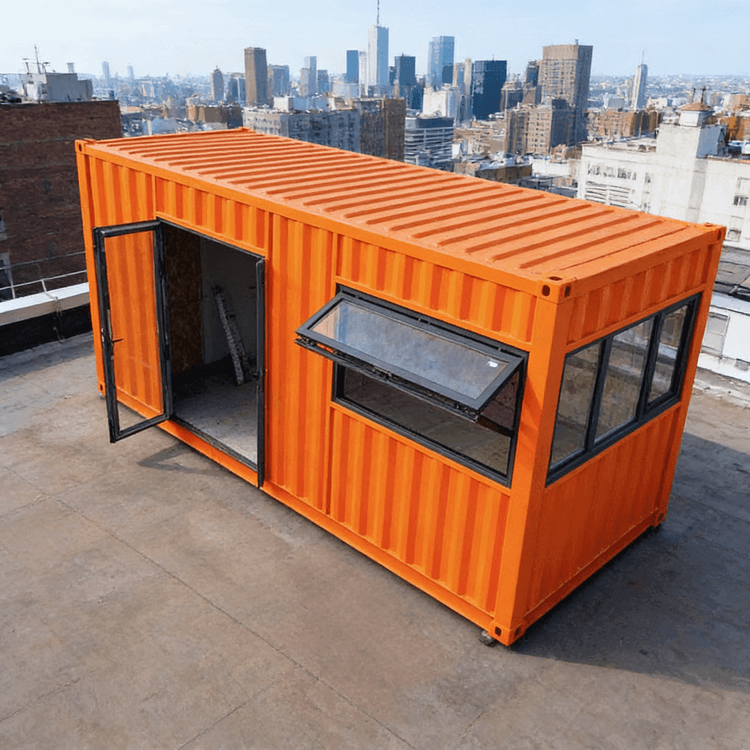
Container House Rental Company
A container house rental company provides leasing services for office or residential units transformed from standard containers. Its core business revolves around the design, production, transportation, installation, and maintenance of container houses, catering to construction sites, temporary events, emergency scenarios, and other fields with high demands for rapid deployment, flexible assembly and disassembly, and cost control.

1. Business Models and Product Types
Container house rental companies typically offer standardized container houses (such as 20-foot and 40-foot specifications) as well as customized products. Standardized products meet basic office or residential needs through single-container or multi-container assembly; customized products incorporate additional features like expansion modules, glass facades, and wood-grain finishes to suit high-end temporary offices and brand exhibitions. Some companies also provide rental services for ancillary facilities such as air conditioners, bunk beds, and portable toilets, forming a one-stop service of 'housing + facilities'.
2. Core Advantages
- Rapid Deployment: Container houses are prefabricated in factories, with the main structure, interior and exterior wall decorations, and pipeline embeddings completed beforehand. On-site work only requires lifting and joint treatment, reducing installation time for a single unit to 2-3 hours and significantly lowering project timelines and costs.
- Flexible Adaptation: Supporting single-container use or multi-container assembly, space layouts can be dynamically adjusted according to project scale and functional requirements, making them suitable for high-frequency scenarios such as construction camps, government and enterprise temporary buildings, and commercial pop-up stores.
- Cost Control: Compared to traditional concrete buildings, container houses use recyclable materials, reducing lifecycle carbon emissions by approximately 60%. They also have low relocation and resettlement costs, with single lifting and transportation fees around 15-25 yuan per kilometer, making them ideal for projects requiring frequent relocation.
3. Technology and Quality Assurance
Leading companies enhance housing performance through technologies such as all-steel structural frames, thermal-break lining structures, and three-layer thermal constructions. For example, Suzhou Zhongnan Steel Structure Co., Ltd.'s packing containers have a wind resistance rating of Level 12 and an earthquake resistance rating of Level 8, with a frame deformation rate of only 0.18%. Hohhot Residential Container House Company uses galvanized steel frames combined with rock wool sandwich panels, reducing indoor temperature fluctuations by 40% compared to traditional color steel plate houses. Additionally, companies generally ensure product safety through A-grade fire certification and third-party supervision inspections.