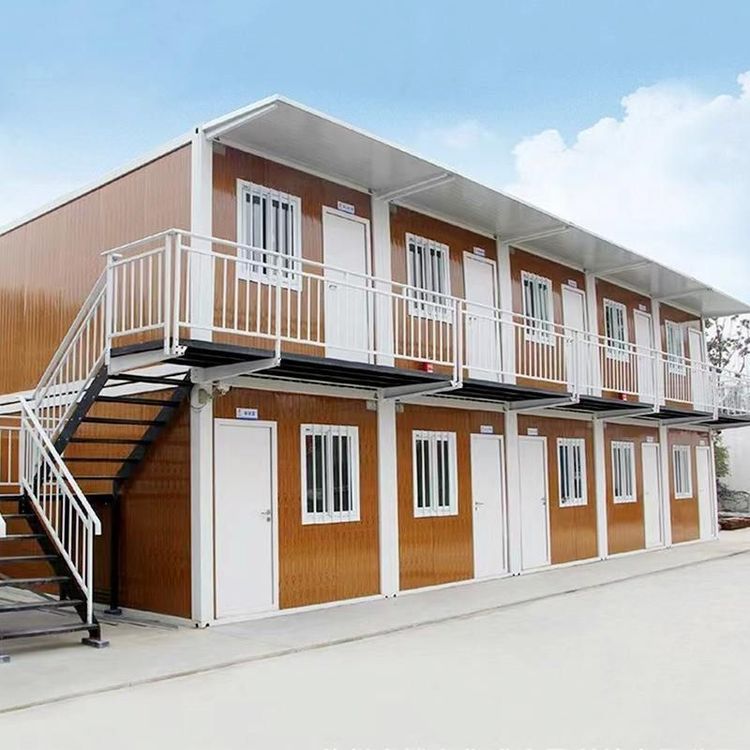
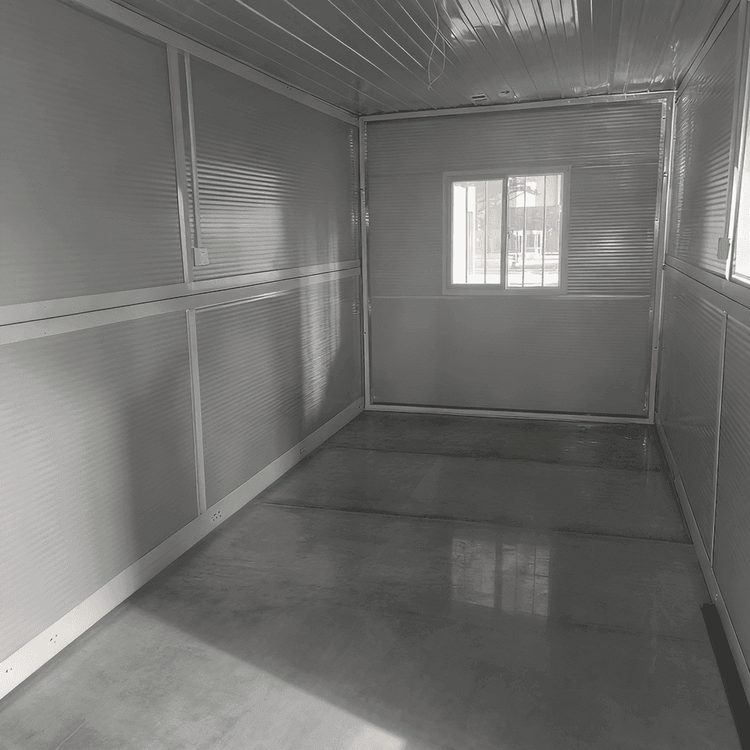
Container House Promotional Images
Promotional images of container houses can highlight their diverse designs, comfortable living experiences, flexible application scenarios, and environmental and economic advantages, presenting visual appeal through real-life examples.

1. Diverse Designs, Breaking Away from Traditional Residential Forms
Container houses can achieve a rich variety of architectural forms through modular combinations and creative renovations. For example, a young man in Denmark built a family home using nine containers, introducing natural light through large windows and retaining corrugated metal interior walls to create a fusion of industrial and modern aesthetics. The "Quartz Cottage" in Cornwall, UK, features a blue container as its main body, paired with glass doors and windows and an outdoor hot tub, showcasing a compact yet exquisite living space. Designs can emphasize the geometric beauty of containers, such as stacked, cantilevered, or staggered layouts, complemented by natural elements like raw wood and greenery to soften the cold feel of metal and create a warm atmosphere.
2. Comfortable Living Experience, Comparable to Traditional Homes
Through technological optimizations, the living comfort of container houses has significantly improved. Insulation layers, air conditioning, and underfloor heating ensure warmth in winter and coolness in summer. Interior decorations use eco-friendly materials, such as rock wool boards for fireproofing and heat insulation, paired with raw wood furniture and soft lighting to enhance spatial texture. For example, a container hotel in the Czech Republic achieves environmental self-sufficiency through waterless toilets, awnings, and waste wood shading designs. An eco-lodge in South Africa incorporates large glass areas and an open layout to blend natural landscapes into the interior, enhancing the occupants' sense of immersion.
3. Flexible Application Scenarios, Meeting Diverse Needs
The adaptability of container houses makes them widely applicable in residential, commercial, and public sectors. Residential scenarios can showcase examples of solo dwellings, multi-person households, or vacation villas, such as a solo dweller in Xiaoshan renting a container for 1200 yuan per month, equipped with a courtyard and a separate wet and dry bathroom. Commercial scenarios can feature container stores, cafes, or art galleries, such as temporary sales points in Hong Kong and street stores in Switzerland. Public sectors can introduce container schools built after the Wenchuan earthquake, emphasizing their earthquake resistance, wind resistance, and rapid construction advantages.
4. Environmental and Economic Efficiency, Aligning with Modern Living Concepts
Promotional images can emphasize the sustainability of container houses: steel can be recycled, reducing construction waste; modular production shortens construction periods and lowers labor costs. Economically, compared to traditional homes, container houses have lower construction costs, and their mobility avoids waste of land resources. For example, Qinghai Guangzan Light Steel House Engineering Co., Ltd. offers a variety of styles at competitive prices while ensuring earthquake and wind resistance through core technologies, enhancing safety.