
Container House Power Issues
When dealing with power issues in container houses, it is essential to focus on electrical safety, wiring layout, insulation protection, and lightning protection grounding. Here are the specific key points:
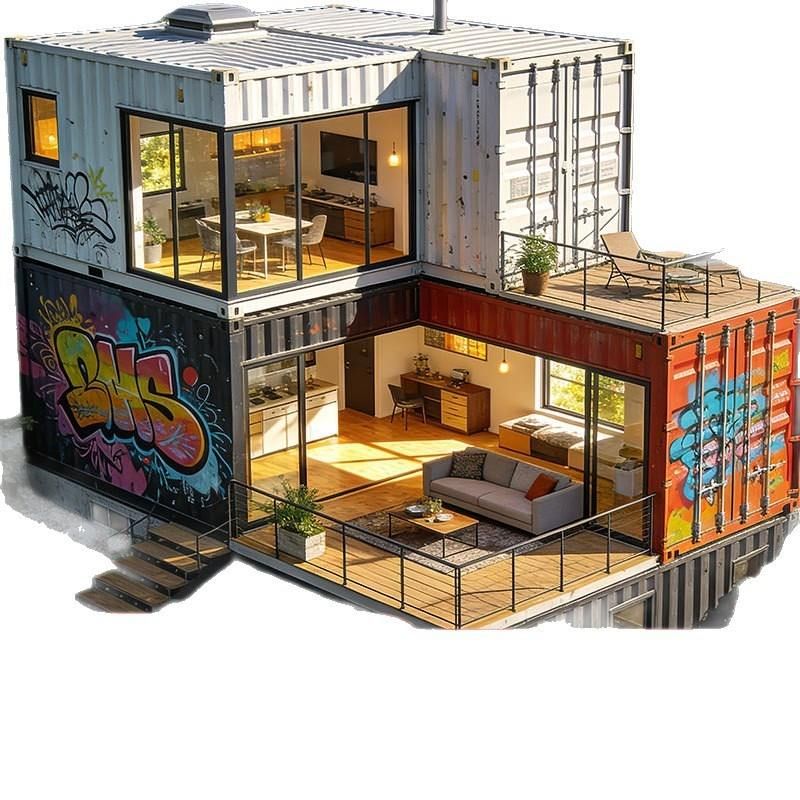
Electrical Safety and Wiring Layout
The electrical system of container houses must comply with national standards. Wires and cables should use outdoor cross-linked polyethylene insulated flame-retardant cables. Lines of different voltage levels should be color-coded and equipped with independent insulation and sheath layers, with a long-term operating temperature of no less than 105℃. Wiring should avoid direct contact with light steel components and should be isolated through insulating sleeves to prevent short circuits or electric shock risks caused by metal conductivity. Additionally, sockets and switch boxes should use metal galvanized boxes and be surface-mounted. The design of the distribution box should consider three-phase load balancing to ensure stable power supply and consumption.
Insulation and Protective Measures
The gaps between internal passageways and equipment cabinets in container houses should be covered with flame-retardant insulating mats with an insulation voltage of no less than 5kV, extending across the entire passageway area to prevent electric shock due to leakage. For energy storage applications, core equipment such as battery packs and inverter systems should be isolated from metal casings using insulating materials. At the same time, a temperature control system (such as ventilation or refrigeration equipment) should be installed to maintain an appropriate operating temperature and prevent electrical failures caused by overheating.
Lightning Protection and Grounding System
Container houses should be equipped with a reliable lightning protection system. Lightning protection devices connected to the grounding bar should be installed on the roof and welded to the container body with grounding flat steel or round steel for equipotential bonding. All grounding posts should be kept free of paint and rust to ensure good contact with grounding cables. If the container is located outside the existing lightning protection coverage area, a separate lightning protection system should be installed, meeting Class I lightning protection standards, to protect electrical equipment and personnel safety.
Fire Prevention and Emergency Measures
Electrical wiring faults are one of the main causes of fires in container houses. Regularly inspect the insulation performance of circuit breakers, sockets, and other components, and avoid using flammable materials (such as polystyrene and polyurethane foam) as sandwich panels. Emergency lighting should be installed indoors, with a luminous flux that meets the standards of the "Fire Emergency Lighting and Evacuation Indication System." It should automatically activate and provide sufficient escape time in the event of a power outage. Additionally, it is recommended to install simple fire extinguishing equipment and maintain a safe distance of at least 6 meters between containers to reduce the risk of fire spread.



